thursday Jan 5 2023
BOSTON—William “Rick” Singer, the mastermind behind a nationwide college-admissions cheating scheme that ensnared top universities, business executives and Hollywood celebrities, was sentenced Wednesday to 42 months in prison.
He will also have to pay nearly $20 million in restitution and forfeitures of ill-gotten gains.
The hearing in U.S. District Court here marked the end to a lengthy drama for Mr. Singer that exposed the ease with which the high-stakes college-admissions process could be corrupted. The scandal, made public in March 2019 after a year-long investigation by the Federal Bureau of Investigation, Internal Revenue Service and federal prosecutors, captivated the country and inspired books and a Netflix documentary. It also raised fundamental questions about who deserves to get into the nation’s most exclusive institutions of higher education.
Mr. Singer, 62 years old, pleaded guilty in 2019 to four felonies, admitting to running a complex operation that arranged for parents to fraudulently boost their teens’ ACT and SAT scores and to bribe college coaches to flag the clients as recruited athletes, all but guaranteeing their admission to schools including Georgetown University and the University of Southern California. Payments were often funneled through Mr. Singer’s sham charity, allowing parents to take tax write-offs for the bribes.
Though he was at the head of a conspiracy that prosecutors say brought in $25 million and tainted an admissions process that was intended to be based on merit, Mr. Singer also served as a key cooperator in the federal case. The probe, dubbed Operation Varsity Blues by investigators, started with a tip from an investor involved in a stock-fraud scheme and ultimately led to criminal charges against 57 individuals.
Most of those charged pleaded guilty, with sentences ranging from probation to 2½ years in prison. All but one person who took their cases to trial were found guilty; one parent also was pardoned by former President Donald Trump and one coach entered a deferred prosecution agreement.
Mr. Singer sat in the courtroom Wednesday afternoon, flanked by his two lawyers and staring straight ahead with his shoulders hunched, as Assistant U.S. Attorney Stephen Frank summarized the scheme.
Mr. Frank said that while there were dozens of conspirators, “Without Rick Singer coming up with the scheme, masterminding the scheme, orchestrating the scheme, it would never have happened.”
“I am responsible for my actions and my crimes,” Mr. Singer told U.S. District Judge Rya W. Zobel. “The fraudulent testing scheme, bribing of university officials, lying on students’ applications and profiles, I did all of it.”
Mr. Singer apologized to the students he worked with, saying they were “deserving of more integrity than I showed them,” and expressed regret for tarnishing the reputations of universities, tainting the experiences of families who worked with him legitimately and embarrassing his family and friends.
Despite my passion to help others, I lost my ethical values and have so much regret. To be frank, I’m ashamed of myself,” Mr. Singer said.
Prosecutors called Mr. Singer’s scheme “staggering in scope” and “breathtaking in its audacity.” They said his cooperation with the investigation was valuable, while also beset with missteps.
In addition to the prison term, Mr. Singer was sentenced to three years of supervised release, and ordered to pay $10.7 million in restitution to the IRS, forfeit more than $5.3 million in assets and pay a $3.4 million forfeiture money judgment.
The delay in sentencing Mr. Singer is partly due to his agreement with the government; cooperators typically aren’t sentenced until after their work with authorities is complete. Mr. Singer’s lawyer also died last year, leading to an additional delay.
Judge Zobel said Wednesday that Mr. Singer needed to face prison time, given how complex and lucrative the scheme was, and how long it went on. Still, she awarded him significant credit for his cooperation.
Prosecutors had asked the judge to sentence Mr. Singer to six years in prison and three years of supervised release. The U.S. Probation Office recommended that Mr. Singer receive a prison sentence of between 6½ years and eight years, one month. Mr. Singer’s legal team had asked that he face punishment of no more than six months in prison.
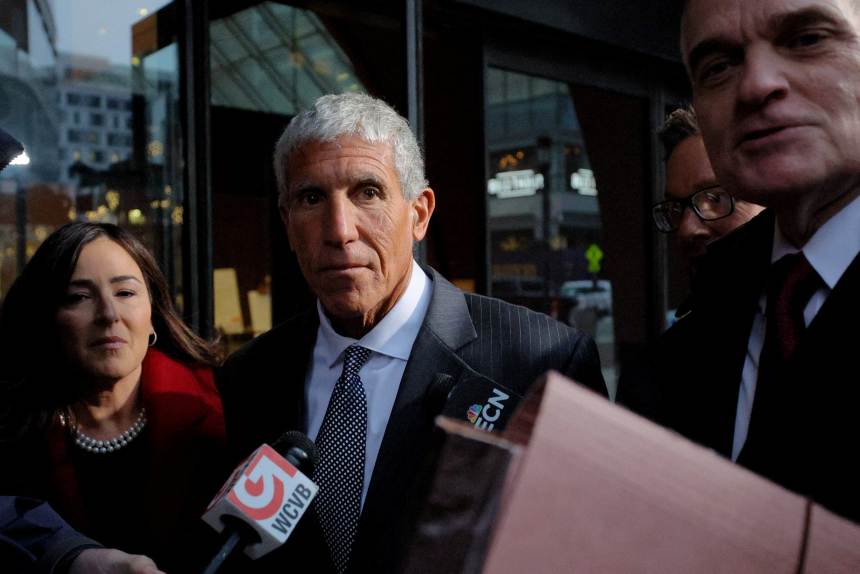
William ‘Rick’ Singer departs after being sentenced at the federal courthouse in Boston.Photo: BRIAN SNYDER/REUTERS
BOSTON—William “Rick” Singer, the mastermind behind a nationwide college-admissions cheating scheme that ensnared top universities, business executives and Hollywood celebrities, was sentenced Wednesday to 42 months in prison.
He will also have to pay nearly $20 million in restitution and forfeitures of ill-gotten gains.
The hearing in U.S. District Court here marked the end to a lengthy drama for Mr. Singer that exposed the ease with which the high-stakes college-admissions process could be corrupted. The scandal, made public in March 2019 after a year-long investigation by the Federal Bureau of Investigation, Internal Revenue Service and federal prosecutors, captivated the country and inspired books and a Netflix documentary. It also raised fundamental questions about who deserves to get into the nation’s most exclusive institutions of higher education.
Mr. Singer, 62 years old, pleaded guilty in 2019 to four felonies, admitting to running a complex operation that arranged for parents to fraudulently boost their teens’ ACT and SAT scores and to bribe college coaches to flag the clients as recruited athletes, all but guaranteeing their admission to schools including Georgetown University and the University of Southern California. Payments were often funneled through Mr. Singer’s sham charity, allowing parents to take tax write-offs for the bribes.
Newsletter Sign-up
The 10-Point.
A personal, guided tour to the best scoops and stories every day in The Wall Street Journal.
Subscribe
Though he was at the head of a conspiracy that prosecutors say brought in $25 million and tainted an admissions process that was intended to be based on merit, Mr. Singer also served as a key cooperator in the federal case. The probe, dubbed Operation Varsity Blues by investigators, started with a tip from an investor involved in a stock-fraud scheme and ultimately led to criminal charges against 57 individuals.
Most of those charged pleaded guilty, with sentences ranging from probation to 2½ years in prison. All but one person who took their cases to trial were found guilty; one parent also was pardoned by former President Donald Trump and one coach entered a deferred prosecution agreement.
SHARE YOUR THOUGHTS
What do you think is a fair punishment for Rick Singer given his role in the college-admissions scandal? Join the conversation below.
Mr. Singer sat in the courtroom Wednesday afternoon, flanked by his two lawyers and staring straight ahead with his shoulders hunched, as Assistant U.S. Attorney Stephen Frank summarized the scheme.
Mr. Frank said that while there were dozens of conspirators, “Without Rick Singer coming up with the scheme, masterminding the scheme, orchestrating the scheme, it would never have happened.”
“I am responsible for my actions and my crimes,” Mr. Singer told U.S. District Judge Rya W. Zobel. “The fraudulent testing scheme, bribing of university officials, lying on students’ applications and profiles, I did all of it.”
Mr. Singer apologized to the students he worked with, saying they were “deserving of more integrity than I showed them,” and expressed regret for tarnishing the reputations of universities, tainting the experiences of families who worked with him legitimately and embarrassing his family and friends.
“Despite my passion to help others, I lost my ethical values and have so much regret. To be frank, I’m ashamed of myself,” Mr. Singer said.
Prosecutors called Mr. Singer’s scheme “staggering in scope” and “breathtaking in its audacity.” They said his cooperation with the investigation was valuable, while also beset with missteps.
In addition to the prison term, Mr. Singer was sentenced to three years of supervised release, and ordered to pay $10.7 million in restitution to the IRS, forfeit more than $5.3 million in assets and pay a $3.4 million forfeiture money judgment.
The delay in sentencing Mr. Singer is partly due to his agreement with the government; cooperators typically aren’t sentenced until after their work with authorities is complete. Mr. Singer’s lawyer also died last year, leading to an additional delay.
Judge Zobel said Wednesday that Mr. Singer needed to face prison time, given how complex and lucrative the scheme was, and how long it went on. Still, she awarded him significant credit for his cooperation.
Prosecutors had asked the judge to sentence Mr. Singer to six years in prison and three years of supervised release. The U.S. Probation Office recommended that Mr. Singer receive a prison sentence of between 6½ years and eight years, one month. Mr. Singer’s legal team had asked that he face punishment of no more than six months in prison.
Prosecutors say Mr. Singer ran the test-cheating scheme on about 30 separate occasions. He encouraged families to have their children tested for learning differences, securing extra time to take college-entrance exams. Enough extra time and they could sit for the tests at locations where Mr. Singer had a proctor either feed answers to the teens or correct their test responses afterward.
For his scheme related to athletics, Mr. Singer exploited the fact that coaches of low-profile sports like sailing and women’s soccer were often poorly paid and under pressure to raise money for their programs.
In addition to Georgetown and USC, he colluded with coaches at Yale University, Stanford University, the University of California, Los Angeles, the University of Texas at Austin and Wake Forest University. He also made inroads with a top athletics administrator at USC, who helped usher applicants down the special admission pathway for athletes, often with doctored photos highlighting their faked athletic prowess.
Mr. Singer began cooperating with federal authorities in September 2018, after he was snagged by the government with help from former Yale soccer coach Rudy Meredith, who admitted to taking bribes directly from a parent and to working with Mr. Singer.
Initially, Mr. Singer tipped off several clients about the investigation, a move that earned him an obstruction of justice charge. Mr. Frank said Wednesday that because of Mr. Singer’s actions, prosecutors couldn’t bring charges against some individuals.
“It was a sobering day in court,” said Candice Fields, a lawyer for Mr. Singer. “He hopes to continue making amends for mistakes of the past.”
Mr. Singer, known for his frenetic energy, fierce competitive streak and tracksuit wardrobe, got his start coaching college basketball, then shifted to college counseling in Sacramento, Calif. By the late 1990s he encouraged some teens to fudge details like their race or extracurricular activities on college applications, and by 2007, he was offering a full menu of unscrupulous services alongside his traditional counseling. He met clients through financial-services firms and word-of-mouth and worked with well-heeled families around the world.
 Professor Elam
Leave a comment