Old steelmaking equipment in Dortmund commemorates the area’s industrial past. Germany’s economy has relied on analog technologies, but that approach is falling behind. Photo: Martin Meissner/Associated Press
BERLIN—A decade ago, Germany was the model nation.
Its economy hadn’t just withstood the ascendance of China; it was thriving in its wake. Its balanced public finances stood out in a world of huge government debt. And while British and U.S. lawmakers were caught up in the culture wars, German politicians continued to practice the art of compromise.
Today, Germany has gone from paragon to pariah. Its economic model is broken, its self-confidence shattered and its political landscape fractured.
Europe’s former growth engine has shrunk for two years in a row, erasing any recovery made since the Covid-19 pandemic. Its manufacturing output is down about 10% over the same period and its companies, squeezed between rising costs and falling exports, are shedding thousands of jobs a month. When voters elect a new parliament on Sunday, the far right is likely to double its seats and a fragmented center could struggle to form a stable government.
Old steelmaking equipment in Dortmund commemorates the area’s industrial past. Germany’s economy has relied on analog technologies, but that approach is falling behind. Photo: Martin Meissner/Associated Press
BERLIN—A decade ago, Germany was the model nation.
Its economy hadn’t just withstood the ascendance of China; it was thriving in its wake. Its balanced public finances stood out in a world of huge government debt. And while British and U.S. lawmakers were caught up in the culture wars, German politicians continued to practice the art of compromise.
Today, Germany has gone from paragon to pariah. Its economic model is broken, its self-confidence shattered and its political landscape fractured.
Europe’s former growth engine has shrunk for two years in a row, erasing any recovery made since the Covid-19 pandemic. Its manufacturing output is down about 10% over the same period and its companies, squeezed between rising costs and falling exports, are shedding thousands of jobs a month. When voters elect a new parliament on Sunday, the far right is likely to double its seats and a fragmented center could struggle to form a stable government.
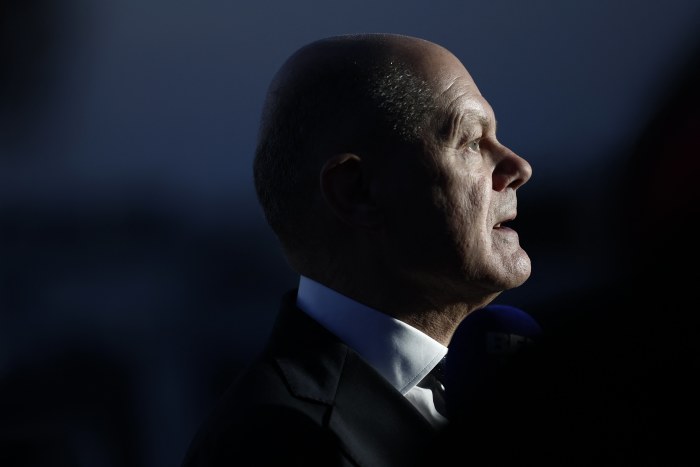
German Chancellor Olaf Scholz. The country faces a political crisis following a yearslong economic slump. Photo: behrouz mehri/Agence France-Presse/Getty Images
There are external causes for this malaise, from the war in Ukraine to U.S. protectionism and China’s economic slowdown.
Yet some analysts, economists and historians think Berlin mismanaged its response. The reason: conservatism—defined not as the political ideology but as the preference for the status quo over change, for reaction over action and for caution over risk.
This is partly the wage of success. As long as Germany’s economy was growing, brushing aside the financial crisis and the eurozone debt crisis, there was no pressure to course-correct, said historian Timothy Garton Ash, author of “Homelands,” a history of Europe in the past 50 years.
“Germany woke up last because they were doing best,” he said. “It’s a critique of the political, business, and, to some extent, intellectual elites because it would have been their role to look ahead and see the coming challenges.”
The creation of an energy crisis
Germany was a pioneer in cutting CO2 emissions. It enacted its first ambitious renewable energy law a quarter of a century ago and aims to become greenhouse-gas-neutral by 2045, earlier than most other nations.
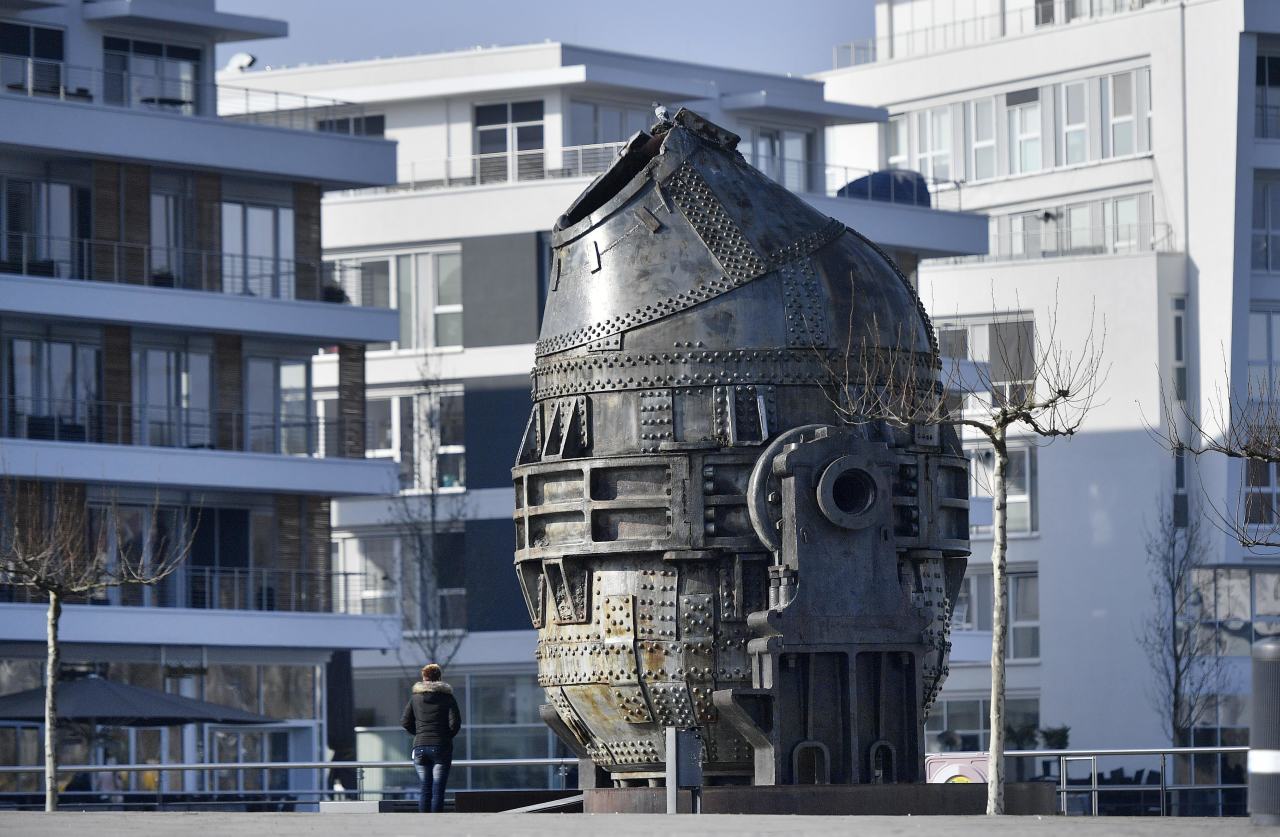
Old steelmaking equipment in Dortmund commemorates the area’s industrial past. Germany’s economy has relied on analog technologies, but that approach is falling behind. Photo: Martin Meissner/Associated Press
BERLIN—A decade ago, Germany was the model nation.
Its economy hadn’t just withstood the ascendance of China; it was thriving in its wake. Its balanced public finances stood out in a world of huge government debt. And while British and U.S. lawmakers were caught up in the culture wars, German politicians continued to practice the art of compromise.
Today, Germany has gone from paragon to pariah. Its economic model is broken, its self-confidence shattered and its political landscape fractured.
Europe’s former growth engine has shrunk for two years in a row, erasing any recovery made since the Covid-19 pandemic. Its manufacturing output is down about 10% over the same period and its companies, squeezed between rising costs and falling exports, are shedding thousands of jobs a month. When voters elect a new parliament on Sunday, the far right is likely to double its seats and a fragmented center could struggle to form a stable government.
German Chancellor Olaf Scholz. The country faces a political crisis following a yearslong economic slump. Photo: behrouz mehri/Agence France-Presse/Getty Images
There are external causes for this malaise, from the war in Ukraine to U.S. protectionism and China’s economic slowdown.
Yet some analysts, economists and historians think Berlin mismanaged its response. The reason: conservatism—defined not as the political ideology but as the preference for the status quo over change, for reaction over action and for caution over risk.
This is partly the wage of success. As long as Germany’s economy was growing, brushing aside the financial crisis and the eurozone debt crisis, there was no pressure to course-correct, said historian Timothy Garton Ash, author of “Homelands,” a history of Europe in the past 50 years.
“Germany woke up last because they were doing best,” he said. “It’s a critique of the political, business, and, to some extent, intellectual elites because it would have been their role to look ahead and see the coming challenges.”
The creation of an energy crisis
Germany was a pioneer in cutting CO2 emissions. It enacted its first ambitious renewable energy law a quarter of a century ago and aims to become greenhouse-gas-neutral by 2045, earlier than most other nations.
Less known is how little success it has had. While emissions were down 60% in 2023 from their 1990 level, according to the government, a sharp drop that year was because of the recession. Today, Germany’s CO2 emissions per capita are above the global and the European Union average, higher than the U.K.’s and France’s and just below China’s, according to Our World in Data. Meanwhile, German households paid the highest electricity prices in the EU in the first half of 2024, according to official EU statistics.
One reason for this mixed record was Chancellor Angela Merkel’s 2011 decision, after the Fukushima nuclear accident, to accelerate a planned phaseout of nuclear energy. It meant Germany needed more fossil fuel, including coal and Russian natural gas, as it ramped up renewables.
The U.S. and European allies warned Germany it was too dependent on Russia. Yet Merkel stayed put in 2014, when Russia annexed Crimea. So did her successor Olaf Scholz when Moscow invaded the rest of Ukraine and began throttling gas deliveries, driving up prices and forcing Berlin to restart idled coal-fired plants.
“The problem with consensus societies is that sometimes the consensus is wrong, and when it is, there is no corrective mechanism,” said Wolfgang Münchau, author of “Kaput—The End of the German Miracle,” published late last year. “It’s the opposite of a whistleblower society.”
After a short extension over the winter months, Germany’s last three nuclear power plants went offline in April 2023, in the middle of an energy crisis that had begun to sink the German economy.
Indecision fuels mass migration
When Merkel let in hundreds of thousands of Middle-Eastern, Central-Asian and African asylum seekers stranded between Greece and Hungary in 2015, many Germans welcomed the move, flocking to train stations to greet the new arrivals.
The biggest influx of people in the history of postwar Germany resulted from a nondecision. As described by Robin Alexander, deputy-editor of the Die Welt newspaper, in his 2017 book “Die Getriebenen,” which translates as “The Driven,” Germany’s borders were already open under the provisions of the Schengen document-free travel area. As the migrants approached, Merkel chose not to close them.
Why? Because of the risk that a closure would be challenged in court and that the border police might have to use force to protect the borders.
 Professor Elam
Leave a comment