Monday 7/21/2025
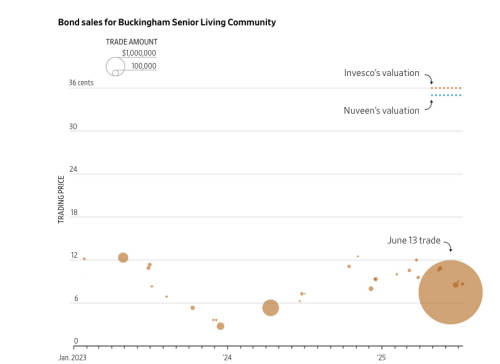
The graph illustrates what Invesco said the bonds were worth, 36 cents, and what they were really worth, less than one third of that, A redemption resulting in a 66% loss wipes out years of dividend gain.
From the article in today's WSJ
When a tiny mutual fund dumped bonds recently, the low prices it got affirmed an alarming reality for investors in risky municipal debt: Many securities turn out to be worth less than shareholders have been told.
Shares of Easterly Asset Management’s high-yield muni fund in early June cost about $6, based on Easterly’s estimated value for each bond in the fund. But many of those bonds hadn’t traded in years. And when Easterly began rapidly selling some last month, buyers weren’t willing to pay nearly the amount fund managers had estimated.
An Easterly spokeswoman said true price discovery is only possible when bonds trade in the market.
Following the sales, the Easterly fund’s share price tumbled to around $3. That is a startling move—even for junk debt—in the relatively staid world of muni bonds, the debt of state and local governments. Investors generally prize munis for their stability and frequently tax-free interest payments. Easterly’s experience left some asking how many more rude awakenings that market will have.
____________________
When I was a broker I sold two million dollars of municipal bond funds from one particular fund family. I noticed the high yield fund was less volatile than the 'regular' fund. The answer I got was the same as now. The high yield fund would investigate a new offering. If it met their standards, they bought the entire thing. This meant it never traded. So the fund reported the value to no doubt at what they paid.
As T bond yields fell to near nothing, March 2020, seniors seeking yield would buy most anything. To goose the yields in a market of falling rates, funds would buy risky bonds like those above or borrow money to buy more bonds increasing the yield but also the risk. The risk is explained above. If the value
falls,in this case 50%, and one owned even more via leverage the potential to lose even more money looms large.
Once this market tops, as Warren Buffet says, when the tide goes out we discover who has been swimming naked.
REITS, ETFs, Junk munis, who knows what is really contained in these? I recall years ago that Bear Stearns was making markets in junk munis, until they weren't. And then are are few to no bids for bonds.
The story above illustrates another danger. Yes the Brooklyn Bridge and the DFW airport were built by muni bond financing. But now the ability to issue munis has been extended to companies not backed by the ability to tax all its citizens. Consider this story from the same article. As said such reductions could wipe out years of dividend re investment.
It also occurs to me that yield hungry seniors no longer have brokers who just might have warned against such risk. Now just hit the computer key and you by pass that bothersome Series 7 broker test and any oversight a a third firm might offer, okay it was never much but….
Once markets top and everyone wants their money back we will discover how good a steward funds like Nuveen and Invesco and Easterly have really been.
________________
A Texas bond from Easterly’s portfolio is a good example. The Buckingham, a luxury senior-living community in Houston, has been struggling financially for years. Since 2023, the bond has been trading—in relatively small quantities—at 12 cents on the dollar or less.
But mutual-fund managers Nuveen and Invesco assigned a significantly higher value to the bond when they last reported their high-yield fund holdings on May 31. The two funds valued it at 35 cents and 36 cents on the dollar, respectively, according to a Journal analysis of Morningstar Direct data. Last month, the bonds’ biggest trade in years—about $11 million—priced it at about 7 cents.
A Nuveen spokeswoman said the firm’s valuation of the Buckingham bond is based on information only available to investors involved in a debt restructuring. Nuveen is known for maximizing recoveries in distressed situations, the spokeswoman said.
Other bonds Nuveen and Invesco had in common with Easterly traded at 20 or more cents lower than where fund managers had valued them. Those managers’ high-yield funds are so big and diversified, though, that any hit to their share price is likely to be imperceptible.
 Professor Elam
Leave a comment