• Professor Elam

  • Professor Elam

    3/25/2025


    Tue, Mar 25 at 9:24 AM
     
     
    image

    Hey Dennis,

    I'm going LIVE at 11:30 AM ET today, for a new trading event where I'll show you how QQQ options have been hitting +100% within hours.

    Tap Here to Register for this Special Live Event

    Here are some details…

    – We Only Trade Options on the QQQ [Nasdaq ETF]
    ( This Laser-Focus Makes Scanning for Signals Quick and Easy )

    – This Strategy Uses 3 Different PercentR and Price Action Patterns
    ( Which Have Resulted in an Average of 8 Trades Per Month )

    – The Profit Target is Set at +100%
    ( Using Weekly Options Allows Us to Leverage Small ETF Moves )

  • Professor Elam

    2/23/2025

    Hello Dr. Elam,


    I know you've helped us spread the word in the past, we'd appreciate if you can you also help us for this year. I'm not sure if any of your students have applied for this year, if you can help us get the word out to students and faculty, we'd appreciate it! The Spring deadline is May 15th. If no eligible students are identified, the funds allocated to our university ($5,000) will be made available to other eligible students at other schools.


    Scholarship requirements:

             File an Application of Intent with the Texas State Board of Public Accountancy to take the CPA Exam as a Texas candidate

             Be a Texas resident

             Be within 30 hours of completing the 150 semester-hour education requirement to take the CPA Exam

             Completed at least 15 hours of upper-level accounting courses

             Become a licensed CPA in Texas


    I have attached the required application for students to complete. And the requirements can be founds here:  https://www.tsbpa.texas.gov/scholarship/applications-student-app-process.html

    1.       Section I – completed by the student

    2.       Section II – completed by the Accounting Department

    3.       Section III – completed by the Office of Financial Aid; please email to scholarships@tamusa.edu


    We appreciate your help in promoting this scholarship opportunity.


    Respectfully,


    Sandy Vargas

    Assistant Director – Office of Student Financial Aid & Scholarships

    Texas A&M University-San Antonio

    One University Way | San Antonio, TX 78224

    Email: svargas@tamusa.edu
    Context | Relator | Analytical | Discipline | Learner

     
  • Professor Elam

    3/7/2025

    Black eye'

    Dennis Elam, a certified public accountant and associate professor in the Accounting and Finance Department at Texas A&M University-San Antonio’s College of Business, said the adverse opinion is a “black eye” for Biglari.


    “Regulatory compliance is expensive, but that is another cost of being a public company,” he said in an email. “That is why firms should employ CPAs who are compliant with continuing education license requirements.”

    Problems that lead to an adverse audit opinion need to be corrected, he said, adding that changing auditors is not the solution and raises red flags. 

    “If communication to the Board of Directors and presumably the (board’s) Audit Committee is impaired, we are in (a situation where) the left hand does not know what the right is doing,” Elam said. “It was the lack of internal control at Enron that allowed them to move debt off the balance sheet.” That made the Houston energy company appear more profitable than it was. It went bankrupt in 2001.

    Biglari Holdings will need to correct the problem by its next audit, Elam said.

    The “Report of Independent Registered Public Accounting Firm” that Deloitte & Touche prepared as part of Biglari Holdings’ annual report is mandated by the Sarbanes-Oxley Act of 2002. The law regulates financial reporting for public companies and followed financial scandals, including at Enron and telecommunications company Worldcom, which went bankrupt in the wake of accounting fraud.


    Oversight

    Audits of public companies are overseen by the Public Company Accounting Oversight Board, a nonprofit that launched in 2002. Its mission is to “improve audit quality to protect investors” and it’s been pressing accounting firms to do a better job.

    In its 2023 inspection of 56 Deloitte & Touche audits, the board found 12, or 21%, were deficient — meaning the firm “had not obtained sufficient appropriate audit evidence to support its opinion(s) on the issuer’s financial statements and/or internal control over financial reporting.”

    Deloitte & Touche fared better than accounting firms as a whole. The board found 46% of the engagements it reviewed had at least one deficiency related to financial statements and/or internal control over financial reporting, though it added the percentage is “leveling off.”

    “Still, overall deficiency rates are unacceptable, and firms must do better,” board Chair Erica Y. Williams said in an August statement. “Now is the time to double down on efforts to improve and deliver the audit quality investors deserve.”


    Elam, the UTSA professor, said the board's oversight could be having an impact.

    “Perhaps we are seeing a more detailed assessment from some auditors as a result,” he said. 

    In their answer to the board’s report, Deloitte officials said the firm has taken actions “to comply with our professional responsibilities.”

    “We are committed to our shared objective to protect investors and further the public interest in the preparation of informative, accurate, and independent audit reports,” the officials said. 
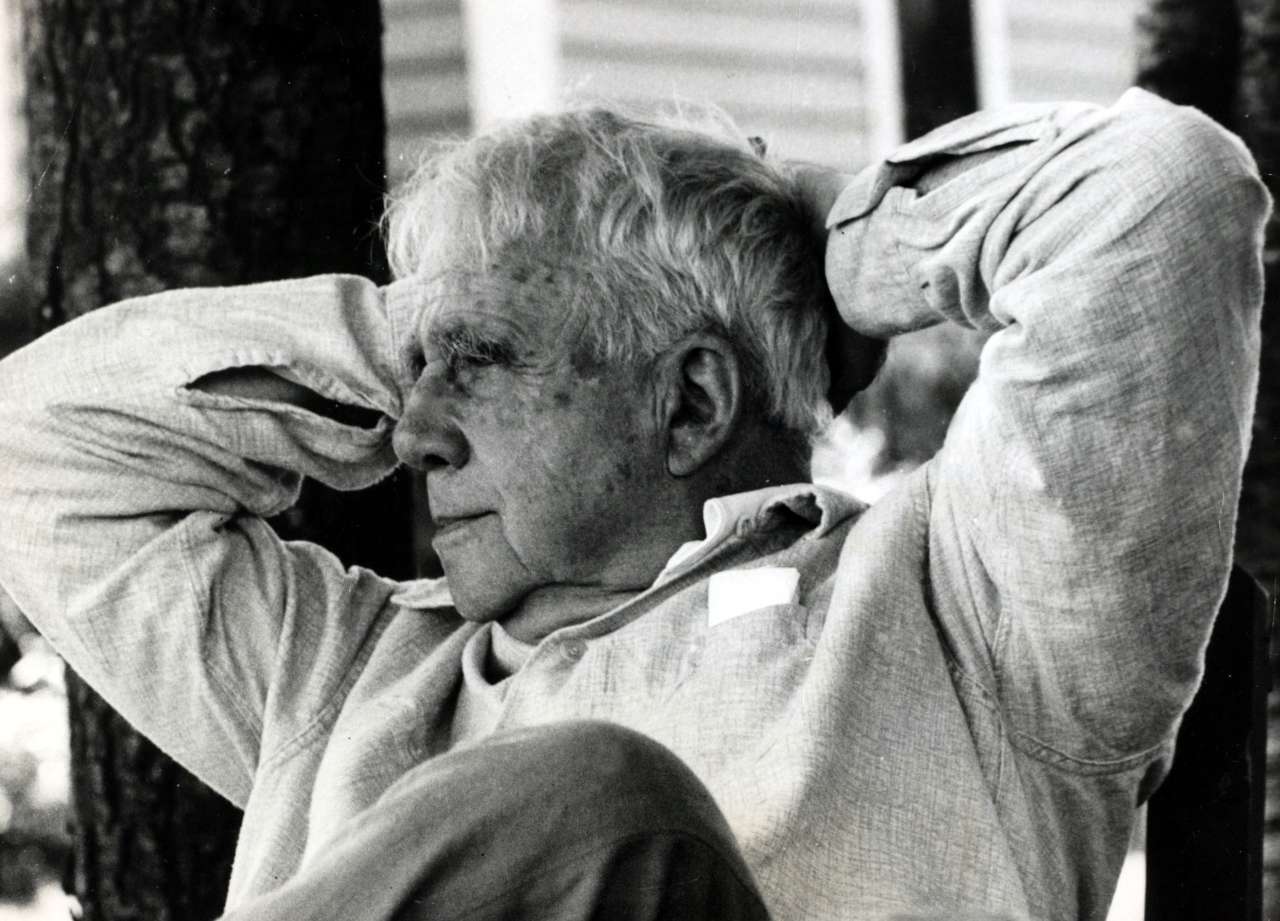


    Photo of Patrick Danner
    Senior Reporter

    Patrick Danner is a business reporter for the San Antonio Express-News. He can be reached at pdanner@express-news.net.


  • Professor Elam

    3/6/2025


    Robert Frost Wasn’t So Frightening

    A fond memory of the poet.


    ET


    image

    Robert Frost Photo: Popperfoto via Getty Images

    I was surprised that, in her review of a new book on Robert Frost, Abigail Deutsch refers to the poet as a “terrifying man” (Books, Feb. 22). That doesn’t track with my own experience.

    In my graduating year, 1954-55, Frost sat down with a handful of students at Yale. My impression of him has been a little diamond in my life ever since. In a gentle, relaxed, congenial tone, with warm eye contact, he said, more or less: “You are all probably taking literature classes in which the professors teach how to get behind authors’ words to determine their deeper meanings. In my case, they teach that the crow shaking snow from a hemlock tree means that evil, black, stands in contrast to the pure white good of the snow around it, like in life. They are wrong. I saw the crow, and the tree, and the snow. It was beautiful. I stopped to enjoy it. Period.”

    Perhaps I was sitting with a terrifying man 70 years ago. If so, I didn’t see him.

    Stephen N. Miller

  • Professor Elam

  • Professor Elam

  • Professor Elam

    3/5/2025

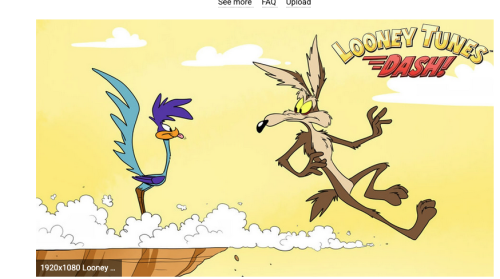
    I think Higher Ed is  about like the coyote and the road runner in this image

    Screenshot 2025-03-05 at 3.47.32 PM

    Jason Riley in the WSJ has this summation.

    A social-media post last month from the Trump administration triggered fainting spells throughout the academy. The National Institutes of Health, which funds biomedical research, announced that it is reducing the amount of money the government pays grant recipients for overhead costs.

    According to NIH, $9 billion of the $35 billion that it granted for research last year “was used for administrative overhead, what is known as ‘indirect costs.’ ” A school that receives a grant typically gets an additional 50% of its modified total direct costs (which includes salaries, materials and supplies, services, travel and some subcontract payments) to cover these administrative expenses. At prestige schools such as Harvard, the overhead payments—for the use of buildings, electricity, support staff, etc.—can run as high as 70%. The Trump administration wants to cap this figure at 15%, which it estimates will save taxpayers more than $4 billion annually.

    The labor economist Richard Vedder thinks this is exactly the shock to the system that higher education needs. “Of course the universities with heavy research grants are going crazy over this,” he told me. “But if you talk to anyone at a university, you know that those overhead costs are vastly inflated compared with the true marginal cost, or extra cost, to the university doing the research.” He added that many schools collect so much overhead money that they give some of it back to researchers as an incentive to apply for more research grants. “It’s kind of a con game, all based on false assumptions and faulty economics,” Mr. Vedder says. A nonnegotiable uniform rate would be far more efficient.

    In a forthcoming book, “Let Colleges Fail: The Power of Creative Destruction in Higher Education,” Mr. Vedder argues that one of the biggest problems with higher ed today is that colleges aren’t sufficiently disciplined by market forces. The result is too much administrative bloat subsidized by the government. His subtitle is a reference to the free-market economist Joseph Schumpeter (1883-1950), who described capitalism as a process of “creative destruction” whereby markets reallocate resources from unproductive to productive uses. “It’s worked pretty well for American business,” Mr. Vedder said. “Why don’t we have it for higher ed?”

    One problem, the book explains, is that universities are essentially wards of the state. “Colleges and universities are dominated by people operating outside of the normal profit-oriented private market economy,” Mr. Vedder writes. By his calculations, the productivity of university employees over the past 50 years has declined not only in comparison with the average U.S. worker but also in absolute terms. It took more faculty and staff to educate a college student in 2021 than it did in 1972.

    The reality is that there are inefficiencies almost everywhere you look in higher ed. Start with our overly generous student-loan programs, which have caused tuition to rise faster than inflation because colleges know that the government is absorbing most of the cost. Far more people attend college today than stand to benefit from the experience, judging from the roughly 40% who don’t graduate and the fact that so many people who do get a degree wind up in jobs that don’t require one.

    Meanwhile, college access for the poor—the intended beneficiaries of student loans—has barely budged over the decades. Mr. Vedder reports that the percentage of graduates who come from the bottom 25% of the income distribution is similar to what it was in 1970. If colleges want to accept students regardless of their chances of success, give schools “skin in the game,” he writes. Force colleges “to share in the costs of loan forfeiture if they accept a lot of mediocre students who drop out or fail to repay their student loans.”

    You don’t need to be an expert in the economics of higher education to understand that academia is in decline. In a 2023 poll conducted by the National Opinion Research Center and The Wall Street Journal, 56% of respondents said that college was “not worth the cost because people often graduate without specific job skills and with a large amount of debt to pay off.” Worse, people who have most recently experienced college, those 18 to 34, are less likely than older cohorts to say the cost of college was worth it.

    “If higher education can somehow change its ways and better emulate the market-oriented private economy,” Mr. Vedder writes, “it would improve some of the maladies facing it”—rising costs, falling enrollment, low public support—“and possibly even deal with what I now view as the greatest problem: a shocking decline in intellectual diversity and a worsening environment conducive to free expression and civil debate.”


  • Professor Elam

    3/5/2025

    Experienced Client Liaison @ Guerra LLP | Trial Attorneys

    San Antonio, Texas, United States


    About

    With over 25 years of public service and legal experience, I am a Client Liaison at Guerra LLP, a national premier law firm that specializes in complex litigation. In this role as a Client Liaison, I use my analytical skills, extensive customer relationship management (CRM) expertise, and customer-focused service to help support the firm's clients and attorneys in various cases, such as mass torts, personal injury, and commercial disputes. I also leverage my background as a former Texas state Senator and a U.S. Marine officer to bring diverse perspectives and experiences to the team, and to align with the firm's mission of providing justice and advocacy for the injured and the wronged. My goal is to continue to learn from and contribute to the firm's culture of excellence, integrity, and compassion, and to help Mr. Guerra and this amazing firm achi

  • Professor Elam