• Professor Elam

    2/21/2025 WSJ

    ith a list price of $3.7 million, Ferrari’s new “hypercar” was revealed to the public in October with a twist: It wasn’t available for sale.

    All 799 units of the low-slung, high-haunched F80 model—the most expensive production vehicle in Ferrari’s history—had been promised to top customers like Luc Poirier.

    The Montreal real estate entrepreneur already owns 42 Ferraris. He said he felt “lucky” to be allowed to buy yet another.

    “To be chosen by Ferrari for one of their hypercars is a true milestone for any collector,” he said.

    Money isn’t enough to buy a top-of-the-range Ferrari. You need to be in a long-term relationship with the company.

    By leveraging the rabid fandom of its customers through a business model based on uber-scarcity, the storied Italian company is enjoying a new golden age. Following an almost tenfold increase in the stock since its initial public offering almost a decade ago, Ferrari is now worth $90 billion, making it the most valuable car company in Europe—despite delivering just 13,752 vehicles last year. 

    Volkswagen, which sold more than 9 million cars last year, has a market capitalization that is roughly $40 billion lower. Most of Europe’s auto industry is plagued by a weak domestic market, a costly transition to electric vehicles and new competition from China.

    ike Tesla, which became the most valuable U.S. carmaker by attracting a tech-company valuation, Ferrari has won the European prize by channeling similarities with a more reliable peer group: French handbag makers.

    “We are not—we are not—an automotive company,” said Chief Executive Officer Benedetto Vigna in a recent interview in Maranello, the city in northern Italy where Ferrari is based. “We are a luxury company that is also doing cars.”

    ______________________


    IN Mark McCormack's What They don't Teach You at Harvard Business School, he was having lunch with the CEO of Rolex Ejurope. A friend wandered to their table and inquired, how is the watch business?  The Rolex CEO replied, I have no idea!  Cearly like Ferrari which is no tselling cars, Rolex is not selling watches.

    _________________________

    At the time of Ferrari’s IPO, in 2015, many analysts were skeptical that a luxury business model would work for a carmaker.

    Former CEO Sergio Marchionne used to draw comparisons with Hermès—a parallel now widely accepted. The French fashion house limits supply of its coveted Birkin handbag, leading to waiting lists at its stores and a huge resale market. Customers buy all manner of other Hermès baubles to move up the list.

    Ferrari’s blossoming into a luxury leader has restored the fortunes of founder Enzo Ferrari’s son, Piero Ferrari, and Italy’s Agnelli family, which took control of the company decades ago through its Fiat brand. In the IPO, both families retained stakes that are now worth billions of dollars.

    Another group that has profited from its Ferrari investments: savvy collectors. Most cars are famously depreciating assets—including most standard Ferraris. But the value of rare Ferraris has soared in recent years.

    A well-preserved example of the previous-generation Ferrari hypercar, dubbed LaFerrari, fetches $3.8 million, according to Hagerty, a specialist auto insurer based in Traverse City, Mich. When the model was released in 2013, in a production run of 499 units, the list price before options was $1.4 million.

    LaFerrari was the company’s first roadworthy hybrid, combining a 12-cylinder “V12” engine with an electric motor to deliver what was then Ferrari’s most powerful production car. The F80 builds on that hybrid tradition, which originated on the Formula One racetrack more than 15 years ago, to deliver even more horsepower—1,200, five or six times that of your average family car—through an eight-speed, twin-clutch automatic transmission. With big butterfly doors and a tiny cockpit, the F80 wears its racing heart on its sleeve.

    Last spring, a Houston real-estate broker bought one of Ferrari’s much-hyped Purosangue models, the company’s first four-door vehicle. The list price is close to $460,000 but can approach $1 million with add-on features. When the broker flipped it, the dealership that had sold him the car sued, saying that he was in breach of a contract giving it right of first refusal for 12 months after the sale, according to the plaintiff’s petition. They recently settled without disclosing terms.

    Playing Ferrari’s game

    Anyone with a few hundred thousand dollars to spare can buy a regular Ferrari as long as they are willing to wait a couple of years. While the standard models aren’t subject to strictly limited runs, the company still lives by Enzo Ferrari’s scarcity dictum: “Ferrari will always deliver one car less than the market demands.”

    Limited-edition Ferraris are even scarcer, and you can’t just walk into your local showroom and buy one. These range from special versions of regular models to the design-oriented “Icona” and, most exclusively, once-in-a-decade hypercars like LaFerrari and the F80.

    Such models help keep orders flowing for the company’s entire product range even though they account for a fraction of deliveries—just 7% last year. Collectors had on average bought 10 new Ferraris before qualifying to buy LaFerrari or an Icona, which means icon in Italian, according to Hagerty.
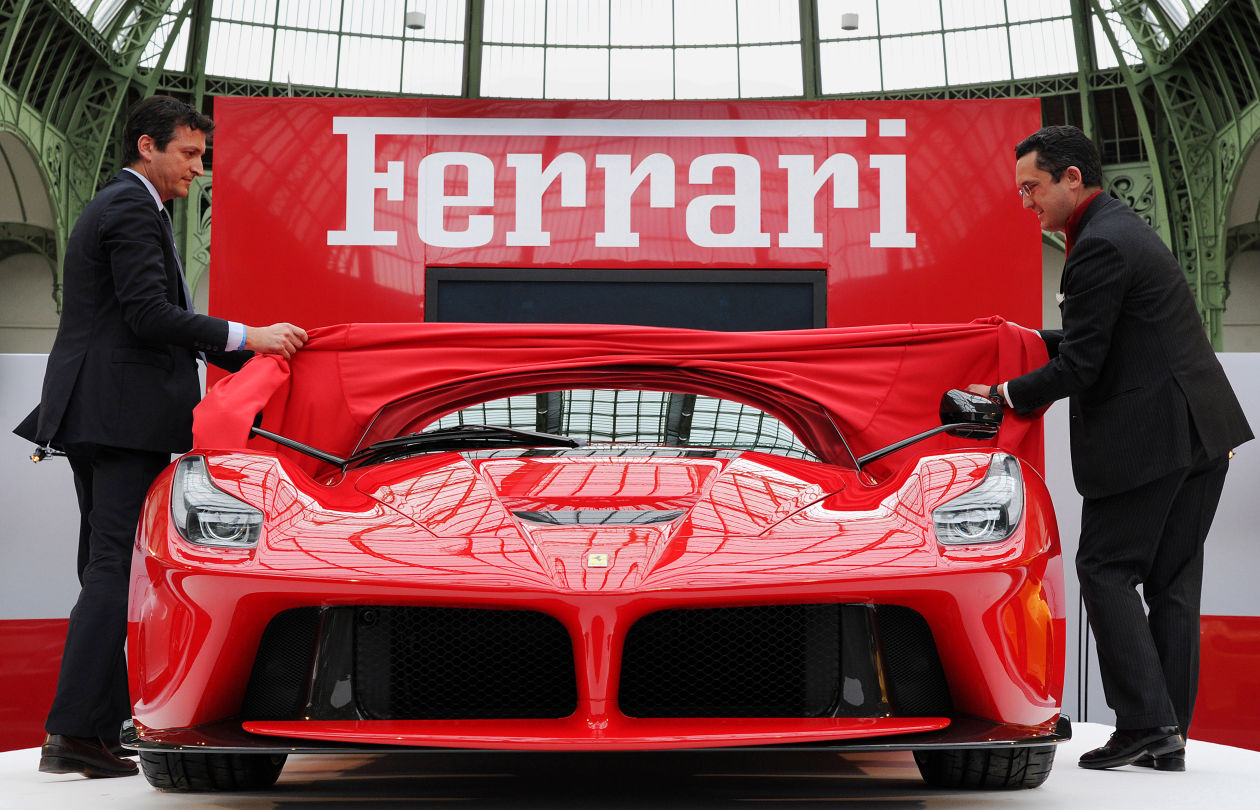
    Ferrari shows off LaFerrari , its first road-worthy hybrid, in 2013 in Paris.

    Ferrari says that making the cut isn’t just about the number of cars in the garage of a “Ferrarista,” as it calls its fans.

    “What we try to measure is: What is your interaction with Ferrari?” said Enrico Galliera, the company’s longtime commercial director.

    The process of establishing a formal—albeit secret—hierarchy of clients started when Ferrari set about selling LaFerrari more than a decade ago.

    Previously, dealers could choose which clients got which cars, a system that could be abused to reward friends and family. Galliera centralized control in Maranello.

    He also noticed that some collectors who hadn’t bought a car recently were on the potential list. That led to the company’s first rule: To get a LaFerrari, customers needed to have bought a Ferrari within the past three years, as well as own a certain number of vehicles.

    Since then, the algorithm has grown more sophisticated, Galliera said, to include the events customers attend, whether they take part in Ferrari’s racing program, whether they have had heritage models restored in its classic-car workshop, and many other variables.

    “We track everything,” he said.

    ome of the company’s erstwhile fans have tired of playing the game. 

    Jan Otto, who bought his first Ferrari in the 1980s after receiving an inheritance, got frustrated when he failed to “get on the ladder” for the Ferrari Enzo, the hypercar that preceded LaFerrari. The retired entrepreneur, who set up a business in Florida offering supercar test drives, no longer owns the brand.

    “Even though I had bought five or six Ferraris and several marquee Ferraris over the decades, I couldn’t find a dealer that was willing to sell me one,” he said. “I hadn’t quite been as vigilant with my purchases or as aggressive as others.”

    thers are happy to cycle through standard models to keep the invitations coming.

    Roberto de Silvestri, a collector based in Monaco, said he buys standard Ferraris to drive around the famous switchbacks above his home. He typically then trades them for the company’s more exclusive models to keep—and drive mainly at events like the invitation-only Cavalcade, an annual drive around a scenic part of Europe.

    “If it’s a limited edition, of course you have to use it,” he said, “but more carefully.”

    Other car brands, particularly those with racing heritages like McLaren, Bugatti and Lamborghini, also create limited-edition models for collectors that come with six- and seven-figure price tags. But those brands haven’t matched the scale of Ferrari’s success at turning a cult following into profit and market value.

    When Porsche launched its IPO in 2022, it leaned heavily into comparisons with Ferrari, but the stock has fallen by almost a third since its debut amid challenges in China and a botched electric-vehicle strategy. With 310,718 cars shipped last year, the German sports car maker is too big to keep Ferrari-style wait lists except for a few models.

    At the other extreme, smaller supercar brands struggle to deliver as steady a stream of new vehicles as Ferrari, leading to cash crunches. Aston Martin’s shares have lost more than 95% of their value since its 2018 IPO. Bahrain’s sovereign-wealth fund took full control of McLaren last year after a period of heavy losses.

    Ferrari’s luxury-sector aspirations face challenges, too. Unlike a maker of timeless handbags, the company has to outdo itself with each new vehicle to please its fans and keep orders flowing.

    tougher luxury market over the past year may have made that harder. Some secondhand Ferraris have fetched bigger discounts than usual following aggressive price increases under Vigna, putting investors on guard.

    Yet the stock has revved back to record highs since the company reported results this month. One crucial detail Ferrari disclosed: The order book now covers production through the end of 2026.

    To keep its all-important wait list topped up, Ferrari and its dealers work hard to attract buyers for the regular cars even as they bat away interest in ultraexpensive ones.

    A favored tactic of James Champion, Ferrari brand manager for H.R. Owen, the carmaker’s London dealership, is asking existing Ferraristi to bring friends or business contacts to events.

    “The whole Ferrari ethos,” he said, “is around community and being part of the Ferrari family.”

    Write to Stephen Wilmot at stephen.wilmot@wsj.com

  • Professor Elam

    2/19/2025

    Trevor Milton n 2022 now out of cash

    Yet another favored EV takes BK. An EV seems particularly odd for a heavy weight truck given the added weight of the batteries.

  • Professor Elam

    Wed 2/19/2025

    Hello Professor,

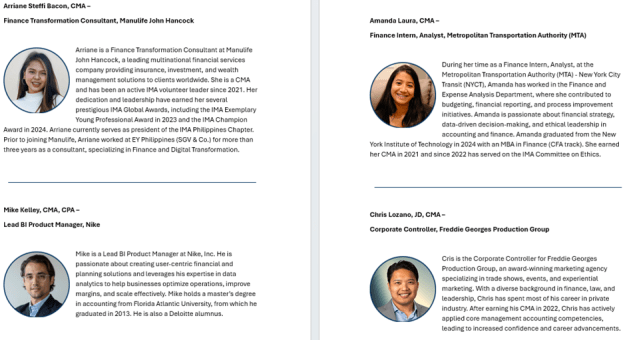
    The IMA Student Series panel is back! IMA is hosting a virtual panel discussion webinar on March 5th at 7pm EST/6pm Central. During this event, students will have the chance to hear from a diverse group of professionals as they share their experiences and insights on the latest trends and developments in finance and accounting. This semester’s panelists are from Nike, Manulife John Hancock, Freddie George Production Group, Metropolitan Transportation Authority. Not only will you gain valuable insights into these fields, but will also have the opportunity to ask questions and network with the panelists. This is a great opportunity for you to enhance your understanding of the industry, learn from the professionals, and make valuable connections that can help advance your career.

    This webinar is open to all students. We will also be recording this webinar for those who cannot attend live. Please register for the webinar to get the recording.

    Registration Link: Register Here

    Or use think link: https://imanet-org.zoom.us/meeting/register/-EBTQgmoRnqW0knJajV9Bw#/registration

    A close-up of a document
AI-generated content may be incorrect.

  • Professor Elam

  • Professor Elam

    Monday 2/17/2025

    Alyssa FInley Life science WSJ

    Remember being told that Joe Biden’s verbal slips were signs of normal aging? That rising crime was a figment of the public’s imagination, and chaos at the border was fabricated by MAGA Republicans?

    Now the same tribunes of truth in the press proclaim that government fraud is a mirage—a pretext for Elon Musk’s Department of Government Efficiency to bulldoze vital programs. Mr. Musk “offered no evidence for his sweeping claims” that officials “had approved money for ‘fraudsters,’ ” the New York Times reported on Feb. 11.

    Who are you going to believe? Reporters at the New York Times or other reporters at the New York Times?

    On Friday the Times reported that a Nevada woman pleaded guilty to filing more than 1,200 tax returns “to fraudulently claim Covid-19 tax credits of nearly $100 million.” She allegedly “used the money to gamble at casinos, take vacations and buy luxury cars” and purchase “designer clothing from Dolce & Gabbana, Gucci and Louis Vuitton.”

    “Government investigators have struggled to keep up with pandemic-related fraud, focusing their efforts and limited resources on large, multimillion-dollar cases,” the story noted, pointing to an estimate by the Small Business Administration’s inspector general that “more than $200 billion—or at least 17 percent of the pandemic loans that the agency distributed—was awarded to ‘potentially fraudulent actors.’ ”

    After the White House pushed back against the Times’s Feb. 11 no-fraud dispatch, Washington’s press corps circled the wagons. Washington Post reporter Aaron Blake wrote an “analysis” trying to debunk Mr. Musk’s fraud claims: “They keep saying they’ve uncovered fraud. But when pressed for evidence, they don’t seem to have much or any.” Perhaps because Mr. Musk could be sued for defamation if he publicly announced specific findings of fraud before they have been investigated and charged.

    Mr. Blake dismissed a 2024 Government Accountability Office report that projected $233 billion to $521 billion in federal fraud each year, which he claimed “is just a modeled estimate, not firm evidence.” GAO based its estimate on fraud that had been uncovered. Most isn’t, which is why the auditor recommended ways for the government to prevent and identify fraud—which DOGE is trying to implement.

    In any case, Democrats love to cite models that support their political narrative—for instance, the Biden IRS’s estimate that $1 trillion in taxes are being unpaid each year, which were used to justify giving the agency an additional $80 billion to hire more agents. The liberal press didn’t question the IRS’s very questionable model.

    Mr. Blake also lectures that most examples of government waste and abuse that the Trump administration cites—e.g., $2 million for sex changes and “LGBT activism” in Guatemala—doesn’t meet the legal definition of fraud. True. Fraud requires a showing of bad intent by the perpetrator and financial harm to the government. Such legal nuance, however, didn’t stop Mr. Blake and others in the liberal press from cheerleading Jack Smith’s dubious Jan. 6 prosecution of Donald Trump for allegedly conspiring to defraud the government with his stolen-election claims.

    Mr. Blake is right on one point: There is far more government waste and abuse than fraud. Take the Federal Emergency Management Agency’s reimbursing New York City to the tune of $377 a day ($137,605 a year) for sheltering asylum seekers, many in posh hotels. That’s twice as much as the average U.S. household spends in a year.

    The Associated Press, however, assures readers that hotels aren’t being paid “luxury rates,” which at “five-star hotels in Manhattan for this coming weekend run from $400 a night to well over $1,000.” What a relief.

    Until now, attacking government waste, fraud and abuse was a bipartisan cause championed by the press. The Post last summer took credit for exposing a massive Medicare fraud scheme.

    Oregon Sen. Ron Wyden introduced a bill called the Insurance Fraud Accountability Act to crack down on insurance brokers who have gamed ObamaCare subsidies to the tune of tens of billions of dollars a year. Only last month Elizabeth Warren could be heard howling about the “fraud-ridden” pandemic employee retention tax credit—the one exploited by the Nevada woman.

    Wouldn’t it be wonderful if the government implemented controls to stop fraud before it happens? This is what DOGE is trying to do. But instead of applauding DOGE’s efforts, the media spin-masters are gaslighting the public. By dismissing and playing down what Americans can see with their own eyes, the press is giving Americans more reason to distrust it.

    Americans may logically conclude: If the media says there’s no evidence of government fraud despite abundant evidence to the contrary, might the same be the case with denials of election fraud? Mr. Trump was re-elected in no small part owing to a vacuum of public trust created by a partisan press, which still hasn’t learned its lesson.

    Advertisement

  • Professor Elam

  • Professor Elam

  • Professor Elam

  • Professor Elam

  • Professor Elam

    Tag Heuer slogan

    .


    Success It's a mind game


    What are you made of?


    Don't Crack Under Pressure