• Professor Elam

    Weekend January 19 2019

    We will have presentations at 5 30 in the Ceremony Room of Patriots Casa January 29 and  30  The plan is to let accounting classes out at that time so all can attend.

    Tuesday January 29

    Bob Herbst  with FHK CPAs will present. Hopefully Justin Mire a TAMUSA  graduate will join him.

    https://www.fhkcpa.com/index


    Screen Shot 2019-01-19 at 11.28.33 AMWednesday January 30

    A representative from Sol Schwartz CPA will present. Our own Cynthia Ruiz won a Schwartz  scholarship and is interning there now.  See my post about applying for the scholarship which is now  $5,000.

    Integrity. Reliability. Excellence.


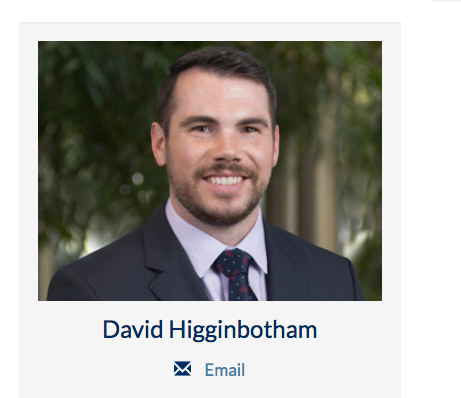
    Dvid Higginbotham will be speaking that evening.

    Screen Shot 2019-01-19 at 11.34.17 AMI expect Amanda Talaat from SA CPA Society will also be present. Expect good information on the importance of obtaining a CPA designation for your career. In addition advantages of student membership  in SA CPA Society will be demonstrated.

    Learn More about SA CPA Society

    https://sacpasociety.com/

    Texas Society of CPAs

    https://www.tscpa.org/


  • Professor Elam

    Thursday January 17, 2019


    Hello :


    In 2005, we established the Sol Schwartz & Associates, P.C. Accounting Scholarship Award to commemorate the 25th anniversary of our firm. Each year since then, we have been presenting an annual scholarship of $2,500 to an outstanding accounting student in San Antonio. In 2016, we increased our scholarship to $5,000.  We are constantly striving to make our scholarship program more accessible to students to use for their education, which is why we have changed the time frame of our scholarship for 2019. 


    We would appreciate your assistance in promoting our scholarship.  I have attached an application form for you to distribute or you can download a copy of the application form by visiting our website under Careers/Scholarship/Download the 2019 Scholarship applicationThe deadline for applying is Monday, April 15, 2019, finalist interviews will be conducted in late April 2019, the winner notified in May 2019 and the check presentation in early August 2019.  Students should mail the application and proof of current registration to:


                                                              Sol Schwartz & Associates, P.C.

                                                              Attn:  Tracey Cifone – Director of Marketing

                                                              8000 IH-10 West, Suite 1100

                                                              San Antonio, Texas  78230


    Please feel free to contact me at 210.384.8000 Ext. 129 should you have any questions.


    Tracey Cifone
    Director of Marketing


    8000 IH-10 West, Suite 1100 | San Antonio, TX 78230
    main 210.384.8000 
    | fax 210.384.8011

    website | map | email | send me a file securely


  • Professor Elam

  • Professor Elam

    Monday January 14, 2019

    Here are three excellent on line accounting tutorials


    Accounting  Coach

    https://www.accountingcoach.com


    Edspira Kahn Academy

    https://www.youtube.com/results?search_query=edspira+accounting+videos


    Professor Farhat

    https://www.youtube.com/results?search_query=professor+farhat+page

  • Professor Elam

    Friday Jan 11 2019


    Will Negative Social Mood Oust Trump? Watch the Stock Market

    By Elliott Wave International


    Special Q&A With Alan Hall on Elections and Impeachment

    At the end of this article you'll have the opportunity to hear Alan discuss his impeachment research with ETV Correspondent Dana Weeks.

    You cannot afford to miss Alan's insightful political analysis. Please login to view the interview after reading the article.


    Those who want President Trump to stay in office should hope the stock market rises, and those who want him ousted should hope it crashes.

    Why? History shows that the stock market is a useful indicator of people's attitudes toward the president. Socionomic theory proposes that society's overall mood regulates both stock prices and the public's perceptions of its leaders. Positive social mood makes society feel optimistic, bid up stock prices and credit leaders for their good feelings. Negative social mood makes society feel pessimistic, sell stocks and blame leaders for their bad feelings.

    These tendencies are evident in presidential re-election outcomes. Presidents Hoover and Carter, for example, lost bids for re-election during trends toward negative social mood as reflected by declining stock prices. In fact, the stock market is a better re-election indicator than inflation, unemployment and GDP growth combined, as my colleagues at the Socionomics Institute demonstrated in a 2012 paper.

    Social mood's influence is also evident in the results of U.S. presidential impeachments and near-impeachments. Twice in history the U.S. House of Representatives has voted to impeach a president. In both cases social mood was trending positively, as reflected by rising stock prices, and in both cases the Senate voted for acquittal.

    Fig 1

    Figure 1

    Figure 1 illustrates the timing of the first presidential impeachment. On March 2, 1868, the House of Representatives formally agreed to eleven articles of impeachment against President Andrew Johnson. The Senate took three separate votes, and each fell one vote short of the two-thirds majority necessary to remove Johnson from office. The Senate acquitted Johnson on May 26, 1868, during a stock rally that added to the 250% increase since October 1857.

    Fig 2

    Figure 2

    Figure 2 shows that a substantial trend toward positive social mood preceded President Bill Clinton's impeachment in the House and subsequent acquittal in the Senate. Note that some of the most serious events in the Monica Lewinsky scandal coincided with the largest downturn in the Dow during Clinton's presidency. Yet, as the Dow recovered, so did Clinton's approval ratings. And despite a $70-million prosecution of Clinton's related perjury and obstruction of justice charges, the Senate acquitted the president as positive social mood lifted the Dow, Dow/gold and Dow/PPI to important peaks.

    Fig 3

    Figure 3

    President Richard Nixon's near-impeachment and resignation from office serves as a textbook case of how social mood influences the fortunes of public figures. Figure 3 shows the Dow Jones Industrial Average surrounding his time in office. The soon-to-be infamous Watergate break-in occurred toward the end of a strong 67% rally in the Dow from May 1970-January 1973. That trend toward positive mood helped Nixon win re-election in a landslide. But as mood trended toward the negative, the public's view of its leader darkened, its appetite for scandal increased, the investigation accelerated, and Nixon's fortunes changed. With almost certain impeachment looming, Nixon became the first president to resign from office on August 9, 1974.

    Fig 4

    Figure 4

    What does this history tell us about the probability that President Trump will serve a full term in office? We considered this question in the June 2017 issue of The Socionomist. Figure 4 is a chart from that issue, updated to the present. It depicts the trend of social mood as reflected by the Dow. We left the gray arrows showing our 2017 analysis in place, and we added red arrows to indicate the possibilities going forward. In July 2017, Congressman Brad Sherman formally introduced an article of impeachment against the president in the House of Representatives. Yet as the market rose during 2017, President Trump–despite low approval ratings, tremendous staff turnover, unrelenting criticism from the political left and numerous indictments and charges of Trump associates in the ongoing Mueller investigation–did not face an impeachment vote. After the stock market peaked on January 26, 2018, however, the tone changed, and even some on the political right became more critical of the president.

    Since the October 3 stock market peak, disapproval of the president has grown steadily louder and more strident. At the same time, the Mueller investigation has implicated more and more of the president's inner circle in illegal activities. The Democrats won control of the House in the 2018 midterms. A November 26 Gallup poll revealed Trump's disapproval rating had hit an all-time high. On December 10, Fox News's senior judicial analyst Andrew Napolitano said Trump could be charged with "three separate crimes and could be indicted while serving as president." By December 17, the Mueller investigation had issued more than 100 criminal counts and charged 34 people, 10 of whom have been found guilty. That same day, Wired published its list of "All 17 (Known) Trump and Russia Investigations" and said, "it's increasingly clear that, as 2018 winds down, Donald Trump faces a legal assault unlike anything previously seen by any president."

    In the weeks since, the Trump Foundation agreed to dissolve, and Secretary of Defense James Mattis and diplomat Brett McGurk have resigned. On December 24, Time reported, "National Christmas Tree to Stay Dark During Holiday Due to Government Shutdown," and several news organizations ran stories with versions of The Atlantic's headline, "President Trump's Nightmare Before Christmas," as the stock market plunged. Of course, stalwart supporters of the president remain. Yet the number of oppositional voices is rising. A December 19 NBC News/Wall Street Journal poll found that 41% of Americans favor impeachment hearings.

    We don't know what the Mueller investigation will ultimately reveal, but for Trump, the facts may not matter as much as the social mood. Fasten your seatbelt and keep your eyes on stock market indexes, our best reflection of the trend of social mood.

    Q & A With Alan Hall on Elections and Impeachment

    You've read his essay, now hear from Alan Hall himself — including how he connects the dots from election research to impeachment, plus how he hopes to "get thru" to people whose minds are already made up.

    Don't have an EWI Login? No worries! Join Club EWI, our free Elliott wave educational community, and gain free access to this resource plus a full catalog of other valuable lessons. Plus, we'll keep you updated with new resources, exclusive invitations, and deals.

    This article was syndicated by Elliott Wave International and was originally published under the headline Will Negative Social Mood Oust Trump? Watch the Stock Market. EWI is the world's largest market forecasting firm. Its staff of full-time analysts led by Chartered Market Technician Robert Prechter provides 24-hour-a-day market analysis to institutional and private investors around the world.

     

  • Professor Elam

    Friday January 11, 2019


    This week I interviewed Lawrence Coffee and Mike Lovelace at the Aventine Hill office in San Antonio both of whom introduced Power BI – an impactful tool to visualize the metrics that drive your organizations strategic objectives. Lawrence is the Senior Manger of Business Intelligence (BI) and Mike, as a CFO advisor provides executive advisory services for needs surrounding the Chief Financial Officer position.


    Where does your organization fall in the BI and Data Analytics maturity progression? In our interview, this maturity progression was likened by Mike to the human process of crawl, stagger, walk, and finally run. In the beginning your organization is focused on what happened and why did it happen. According to Lawrence, these are forms of descriptive and diagnostic analytics, though commonly known as BI. As organizations mature – they will start focusing on what will happen, which is Predictive analytics, though frequently referred to as Advanced Analytics or Data Analytics. Further along in the maturity cycle organizations begin to focus on ways to make it happen, which is known as Prescriptive analytics, or AI.


    Power BI is a Microsoft product, which was originally bundled with SQL Server 2012 as a more advanced BI visualization tool for SQL Server data. In 2013 it was launched as an Excel add-on in September 2013. In July 2015 a stand-alone product ‘Power BI’ was launched by Microsoft – built off the prior Excel add-ons Power Query, Power Pivot and Power view. The tool is powerful data visualizations platform for all your organizations metrics. This product enables you to create interactive dashboards, reports and alerting capabilities, which can be consumed on any device (Desktop, tablets and mobile phones). You can ‘Slice’ data to filter the view of your report. This and other interactive features provides real-time monitoring capabilities of your organizations performance to get ahead of issues and/ or your competition. Spot trends on the fly and identify issues or opportunities before impact.

    Both mentioned the Gartner magic quadrant report, which reminded me of Kaplan's Balanced Scorecard. The Balanced Scorecard shows four dimensions of firm success in different areas. Likewise, the Gartner quadrant shows multiple measures on the same page. The three current magic quadrant leaders for Business Intelligence tools are Tableau, Power BI and Qlikview. Amazingly, though Power BI was just launched in 2015, according to research by Robert Walters it enjoys a 51% share of the market as compared to Tableau’s 20% and Qlikview’s 14%. Oracle and SAP have in house products performing similar functions and have a combined 15% share.


    Given any data set one might then say that Power BI allows one to extract, transform, and then load (ETL) your data into a more automated manner, which allows you to keep your data refreshed on a cadence you need to get the data when and where you need it. 

    In summary, Power BI displays Key Performance Indicators (KPI) in ways not easily possible prior to this software. This is important, as accountants seek ways to better turn data into information for their audience. Of note, the price of Power BI is markedly lower as compared to the older BI platforms is competes with.

    Lawrence and Mike joined me in this audio summary of our discussion.

    Power BI is all about data visualization. It produces dashboards and metrics  by translating data into easy to understand information.

    Screen Shot 2019-01-11 at 11.46.05 AM


    190109_0057S12


    Extra Bonus


    Check out this article by Lawrence on Creating a Dashboard in Power Point


  • Professor Elam

    Thursday January 10, 2019


    190108_0056S12


    In this interview we visit with Mark Goldman CEO of MGR Accounting Recruiters.  Mark began his podcast Where Accountants Go

    two years ago. He is now on number 112. Yours truly was Number 2!

    Don't miss this interview with as Mark put it, a true career expert, my friend Bruce Howard.


    The podcast has featured dozens of Central Texas CPAs as well as national figures like Professor Farhat.

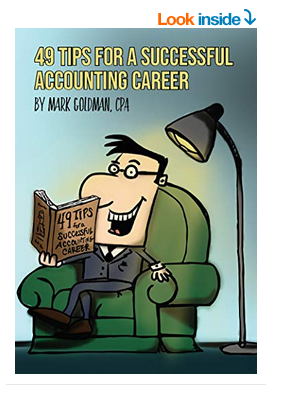
    This led Mark to summarize what CPAs were telling him. That resulted in 49 Tips for a Successful Accounting Career.


    I believe his ideas are applicable to any business career but especially so for CPAs. Take a listen to our interview.

    Screen Shot 2019-01-10 at 2.38.04 PM

  • Professor Elam

    Monday Jan 7, 2049

    The Texas State Board of Public Accountancy was ccreated in 1915.

    httpthe first CPA licenses were granted in 1896.

  • Professor Elam

    Monday January 7, 2019

    Luca Pacioli 1447-1517 was an Italian Mathemetician.

    He is credited with creating the double entry system of accounting.  From Wikipedia


    • Summa de arithmetica, geometria. Proportioni et proportionalita (Venice 1494), a textbook for use in the schools of Northern Italy. It was a synthesis of the mathematical knowledge of his time and contained the first printed work on algebra written in the vernacular (i.e., the spoken language of the day). It is also notable for including one of the first published descriptions of the bookkeeping method that Venetian merchants used during the Italian Renaissance, known as the double-entry accounting system. The system he published included most of the accounting cycle as we know it today. He described the use of journals and ledgers, and warned that a person should not go to sleep at night until the debits equaled the credits. His ledger had accounts for assets (including receivables and inventories), liabilities, capital, income, and expenses — the account categories that are reported on an organization's balance sheet and income statement, respectively. He demonstrated year-end closing entries and proposed that a trial balance be used to prove a balanced ledger. He is widely considered the "Father of Accounting". Additionally, his treatise touches on a wide range of related topics from accounting ethics to cost accounting. He introduced the Rule of 72, using an approximation of 100*ln 2 more than 100 years before Napier and Briggs.[8]


    Venetian merchants were actively involved in the spice trade.

    Imagine a world without salt and pepper,not to mention cinamon and rosemary!  The Spice Trade was a very big deal.

    All of this was inspired by the travels of Marco Polo some 150-200 years earlier.


  • Professor Elam

    Wed Dec 19, 2018

    Will Holisky just ocmppleted SA CPA Leadership Class of  2018.

    Will is a TAMUSA graduate, a CPA, and works in audit at Ridout Barrett.

    Screen Shot 2018-12-19 at 2.14.16 PM