Monday Nov 10 2014
Amazon is benefitting from the trend to more on line shopping.
We recently reproted on the accounting errors at Tesco. Now Tesco is losing sales to Amazon as well.
When it rains it pours.
Related articles
Accounting & Investing Info for San Antonio A & M
Monday Nov 10 2014
Amazon is benefitting from the trend to more on line shopping.
We recently reproted on the accounting errors at Tesco. Now Tesco is losing sales to Amazon as well.
When it rains it pours.
Related articles
Monday Nov 10 2014
This ‘n That
The 2006 United States midterm elections resulted in a sweeping victory for the Democratic Party which captured control of the House of Representatives, the Senate, and won a majority of governorships and state legislatures from the Republican Party.
General elections in the United States were held on Tuesday, November 4, 2014. The Republicans gained control of the Senate for the first time since 2006, and increased their majority in the House.
Wikipedia
This is an analysis of what has been happening since Year 200; it is not a partisan cheerleading attempt for either side. The stark contrast of the 2006 and 2014 elections might startle most observers. But it would not be a surprise to a socionomist, one who studies social mood as the ultimate driver of social change.
My take is that social mood vacillates in eighteen-year swings. We are in an era of economic stagnation which will likely stretch from Year 2000 to 2018. The previous negative era was 1966-1982 with 1982-2000 being an upbeat era.
The downbeat era of 1966-82 began with Lyndon Johnson choosing not to run for re-election. More surprising was the Phoenix like return of Richard Nixon after losing the President race in 1960 and the Governor of California race in 1962. That was followed by his re-election and then departure from office, a first for the last century. Carter handily defeated Ford in 1976 and then went down to defeat himself by Reagan in 1980. This alternation of affection by the public is typical of periods of stagnation. A ‘throw the bums out’ mentality prevails with massive shifts in political preference.
The period of 1982-2000 by contrast witnessed two very popular Presidents, Reagan and Clinton. The positive social mood created the perception that they were successful Presidents. This was clearly a perception that none of the contenders enjoyed from 1966-+1982.
Notice that the mood drives the perception; events do not drive perception which is internally generated. Bill Clinton thinks the public adores him. Obama meanwhile wonders what happened. The answer is lies in the internally generated mood of the public.
This era of 2000-2018 is a replay of 1966-1982. The Presidency changed from Democrat to Republican in 2000. In 2006 Bush lost the Senate and the House. In 2008 the Democrats re-took the White House. Change speeded up with the Republicans re-taking the House in 2010 and now the Senate and all the Governor’s races in 2014. Expect this political version of musical chairs to continue until at least the midterms of 2018.
Harold Hamm CEO of Continental Resources Inc lifted all of the firm’s hedges on oil this week. A hedge represents the purchase of insurance via options or futures against a price decline. With all hedges removed, Hamm is betting on a price rise for oil. While oil prices dropped this week, as I write Friday oil service firms are refusing to fall further. Service firms are the best early warning of a change in trend. Therefore it appears oil prices and service companies are completing the decline from higher oil prices this summer.
Families will be coming together for Thanksgiving and Christmas dinners. And the same scene is likely to be repeated many times. It could be happening with Uncle Ramon or Aunt Edith or Granddad Otto or perhaps Veteran Maria, back from Afghanistan. The majority of the family won’t notice their behavior. But after the initial hellos and howareyas, certain members of the group will drift off on their own. Armed with a book or Kindle, they came prepared; they will sit apart from the group until dinner is served. What’s going on?
These individuals all suffer from the same invisible handicap-hearing loss. Hearing aids certainly improve the situation but they do nothing to substitute for non-verbal communication, which constitutes about half of our exchanges. These individuals have wearied have being accused of ‘only hearing what they want to hear’ or intentionally ignoring someone speaking to them, from the next room out of sight. It does not have to be this way.
Position yourself in front of this relative before you speak. Get their attention first. Then speak clearly. Avoid engaging in conversations in a room with hard surfaces (no carpet or drapes) with multiple other conversations underway. This results in a a cacophony of sound to the hearing impaired.
It is not that they don’t want to hear you. But too often it is a choice. They can endure the inevitable barbs and insults about not choosing not to hear. Or, in surrender, they simply slink away to avoid any interaction at all.
It does not have to be that way. Go out of your way to engage the hearing impaired. It will certainly result in a memorable holiday for both of you.
Monday Nov 10 2014
Doug Short analyzes the employment trends. Full time employment is no where near what it was before the 2009 recession. The chart has flipped with more people wokring part time than full time.
Monday Nov 10, 2014
A Democrat and Repuclican Congressman have an article in today's WSJ. It suggests that the
cost of calculating lease libaility
and the addition of that debt to balance sheets will cause loan rates to be accelerated
An independent study suggests this might cost 190,000 jobs and shrinkthe economy by $27.5 billion annually. Thus far the FASB has not responded to requests for field tests on what it would cost to do all the work the new rules require.
Weekend Nov 8, 2014
Eddie Lampert has certainly been more famous for financial shenanigans to keep SHLD afloat
than for innovative retailing.
Now he ponders selling stores to an REIT, then leasing them back. The stock jumped $10 on this idea which would infuse cash, for about one year's needs they was SHLD is burning cash.
I recently bought an exercise bike at Sears. The store was woefully under staffed to handle the Saturday traffic. But the store looked pretty good. But again, even a few shoppers over whelmed the staff on hand.
The clerk tried to sell me a three year warranty. I declined as I doubt Sear will be here in three years.
Weekend Nov 8 2014
Transocean RIG delayed reporting earngs. RIG took a $$2.8 B write down.
This was a combination of a write down of goodwill on acquisitions $1.97 B
And a writedown on the equipment resulting from lower lease rates $788 Million.
I recently posted several of my articles on the declining oil price. Here is a real world result of that.
We study write downs in ACCT 3311 regarding PPE. Why did RIG take the impariment charge on goodwill?
Because the cash flow analysis indicated the value of the goodwill no longer existed.
Thursday Nov 6, 2014
Back in the day James Coney Island held forth in a narrow street side shop.The line of customers stretched into the street outside. Wile there were lots of offerings on the Blackboard, only two things were really sold, as the name suggests, hot dogs, and chili.
Old school desks served as tables and there crammed together for maximum seating. You would see both coat and tie and blue collar lunch crowd side by side. 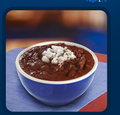
I checked just now and the downtown location is gone, all to the suburbs. The new menu has given way to
burgers and more dogs, but yes, the chili is still there.
Yet where are the chili parlors in San Antonio today? The town is littered with Tex Mex eateries yet none of them, not a one, features a bowl of chili on the menu.
It ws not always like this. From 1860s to the 1930s San Antonio Chili Queens dispensed Texas favorite dish in the downtown area. NPR did a story on the Chili Queens suggesting the story is 200years old.
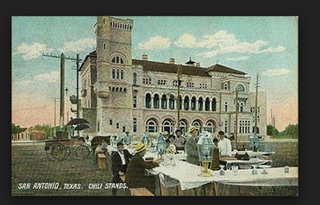 The wagon in the background suggests 1890-1900 along with the mode of dress in this photo of chili stands
In 1977 the Texas Legislature declared chili con carne to the the official state dish of Texas.
So, lots of money has been made in fast food. It looks to me like this is an idea just waiting to be found again.
What has been will be again, what has been done will be done again; there is nothing new under the sun.
Ecclesiastes 1:9
And that quote is about 3,500 years old.
So with Alan Preston and Leonard Love offering their entrepreneurship class, it seems to me this is an idea whose time has come, again.
Chili carts around the UTSA campus, one small shop selling chili in a crowded area, take out is a must, and then there are all sort of varieties, but no doubt one simply needs the basic red meat, powder sauce, variety to get going.
I mean I wonder how many cans of Wolf Brand chili are sold in Texas each year? Just looking at their web site makes me reach for the alka seltzer, good grief.
Anyway, never mind finding a job, here is an enterprise waiting for an entrepreneur.
PS be sure to study chapter six in the garrison managerial accounting text on break evenand target profit to integrate into your business plan!
Thursday Nov 6, 2014
Monday Nov 2 2014
Ethics is getting more attention at the corporate level.
We study ethics in the spring in ACCT 5308. Notice that many companies are still not communicating with employees.
At A & M system schools we are required to participate in on line webinars regarding topics like this. And we must pass 100% of the questions at the end of the training to complete.
Friday August 8, 2014
Word Count 769
Dennis.elam@att.net / 210 232 1691
The Eleventh Hour
The world is a mess.
Former Secretary of State Madeline Allbright, this past month
The markets have not registered a final high, yet. But as our title suggests evidence mounts that a final high in both oil and stock prices is likely to occur this fall. Remember that while talking heads on television bemoan high gasoline prices, high oil and gas prices always move in lock step with a bullish stock market. One breeds confidence in the other. However there are numerous warnings (the gathering storm) that the markets are over extended and likely to hit final highs this fall. Let’s take a look.
The first clue lies in the existence of cycles. The Dow Jones registered its first trip to the 1,000 mark in 1966. Eight years later it bottomed in December, 1974 at 577, retracing about 50% of the 1,000 mark. This fall will mark a two generational anniversary. Markets tend to alternate so this time we may record a forty year high from the low years ago. Amazingly, the Dow’s high in 1929 was at 390. The low in 1974 was a mere 187 points or about 50% higher in thirty-seven years. In addition we are five years out from the 2009 low.
Adjusted for inflation, the Dow Jones has made no progress since Year 2000. Which is to say that if the Dow Industrials divided by the Producer Price Index, or the price of gold, it is at the same level now that was then. This suggests that the rise has not been as a result of any new productivity but as a result of the three trillion dollars the FED has injected into the economy. This resulted in new nominal highs in stock prices rather than raising the level of full time employment. By the way, a mere 47% of Americans now hold full time jobs.
Short term both stock indexes and the energy prices appear to have put in intermediate lows in early August. This should set the stage for a final push higher amid glowing reports of expanding auto and truck sales. That latter indicator is also a warning given where the car market was five years ago. Already tractor and auto manufacturers are offering zero down payment and zero percent financing deals to clear out existing inventory.
Energy prices remain in an uptrend but like stock prices have just undergone a correction. Crude oil dropped ten dollars to the $97 area. Gasoline has dropped to $2.70. After spiking to $6.50 earlier this year, natural gas has apparently bottomed at $3.70. The refining industry did not anticipate the production of abundant ‘lighter’ crude in the US. That coupled with the inability to ship the new production over seas and the lack of the Keystone Pipeline has kept West Texas Intermediate trading below the price of Brent North Sea crude. Brent is trading at $105.44. The fact that crude is not trading at new highs is a further divergence in stocks and energy prices.
Junk bond prices are another indicator of market tops and bottoms. The leading Junk fund JNK bottomed at $16.15 in 2009. It topped in June at $41.42. Investors pulled a record $7.1 billion form junk bond funds this past week. Yields hit new lows under 5% this past month for junk funds. Money is moving out of junk in anticipation of the FED exiting bond purchases in October. After a 2.4x rise in price, junk looks toppy.
Luxury goods makers are falling in price. Coach COH has fallen from $50 to $34. Ralph Lauren RL has been stair stepping down from its high at $190 last year. One luxury stock in particular reflects the strength of the stock market and that is Sotheby’s BID. When investors feel confident, they bid up auction prices for collectibles. This is reflected in a strong price for BID. Sotheby’s topped just over $50 earlier this year. As I write Friday, August 8, 2014, BID is down a whopping 9.2% (just today!) to a new low for the year at $36.92. Market tops are a process, not a simultaneous event. All these events taken together suggest the topping process has begun.
The Dow Industrials has pulled back from well above its moving averages at 17,133. It is now testing the longer term 200 day moving average around 16,348. That should set the stage for a final run up over 18,000.
As always we will update the forecast as we move into the fall.
Dennis Elam blogs at http://www.themarketperspective.com

 Professor Elam