Weekend July 21 212
Professor Elam
Accounting & Investing Info for San Antonio A & M
about
-
Professor Elam
Added half an hour later: I read this on Kim Critchfield's FB page and loved it. I sent a copy to Ben and to a friend who needed to read it. I'll post this on my wall, just to the side of my computer.One evening a Cherokee elder told his grandson about a battle that goes on inside people.He said, "My son, the battle is between the two 'wolves' that live inside us all.…One is Unhappiness or Evil – It is anger, jealousy, fear, regret, greed, arrogance, sorrow, self-pity, resentment, inferiority, false pride, superiority, weakness and ego.The other is Happiness or Good – It is joy, love, hope, serenity, benevolence, peace, empathy, kindness, generosity, truth, humility, faith, strength and compassion."The grandson thought about it for a while and then asked his grandfather, "Which wolf wins?"The old Cherokee simply replied, “The one you feed." – Cherokee Elder -
Professor Elam
Weekend July 22, 2012
From The Market Perspective
I have been reading Engines of Change by Paul Ingrassia, a history of the USA told via fifteen different cars. I mentioned in the update that we have entered an 18 year period of negative sentiment, the last one began in 1966, the current one in yeear 2000. Chapter Seven is about the brief reign of John DeLorean, the Pontiac GTO, his lifestyle, and the failed Delorean.
Two paragraphs on page 166 caught my eye in explaining just how fast the change then was happening.
Events that seemed unthinkable just a few years earlier started happening all the time. In April 1966 Time as on its cover, Is God Dead? Charles Whitman killed 13 people from the Tower at UT Austin, wounding 31 others. The Rolling Stones released '19th Nervous Breakdown.'
In 1967 the US Army was dispatched to quell a race riot in which 43 people died in Detroit. Beatty and Dunaway romanticized rebellion in Bnnie and Clyde. 1968 borught the assassinatinos of Martin Luther King and Bobby Dennedy. The Chicago Seven disrupted the Democrat Convention in Chicago. It does not take a lot of imagination to see that same chain of events playing out again today.
As I say all my writing about socionomics and 18 year cycles has been quite serious for the purpose of preparing you for just these kinds of events.
-
Professor Elam
Wed July 18 2012
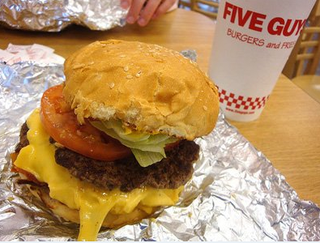
Five Guys Burgers began when four brothers decided to go in the burger business instead of going to college. Here is the low down on eight burger chain start up success stories.Figure out the right burger combo and you can hire a college boy or girl to keep the books….
If I were to recommend the one and only course to take in college it would be managerial accounting, how to figure break even and target profit, how to compute process cost, how to develop standard costs, ie
how to make money. We will be assigning this reading in class for the Fall.
-
Professor Elam
Wednesday July 18, 2012
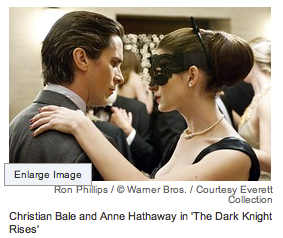
It's spectacular, to be sure, but also remarkable for its all-encompassing gloom. No movie has ever administered more punishment, to its hero or its audience, in the name of mainstream entertainment.
Joe Morgenstern, WSJ on The Dark Knight Rises
In the Spring of 2008 I observed to my classes that the then current Batman Film, The Dark Knight, was probably a forerunner of what was about to happen. The tag line for the movie, the City Has No Hope, turned out to be quite correct as to what happened in the financial markets that fall. Dark Knight grossed an incredible $500 million in its first few months, clearly it was hitting a social mood chord with its audience.
My students remarked that they did not seem to be experiencing negative emotions. Maybe not but something was resonating to get them to collectively shell out $500 M to watch the Joker destroy Gotham.
Now consider this comment from Catwoman to Bruce Wayne.
"There's a storm coming, Mr. Wayne," and end with "you're all going to wonder how you could ever live so large and leave so little for the rest of us."Coming on the heels of the evaportaion of MF Global and Peregrine, not to mention several cities in bankruptcy, unable to pay pensions, employees, and provide services, we have a near perfect metaphor for the melt down ahead. This evaporation of customer funds has a counterpart in the uninsured bank failures of 1931. One might re read my list of fundamental problems in the last weekend post, the Market Did What it Had to Do.
Just today in the same paper, there is an article noting that delinquencies on student loans in the over 40 set is now above 10%. This is a parallel to the sub prime crisis of 2008, except there is no collateral whatsoever to seize in a student loan debt. So the potential for an even great disaster looms.
So we have a parallel to 2008, and interestingly enough, the Director/Writer waited until the markets have risen to the same levels as Fall 2007 to bring the movie to the public. Great timing.
Mr. Morgenstern notes that in the 1930s people crowded into theaters to see Fred Astaire dance with Ginger Rogers in elaborate musicals. True, but they also crowded in to see Public Enemy and Dracula, both are social mood extremes. The musicals were for relief, the horror films were more re enforcement of the negative mood at the time.
Once again, social mood will motivate social actions.
-
Professor Elam
Tuesday July 17, 2012
LeRoy Neiman was the official artist for five Olympiads. His work was prominently featured in Playboy in
the heyday of his work during the 1950s – 1970s. today's WSJ featured a piece on the American Sport Art Museum and Archives in of all places, Daphne, AL.
Click to take a walking tour of the museum, I really like this feature.
Since Tracy Hurley's daughters will be competing at the London Olympics this Neiman of Fencers seems appropriate. One can literally feel the tensionand action just looking at the print.
Explore and learn more at the Official LeRoy Neiman Website.
From his bio on the website
Mr. Neiman has revived an almost lost and time-honored art form," Carl J. Weinhardt observed in the catalog for the exhibition of Neiman's 1972 Olympics sketches, which was mounted that year by the Indianapolis Museum of Art. In the Christian Science Monitor (May 2, 1972), Nick Seitz wrote that Neiman, who has been labeled an American Impressionist, "has the journalistic talent, as well as the artistic ability, to convey the essence of a game or contestant with great impact, from the Kentucky Derby to Wilt Chamberlain, from the America's Cup to Muhammad Ali, from the Super Bowl to Bobby Hull."
-
Professor Elam
Monday July 16, 2012
he Beatles and Wall Street
Joel Benjamin | June 2012
What do The Beatles have to do with the stock market? Everything, says Robert R. Prechter, Jr., one of America's leading stock market analysts and founder of Elliott Wave International, the world's largest market forecasting firm.
Prechter has developed a new theory of social causality called socionomics. It postulates that waves of social mood regulate social actions — including even the popularity of rock stars.
The crux of his theory is that an increasingly positive social mood motivates people to express their increasing joy and enthusiasm by buying stocks. Increasingly negative social mood encourages people to express their increasing misery and anger by selling stocks and seeing the worst in their heroes. The Beatles became the focus of social actions reflecting these mood changes.
Prechter's research shows that the most important dynamic which ignited "Beatlemania" was the increasingly positive social mood of the day:
"Contrast the years of struggle and frustration, ending at the bottom of the bear market of 1962, with their career-making breakout when the trend turned up. Or the spectacular rise in their fortunes as the stock market rose from 1963 through 1965 with the string of stunning setbacks during the bear market of 1966. The rally of 1967-1968 brought a return to success, but, being a bear market rally…it had plenty of stresses and negative aspects. Finally, compare the events attending the 1967-1968 stock market rise with those of the 1969-1970 bear market. The changes in their experiences are so stark — and the role of society so obviously important–one cannot fail to see the trends of social mood at work."
He points specifically to the period of February-October 1966. When the social mood trend was trending toward the negative, as evidenced by a falling stock market, that's when much of the world — from America to the Far East — turned on The Beatles. Then there was Lennon's comment about Christianity and the disastrous visit to The Philippines.
Social mood stimulated all types of expressions and The Beatles were not the only recipients of expressions of happy enthusiasm. Economies were expanding. Warring was at a minimum. All of these were results of an increasingly positive social mood which expressed itself through these social actions.
Stock markets, cultural trends and social barometers
One of the strengths of socionomics is its predictive ability. Since social actions take time to mobilize, there's a correlation between the stock market and cultural trends.
Prechter writes:
"Recessions follow stock market declines. Economic recoveries follow upturns in stocks. Warring is more common after the stock market has fallen. Peace is widespread after the stock market has risen. Horror movies increase in production and popularity as the stock market falls. Bubble gum music is popular in positive-mood trends near major stock market peaks. And so on."
Socionomics flips social causality on its head: changes in social actions do not cause social mood to change. Changes in social mood cause social actions to change. This direction of causality is counter-intuitive, which is why no one has noticed it before.
Rising stock market does not make people increasingly happy. Increasingly happy people make the stock market go up. From October 1962 to February 1966, social mood became persistently more positive, so stocks rose and expressions of joy increased. The Beatles both expressed that joy and were recipients of it.
The last two years of the decade saw both the decline in Beatles fortunes and the stock market heading south. From December 1968 to May 1970, stock prices fell and The Beatles quarreled and made bad business decisions until they disbanded.
From 1970, as the market went sideways in nominal terms and down in real terms, Harrison and McCartney flourished, while Lennon mostly struggled or hibernated. In January 1980, at the low in real stock prices, McCartney was busted in Japan for pot possession and briefly went to jail and Lennon was murdered.
As the public mood changes so does The Beatles' fortunes
It wasn't until the public's mood changed significantly toward the positive over a period of years that the public rekindled its love of The Beatles. In 1987, The Beatles catalogue was issued on CD.
Then, as the market started to really move upwards under Clinton — as the public became hopeful again — The Beatles and their attraction to the public intensified. In the mid 1990s, they released Live at the BBC, then came Anthologies, books, videos and CDs and two new singles — Free as a Bird and Real Love. The stock market climaxed in 2000, and the public's renewed adoration of The Beatles peaked in November of that year with the release of "1" album which sold 13 million copies in the first month.
As the stock market dove from 2000 to 2002, The Beatles waited it out, and in November 2003 at the start of another upturn, they issued Let It Be — Naked, then The Capitol Albums, and then came Cirque de Soleil/Love in Las Vegas in 2006.
They rode out the next downturn in the market from 2007 to early 2009 and then appeared again at the end of 2009 with the release of the Remastered catalogue and the Rock Band video game. In the fall of 2010, with mood and the market still rising, they finally released their entire catalog on iTunes.
Bear markets are mostly bad for rock stars. Many of them died during bear markets: Hendrix, Joplin, Morrison, Jones, Elvis, Keith Moon, and John Bonham.
The problem for Beatle fans is that Prechter's socionomic theory predicts that The Beatles' popularity will not continue indefinitely. Given the social mood and upcoming negative trends in the markets, The Beatles' public appeal will once again fade significantly.
History shows that fans' passion during the mania years always wanes as the people who experienced it die off. Still, there is hope for some measure of timelessness as well as periods of rekindled Beatles appreciation. Prechter concludes that true talent endures and pockets of appreciation remain, but initial passions may never return.
Any revivals of Beatle appreciation, according to socionomics, are likely to come late in major positive-mood trends in social mood:
"The Beatles were for the most part a positive-mood band, and it will take substantial extremes in positive social mood — like the one that supported them in the 1960s and again in the 1990s, to make resurgences of their popularity even possible."
Joel Benjamin is the Director of The Center for Beatle Scholarship.
www.Beatlescholarship.com | Joel@Beatlescholarship.co -
Professor Elam
Monday July 16 2012
The IASB which oversees the IFRS regrets the lack of interest by the SEC.
That would be the International Accounting Standards Board that oversse the International Financial Reporting Standards wonders why the Securities and Exchange Commission is still dragging its feet over adopting IFRS.
I suspect the reason is that US firms and the SEC are not anxxious to face down the effect of abandoning LIFO. This would mean a huge tax hit along with all the taxes that will kick in 2013 anyway. No doubt corporations would call for a one time tax out on such an 'extraordinary event. And the Administration is not interested in bringing that up before the election.
And so IFRS exists in our accounting text but not at the SEC>
-
Professor Elam
Monday July 16, 2012
Is there no accountability anywhere? I find it incredible that Condezza Rice is being considered for Vice President for example. The World Trade Center evaporates yet no one in the entire 'National Security' appartus from the Adviser on down to the FBI, CIA, FAA, etc, loses a job.
Charles Ferguson has written Predator Nation noting that no one has gone to jail as a result of the financial scandals either. Let's see as Colleen Rowley said, connect the dots.
Wall Street lavishes money on both parties, they elected Obama and Romney got rich in the same game, does anyone thing anything will change?
-
Professor Elam
Monday July 16 2012
JP Morgan managed to hit its projected earnings to the penny, even after the Whale trading losses ballooned form $2 B upwards. How did they do that, this article answers the question
Oh one third is resuced by not having to pay taxes on the loss, tax benefit it is called in the accounting book
Lower the loss ereserves, and reach into the cookie jar for claw back others
Write up 'mortgage servicing rights'
And allocate the loss to other periods re stating the first quarter earnings, which of course are now old news anyway
This students is how earnings are managed.
-
Professor Elam
Weekend July 14, 2012
Professor Sam Rock brought this to my attention. I thought you would enjoy eight mintues with a person
who has 100 years of insight. Before you click what do you consider to be the best and worst invention of the last 100 years?