• Professor Elam

    Wed April 28 2010

    Greg Itzin plays Charles Logan a former disgraced US President. He is back in the last season of 24, scheming as ever and has the current President's ear. I haver maintained that we could watch 24 each week and easily have an hour's discussion on the ethical challenges that the characters face each week.There are but five episodes left in this last season, and they can be watched on the internet, just google 24 season 8.

    As Itzin says in this interview, when you play the President on 24, you are the President. True enough, and that role laid the groundwork for him to play, yes, Ken Lay, the Smartest Guy in the room in the forthcoming Broadway Production of Enron, A True Story of False Profits. 

  • Professor Elam

    Tuesday April 27, 2010

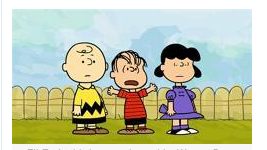
    Picture 2  The licensing rights for the Peanuts Gang has been sold for $175 M. I make this post as a socionomic observation. Market highs tend to be inclusive, people want to joint together. Acquisitions are made, mergers occur, white knights emerge. This never happens at market bottoms when things are cheaper. The reason is that fear rules the day. People become exclusionary.  

    Every day for example we get another announcement of another Greek bailout only to see it fail the next day. Hard times, hard attitudes. Greece will no doubt bail out of the EU agreement. The bailout terms are either not coming or will be too harsh for the politicians to sell to the heavily socialized Greek economy. 

    Greece, Portugal are a glimpse of where we are going. A protest rally of 15,000 showed up in IL the other day. Protests, coming to a unionized state here soon, shades of the 60s. Understanding why all this is happening will help you endure it.

  • Professor Elam

    Tuesday April 27 2010

    The National Review Online examines the Dodd bill. Surprise, political favors are always wrapped in serious sounding phrases like 'reform', with thousands of lobbyists in Washington, do you really think they are going to reform things for you and I?

  • Professor Elam

    Tuesday April 27 2010

     I suggest you look at Mish dated Monday April 26, 2010. This is an article about crowd sourcing. 

    Crowd sourcing is the act of taking a job traditionally performed by an employee and outsoucring it to an undefined group of people on a project-by-project basis, in the form of an open call.

    Firms wishing to follow this model could encourage employees to set up a company with 10 or more colleagues, and buy back their services as and when needed.

    Big oil companies have been doing this since the 1960s, and have only accelerated their desire to do it since. I was part of a family owned business which followed this model. My Dad had been employed by Gulf Oil. He got 'retirement' at age 55, a $350 a month check. He did exactly what crowd sourcing suggests. He organized a group of oil field maintenance workers and contracted them to Gulf Oil. As the price of oil rose in the 1970s, Gulf used more and more contract employees, the business grew.  Why?  Simple, Gulf did not want to incur the cost of hiring their own employees, much less the headache of dealing with unionized employees. When Chevron bought Gulf, they forced all the 'contractors' to bid for the work. As a CPA I knew my costs and would not bid below them. Others did not know their costs. I of course did not win the bid, the chap that outbid me of course was out of business in one year. Chevron had succeeded in  finding the lowest possible cost by enticing someone to bid below their own cost,  a good deal for Chevron I guess. 

    Congress was determined to pass the Windfall Profits Tax on Oil Companies, it did and the companies quietly started leaving the US. Many large former oil company office buildings in Midland, Odessa, and Andrews, all oil producing counties, are vacant today. Chevron was a company of about 50,000. It has since bought Gulf, Texaco, and Unocal, all similar sized companies. Guess what, Chevron is still a 50,000 employee company. The other 150,000 are gone as are most of the contractors. 

    In Austin, TX just up the road semi conductor manufacturers use temp workers from Addeco or Kelly or some such crowd sourcing employer. The move by the Administration to force employers to provide more benefits will result, I promise, in fewer jobs. No private sector jobs have been created by the so called stimulus bills, a lot of govt jobs have been created. Now govt jobs are at risk in Greece, IL, CA, New Jersey for the same reason. 

    This article suggests that IBM will continue the trend. Of course they will!  Everyone is a contract laborer now. 

    Bottom line, are you prepared to go it alone?  What if private hiring collapses?  As Mish says, this is deflationary.

  • Professor Elam

    Tuesday April 27, 2010

    The explosion of the web has given us some very successful ventures and some famously failed ones. Not long ago America Online was stuffing every mailbox in America with a CD urging you to get Online. TIme Warner bought the company and two years later had the biggest write off in history. Clearly Time Warner, no rookie in the media business, did not understand the medium. 

    I don't care for the title of this article, but I do believe Bo Peabody is on to something. Social networks like Twitter or Facebook allow lots of socializing but they are not good advertising platforms. The reason is that it is too hard to define the audience or know what will happen on the network. 

    Content networks on the other hand are all about content, people seeking information rather than contacts. Those sites are viable advertising mediums. Take a read, interesting. 

    I am working with SA CPA to increase our level of participation. I suspect the answer is by increasing content and social networking. But we need to understand which is which, and why. 

  • Professor Elam

    Monday Ap;ril 26, 2010

    Truly there is nothing new under the sun. See our previous post in which the NY Times published e mails from Goldman that the firm had profited from selling short investments sold to clients.

    One of the students asked if the clients could sue the broker for betting against them. That reminded me of previous incidents, shown below. As you can see, there is only one client for a Wall Street firm, themselves….

    1929

    Consider this gem courtesy Bob Bronson Analysis

    The Pecora Commission investigating Wall Street Crash of 1929 started on 3/4/32 with its first

    hearing on 4/11/32.  From the stock market high at that time it started its seventh and final decline

    of the three-year Crash dropping 53% into the final low on 7/8/1932.  Then after rising 191.4%

    for 19 months to its 2/5/34 high, the stock declined 22.8% over six months into its final 7/26/34

    low, which was 24 days after the Pecora Commission ended its 28-month investigation on 7/2/34.

    http://en.wikipedia.org/wiki/Pecora_Commission


    Sound Familiar to Goldman Sachs?

    The investigation revealed that National City sold off bad loans to Latin American countries by

    packing them into securities and selling them to unsuspecting investors, that Wiggin had shorted

    Chase shares during the crash, profiting from falling prices, and that Mitchell and top officers at

    National City had helped themselves to $2.4 million in interest-free loans from the bank’s coffers.

    http://en.wikipedia.org/wiki/Ferdinand_Pecora


    1983 Baldwin United

    Sales of annuities in failed Baldwin United caused a Merrill president to step down. Underwriters are supposed to perform due diligence to assure pruchasers of the soundness of the investent. Gee how did all these firms miss that?


    2002 Dot.com recommendations

    We can then jump forward to teh post dot.com crash. Then Eliottt Spitzer obtained a $100 M fine from Merrill Lynch. It seems analysts like Henry Blodgett were e mailing their disdain for stocks they were recommending to the clients! And guess what, the underwriting dept was helping determine what the analysts made in salary, talk about a conflict of interest!  In thei article notice that Spitzer had also called in other firms, they too ended up paying fines.

    Of course teh $100 M was just a fraction of the overall profit Merrill made that yea.r. This is the same firm that hired John Thain who spent $1 M redecorating his office. He did later pay it back but…

    By the way, the analyst in question, Henry Blodgett, has resurrected himself as the blogger for Business Insider!
     

  • Professor Elam

    Monday Apr 26 2010

    Okay, let's as the saying goes, connect the dots. 

    Warren Buffet is supposed to be an advisor to Pres Barack Obama

    Warren made a comment in this 2002 annual report that derivatives were potential weapons of mass destruction.

    The financial reform bill will require derivatives to traded on exchanges, subject to collateral and margin requirements. 

    Warren sold a large PUT position to various investors. The PUT 'insures' against loss for the investors if the stock averages close below a certain level at a certain date in the future. 

    The PUTs that Warren sold were off exchange, a private transaction, not subject to exchange regulations or margin requirements. If the PUTs had been on an exchange, or were now on an exchange, when the value of the PUT increased, Warren would have to post more cash collateral. 

    Now, guess what?  Warren wants all existing derivatives grandfathered, especially his! He does not want to have to abide by exchange rules, he claims Congress cannot affect already existing contracts. He notes that BRK has $20 B in the bank anyway. 

    Well!  Appreciate that in the 2008 meltdown, the theoretical value of the PUTS soared, but Warren was not worried as the expiration date was still years away. Under the new law, BRK would be forced to post cash collateral in the event of a market decline. And this is precisely what Congress wants to regulate. The fear, as was Greenspan's fear regarding Long Term Capital Management, is that a firm or firms will exceed their ability to perform on such bets, that failure would likely implode the financial system if one party failed to another and another. 

    Are you following all this?  Now recall that BRK is in Nebraska. Recall the Cornhusker Compromise, where Ben Nelson, D NB got an exemption for his state on the health care bill in exchange for his vote. Recall that NB itself recoiled over this deal and Nelson's ratings plummeted. No doubt Washington does not want a repeat of that fiasco. 

    But the failure to force all existing derivatives to list on an exchange now would defeat the idea of marking everyone to market and forcing them eliminate or close out contracts that cannot be covered. 

    AS it is, BRK never has to post any cash to anyone. The reason BRK sold the PUTS was to use the billions in premiums for years with no interest cost or margin requirement. 

    Hmm, I wonder if Vegas is taking bets, a derivative, on how this turns out?

  • Professor Elam

    Monday Apr 26 2010

    This is a good example of how to explain large numbers in  short time frame. It was done by a college student.  This is a great example of good design. It is simple, straightforward, and makes the President's claim that they are really cutting the budget ridiculous. Make that the last three Presidents…..

    This video takes less than two minutes and is well worth your time. After seeing it, realize that there is actually a commission on cutting the deficit. Are they serious, as the student shows, you would have to cut all the entitlement spending, like social security, or thing like the Fed Govt buying a prison in IL to put the Gitmo prisoners. 

    The better idea would be as Tom Sowell suggests, tie Govt Spending to the GDP, the countries and states in trouble are the ones that have let debt dwarf GDP, Portugal debt is 3x its GDP.

  • Professor Elam

    Monday Apr 26, 2010

    Rick Santelli on CNB C suggested months ago that derivatives should be put on the exchanges so that everyone could see what they are worth, who issues them, ie, real transparency, real rules. This is one of the provisions of the Financial Reform Bill.

    The NY Times, courtesy of the Senate, has released lots of damning e mails indicating Goldman profited from betting against their own clients. Lesson, be careful what you put in an e mail…

    But, will anyone at Goldman really suffer, even have to give back a bonus, I doubt it. 

  • Professor Elam

    Sat  April 24, 2010

    While Wall Street melted in 2008 and President Obama announced more financial reform just yesterday, what were the Jack Bauer watchdogs up to at the SEC?  You will recall that the SEC sets the budget for the PCAOB, guardian of the accounting rules of the game these days. Well you might think what with Bernie Madoff, FNM, FRE, the housing bubble, Lehman, Bear Stearns, they would be rather busy, well maybe not. 

    It seems the SEC Inspector General has found 33 SEC staffers in the $99-200K + salary range were, yes, looking for as Mark Steyn put it yesterday, looking for Debbie Does Wall Street. An investigation reveals the 33 were surfing XXX sites and downloading accordingly. Remarkably, several have resigned or have been asked to be re assigned, presumably they will join well, never mind, let's  just guess where those talents might best be used. 

    AS I recall Barack was going to make government cool again, he can start with the SEC.  All of these individuals who would use a govt computer in this manner should be discharged for sheer stupidity, how could such a person ever be expected to find a determined financial fraudster if they themselves are this naive.