• Professor Elam

     All

    Ankur Chopra and I attended the TXCPA Educator Conference in Austin this past weekend

    If you have any interest in the cpa exam I suggest you watch these sections of the presentations


    _______________

    The link to  all slides is below, I suggest you view two in particular both on the first day Friday
    the url disapears Friday  I saved these in pdsf working on how to display  in typepad.
     
    CPA Exam Update with Michael Potenza at  10 45
     
     
    General Session Pipeline with Jodi Ray at 4 00 PM


    Jodi was candid in my discussion with her at the reception, AICPA  is foot dragging, too slow to respond
    to draw down in those taking the exam.                           
     
  • Professor Elam

    Monday  10/30/23

    I was struck by how muuch Arnold's comments in write your ow story irror just what Ralph Emerson tells us – imitation is suicide! Take a read ans see the similarity.


    Arnold’s Corner: Monday Motivation

    I am flying back from the UK, and I loved seeing all of my fans there. I have to tell you, I was blown away. When I walked out on the stage of Royal Albert Hall and saw almost 5,000 of you, it took my breath away.

    My publisher said it was the first time an author sold that place out, with everyone there buying a book. I love the support for Be Useful, but it was a perfect reminder that I can never call myself self-made. At Royal Albert Hall, and the night before at the sold-out Palladium, I told the audience to imagine me sitting on stage with no one there to listen. The events were made by the fans — not by me.

    Something I said at one of my events seemed to be a big hit.

    I was asked about the difficulties of finding your vision in this day and age, and you guys have heard me say, over and over, that you have to put the machine down. But I said something else, and afterward, a few people came up to me and said it clicked, so I had to share it with all of you.

    When you’re looking at your iPhone, whether it’s social media, email, or news, you’re reading someone else’s story. And that’s time you could be spending dreaming up and writing your own story.

    I usually finish each week with a challenge. This week, I am starting with one.

    Get off your machine. For an hour a day at first. Eventually, I want you to try for a day a week, too.

    When you spend too much time on your machine, you’re costing yourself more than you will ever know.

    Your head is down, and you only read other people’s stories. You’re never going to find yourself there. You need to lift your head up and start on your own story. You need to look inside yourself, not at your screen.

    I know that this will be uncomfortable at first. A lot of you grew up with these phones in your hands and don’t know any other way. You feel anxious when you have nothing to do because you never learned the joy of having nothing to do.

    You call it boredom. I call it time to daydream.

    Instead of daydreaming and letting your mind wander and discover, many of you grew up filling your mind with other people’s ideas.

    I was lucky. My parents didn’t have a telephone or a television when I grew up. All I had were my dreams. And I used my time daydreaming to discover who I wanted to be. My teachers, who used to throw chalk at my head when I was staring out the window dreaming, might tell you that I let my mind wander too much.

    I’d tell you that you can never let your mind wander enough. People call it “getting lost in your thoughts.” I think it’s the opposite. When you take the time to sit alone with your thoughts, you can find who you want to be; not who your parents want you to be, not who your friends want you to be, and definitely not who some shyster on Instagram or TikTok wants you to be.

    All of you are getting pushed and pulled in a million directions. You’re choosing to give up control of your mind every time you open up social media to see what the influencers you follow are saying.

    You may think those accounts you follow that tell you what to think and how to live your life help you.

    And in the short term, they probably make things easier for you. It’s more comfortable to have someone else tell you what to think and who you are than it is to spend time alone, really deciding who you want to be.

    But in the long term, it’s going to hurt. If you keep running from the discomfort of sitting with your own thoughts, you’ll spend your whole life having your brain filled up by others, and you won’t be able to think for yourself.

    Embrace the discomfort right now for the growth you’ll have in the future. Lock up that phone for one hour a day and just walk or sit with your thoughts. You don’t need TikTok, or Instagram, or podcasts every hour of your day. Let your brain entertain itself.

    It’s going to be hard at first. But if you keep going every single day, just like a muscle adapts to lifting weights, your mind will adapt. It will get used to thinking for itself. It will learn to daydream.

    You’ll be ready to write your own story. That’s where you’ll find yourself.

  • Professor Elam

    10/25/2023

    The Accounting Education Foundation of the Texas Society of CPAs is pleased to announce that we are accepting scholarship applications for the 2023-24 academic year.  Last year, the Foundation awarded $126,000 in scholarships to students intending to earn the CPA credential in Texas.  This year the Foundation plans to award fifty $2,500 scholarships to students attending Texas colleges and universities. We ask that you follow these steps in connection with this scholarship program: 


    1. Distribute the application link: https://txcpa.secure-platform.com/a to all students eligible to apply for the scholarship.  Students must complete and submit the application online. Schools are no longer limited to a maximum number of applications.


    1. Applicants must submit electronically a current transcript during the application process. The selection committee will not consider an application unless a transcript has been received.  If the applicant has attended more than one university, the cumulative college transcript should show grades and credit received from all previous schools.  If the transcript does not show a previous record, then a separate transcript (or transcripts) will be required. 


    1. A short nomination form will be sent to the faculty member the applicant identified in the application process.


    The deadline for receiving applications and all supporting documents is Tuesday, October 31, 2023.  Awards will be made during the fall semester and will be sent to the school for disbursement to the students.  We appreciate your efforts in making this scholarship program a success and look forward to receiving applications from your students. 


    Please note, incomplete or late applications will not be considered.   


    Questions can be directed to:

    Stephanie King 

    TXCPA Accounting Education Foundation  

    sking@tx.cpa

    972-687-8533 


    AEF Scholarship Requirements 


    All applicants must be a student member of TXCPA or have submitted a new Student Member application (complimentary membership for students) at www.tx.cpa.


    To be considered for an Accounting Education Foundation scholarship, a student must: 


    1. Be an accounting major with the intent of becoming a Texas Certified Public Accountant and entering the accounting profession upon graduation.


    1. Enrolled as a full-time college student (at least 12 semester credit hours each semester for undergraduate students/at least 9 semester credit hours each semester for graduate students).


    1. Have satisfactorily completed at least 90 semester credit hours of college-level courses by August 31 of the year of application and graduate no earlier than spring 2024.


    1. Submit a reference from an accounting professor or department chair.


    1. Have completed 15 semester credit hours of accounting courses required of accounting majors by August 31 of the application year.


    1. Have an Accounting GPA of 3.25 or more on a 4.0 scale.


  • Professor Elam

  • Professor Elam

    10/23/2023

    The Federal Reserve’s policies are threatening U.S. financial markets and the economy. They are in danger of a steep recession and the risk of a repeat of 1987’s Black Monday.

    Early in the pandemic, the volume of U.S. dollars in circulation soared. For two years starting in March 2020, the M2 money supply—a measure of the cash and checkable deposits in circulation plus savings deposits and other easily convertible assets—grew at an unprecedented annual rate of 16.5%. That is more than three times the appropriate rate for hitting the Fed’s 2% inflation target.

    Then, in March 2022, the Fed changed course, first tightening the money supply by increasing the federal-funds rate and then introducing quantitative tightening. Between July 2022 and August 2023, the M2 supply contracted by 3.9%, the most extreme contraction since 1933.

    The first factor contributing to the contraction of the money supply is the Fed’s quantitative tightening. In June 2022, the Fed started to reduce its balance sheet by $45 billion a month. In September 2022, it doubled its monthly balance-sheet reduction to $90 billion. This balance-sheet runoff by the Fed requires the public to buy an equivalent amount of securities, reducing their deposits as they buy the bonds.

    Quantitative tightening has already produced a dramatic selloff in the bond market. But just as they did ahead of the September 2019 crunch in the repurchase-agreement market, Fed officials keep repeating their mistaken mantras that quantitative tightening can operate “in the background” and “on autopilot,” implying minimal market effect. But basic balance-sheet accounting shows that unless commercial banks are creating enough “new money” through their lending activity to offset the Fed’s balance-sheet shrinkage, quantitative tightening has a contractionary effect on the money supply.

    The second factor contributing to shrinking M2 is the decreased availability of commercial bank credit—the sum of loans and bank holdings of securities. With the steep rise in rates, bank lending has slowed, and banks have been selling off securities. In September 2022, U.S. commercial banks held $17.36 trillion, but by September this year the total had fallen to $17.28 trillion. Within that total, bank holdings of securities have fallen nearly $600 billion over the same period.

    This brings us to the stock-market crash of 1987. In that year the key 10-year bond yield rose steeply from January onward (from 7% in January to 10% by Black Monday in October) and the money supply slowed sharply.

    In 1987 growth of M2 declined by almost half, from 9.7% year-on-year in January to 4.9% in September, while M3—no longer published by the Fed—slowed from 8.7% to 3.6% over the same period. A bond-market crunch and monetary squeeze together led to a sudden, drastic reassessment of equity-market valuations. The same could happen today, particularly since the current jump in bond yields and monetary squeeze are much more pronounced than in 1987.


    Because of the sustained decline in the money supply, the economy is in real danger. So far, only the remaining excess money the Fed created between 2020 and 2021—the cumulative excess savings from the Covid handouts—has been keeping businesses hiring and consumers spending. The effects of the excess money are still giving the economy a lift, but that extra fuel is almost exhausted. When it dries up, the economy will run on fumes.

    In all of this, an appreciation for time lags is critical. The Fed ignored the huge acceleration in the quantity of money and thus failed to anticipate the ensuing inflation. When inflation struck in early 2021, Fed officials tried to argue it was “transitory,” caused by supply-chain disruptions.

    The Fed continues to ignore the money supply, and we now face the opposite problem. The money supply has been contracting for 18 months, and soon, after the overhanging extra money from 2020-21 has been used up, spending will plunge and inflation will fall, not simply to 2%, but below—and perhaps even into deflation in 2025.

    Since Fed officials pay no attention to either monetary aggregates or their credit counterparts, they are overlooking these signals, and the risks are intensifying each day. Instead, we hear Fed leaders talk about being “data-dependent”—keeping their eyes firmly on lagging economic indicators such as the labor market and the composition of the consumer-price index, not the monetary causes for their movement.

    Monetary analysis tells a very different story than the measures the Fed follows. The first effect of a monetary contraction is higher market interest rates for a brief period. Then comes an economic slump. The economy goes into recession and inflation falls. This results in a second and more permanent effect of subpar money growth, namely lower interest rates and a weaker currency.

    When the stock market crashes, “higher for longer” will become a thing of the past as the Fed makes an abrupt pivot. Then the 10-year yields and U.S. dollar will come tumbling down.

    Mr. Greenwood is a fellow at the Johns Hopkins Institute for Applied Economics, Global Health and the Study of Business Enterprise. Mr. Hanke is a professor of applied economics at Johns Hopkins University.
     

  • Professor Elam

    10/22/31


    Interesting analysis of Alan Rickman as Hans Gruber in Die Hard

  • Professor Elam

    10/20/23

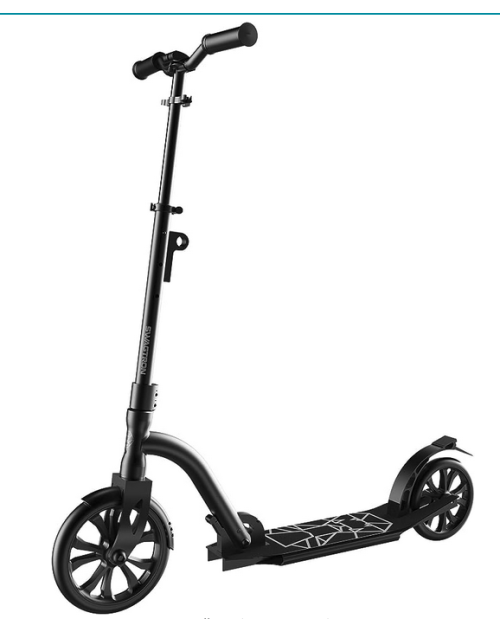
    When I was in the fifth grade, Dad bought me a kick scooter. Yikes I wanted a new bicycle but he knew what he was doing.

    After a year of learning to balance on the scooter, I got on a bicycle and rode off  no problem on my first attempt.

    I forgot that then I was five feet tall andweighed 95 pounds, a kick scooter works very  well  in that dynamic.

    Ahem, I am  now   six feet and   180 lbs and the kick does not result in much progress


    So I am offering the  Swagtron Commuter Kick Scooter to which ever parent would like it for his or her young man.

    the vertical handlebar is adjustable for height, so it will fit just about anyone


    Only ridden once, solid tires no flats, and  well made of aircraft aluminum

    It is a  $100 item, yours free for the asking


    DLE

    dennis.elam@att.net


    Anyone interested? ?.,mnbv/.//.,mnbvcxz

    Screenshot 2023-10-20 at 3.48.54 PM

  • Professor Elam

    The Whole World is Watching

    Social Mood Determines Social Action, not the other way around

    Socionomic Theory

    The fall of US Deterrence has been occurring slowly and now suddenly.

    Russia invades Georgia in 20078 ad Ukraine in 2014.

    President Obama ignores his  ‘red line’ on chemical weapons in Syria.

    China builds its own islands in the South Chia Sea.

    Chinese military aircraft increase incursions into Taiwan from 380 in 2020 to 1,700 in 2022.

    President Biden cuts the defense budget three years in a row.

    No surprise, we now have two fighting wars and have endorsed support for a third in Taiwan, come on, man!

    Global social mood has turned negative In addition to two wars…

    Russia jailed WSJ reporter Evan Gershkovich six months ago.  Now they have detained Radio Free Europe’s Alsu Kurmasheva, both a Russian and American citizen.

    The Republican led House of Representatives voted their Speaker out and Jim Jordan just failed a third election attempt.

    China arrests a Japanese pharma executive on espionage charges.

    Protests for both Hamas (Palestine) and Israel occur in NYC.

    Tm Cook tours China as IPhone 15 sales sag.

    China’s Country Garden developer just missed a $15.4 million bond payment.

    Positive mood causes people to invest enjoy inclusion. Negative mood results in distancing from investment and one another.

    War is the ultimate negative mood and we have plenty of that with more about to break out.

    As far as investing, the bond market turned bearish March, 2020. From about .5% then, the current yield on the Ten -Year Treasury has neared 5%.   The Dow Industrials now trades under its 200-day moving average and is about to test ‘support’ at 32,750.  Internally the stock markets are in bear territory. That usually requires a 20% drop. but seven stocks are keeping the belief alive that a bear market is not happening.

    Only 18% of the SPX and NASD stocks are above their 50-day moving average. Yet investors remain complacent.

    The amazing thing is that Brent crude is not $100.  B rent i  $93.24 while WTIC is $89.  Given the requirement of air freight supplying two wars, this suggests a world-wide economic decline.

    Sorry Bernie and AOC, the Green Revolution is not happening. The International Energy Agency, IAE estimates the world needs another 49.7 million miles of transmission lines. That would circle the globe 2,00 times. China is now the world leader in mining aluminum and copper required to build such lines. This reality has not reached Joe Biden and John Kerry. Does Kerry still believe climate change is our number one problem?

    The whole world translation the new Axis of China, Russia, and Iran are now emboldened by America’s dithering and refusal to become energy independent.

  • Professor Elam

  • Professor Elam