• Professor Elam

    A
    Look Ahead-2010

    “No longer
    are we going to run New York like a payday loan operation,”

    David Paterson Governor of New York, State of
    the State


    That comment is perhaps the most prescient for
    the year. So with that as prelude, what is likely to happen in 2010?


    A chart in USA Today lists Texas as the state
    most likely to generate jobs. Basket cases like Detroit, MI will continue to
    beg for Federal help. The New Civil War between the right to work South and the
    failing rust belt continues.


    The stock market will likely hold up well into
    the spring. Expect a sideways correction starting this month with a final burst
    up in May and June.


    The Federal stimulus has not created a single
    private sector job.  Instead higher
    taxes and more regulation such as health care continue to be disincentives to
    hire. Government employment has not shrunk a bit, the Teamsters now have more
    government than private employed members. We do not expect unemployment to drop
    below 10%; the real U-6 unemployment 
    now stands at 17.2%.


    The 
    price of oil has risen to $80+ . We expect the price to top $100 by
    spring, and to move higher from there. Unlike other columnists, we would rather
    make realistic predictions that can be updated than pie in the sky
    platitudes.  If that occurs, expect
    new highs other commodity markets as well like gold, silver, and copper.


    Overall there is not a pool of buyers to absorb
    all the 30 year old homes on the market as boomers seek to downsize. The Case
    Shiller model suggests prices need to fall another 30-40%.  There are hundreds of 30 year old
    houses here in San Antonio listed for a quarter of a million dollars and no one
    to buy them. The newspaper has started a column entitled Overlooked Gems for
    homes that have not sold. 
    Additional social services in Andrews along with a more diversified
    economy has led to a stable population and surprisingly high home prices. (Home
    prices crashed in 1986 but not in 2008 when oil crashed both times).


    Hold your personal political opinions and let’s
    examine what has happened. Barack Obama got positive approval ratings simply
    because he was not George Bush. A year after being in office, he now bears the
    brunt of the same negative mood he inherited from Bush. Like Jimmy Carter, he
    has sagged below 50% in approval. As unemployment drags on and he continues to
    ignore pleas for less government, his ratings will continue to fall.  This simply parallels the 1970s
    templates of Nixon, Ford, and Carter.


    The panty bomber may well have been a trial
    run. Now terrorists  know that
    first hand information (my son is a crackpot) is ignored and no, the FBI TSA
    cannot connect the dots. The panty bomber was quite successful, air line travel
    now gets worse with no increase in effectiveness.   New York and Chicago had best hope terrorists do not
    target subways. It would not be possible to search subway riders and still have
    an effective, timely subway system. With Fort Hood, CIA dead in Afghan, and the
    panty bomber in three months, we should expect more domestic terror
    attempts. 


    Deflation continues. One pizza chain now offers
    any size, any topping, $10.  The
    Dollar menu reigns supreme at burger joints. Car sales have struggled back to
    12 million annual units on Cash for Clunkers. But that is about replacement,
    for the first time in decades more cars are being removed from the road than
    replaced.


    But as we have stated numerous times here, all
    predictions depend on the US Dollar. 
    This morning, Thursday Jan 7, 2009, the dollar is up. Our model for the
    West Texas economy, Patterson PTEN, has hit resistance in the $17 area. Nabors
    NBR is doing much better.  Our
    bottom line is this, the future of commodity based economies like West Texas
    are dependent on the strength of the Dollar. A stronger dollar will depress oil
    prices near term.  Having said
    that, the continued diversification out of Dollars and into commodities by
    China has led oil up from its $35 low.


    The best performing investments the last ten
    years were gold and oil. Gold began at $300 and oil around $12. While oil
    crashed in 2008, the year over year increase still made it a top performer for
    2000-2009. Stocks have are right where they were in 1999 but with lower
    dividends.  Like Japan, the USA has
    experienced a Lost Decade. 
  • Professor Elam

    THe WSJ has a comment on the Fed failure to spot the panty bomber (Mark Steyn's description). 

    Bush was wrong to pile agency on agency with the usual bureaucratic incompetence  that results. 

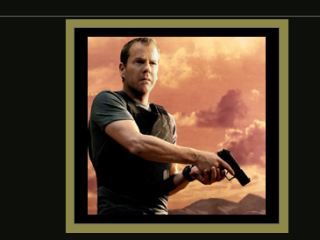
    Picture 2  America's thrill ride tv show, 24, begins January 17. Originally it featured a small counter terrorism unit based in LA, the hapless FBI and others were always  several steps behind due to obvious political correctness and sheer size. Seems fiction mimics reality. 

  • Professor Elam

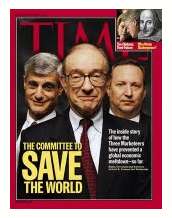
    This author argues that if Bear Stearns had not been rescued, a larger crash would not have happened. 

    Picture 2  Well the better read is the comments show to the article. AS the first post says, that way the fails would have happened the next day all over the world, and it is hard to see how the big banks and FNM FRE AIG are any better under either scenario. 

    Something that would have let companies and govts know they will not be rescued would at least have forced them to mend their own fences. I suspect that is going to happen as I have reported here in states and cities across the US this year. Even the $4 trillion promised in Barney's latest plan will not rescue everyone. 

    In 1976 President Gerald Ford said not to a New York City Bailout, while NYC did get some help at least it brought the crisis to a head, the comptroller of JC Penny came in for a year to help straighten out the accounting, and NYC at that time stopped making promises to unionized city employees. 

    All that was then, now we are right back there again but on  a much larger scale. California, AZ, Michigan, NYC, all broke, unemployment benefits have been extended as emergency payments, will that last all the way to the November elections?

    GM finally imploded as it and Chrysler ran out of cash, just as Bear Stearns did. This same scenario will play is playing out across the country now. Worse the Fed govt is trying to pay off union support with ever more debt, when will this house of cards finally crash?

  • Professor Elam

    Picture 1  

    Apple, notoriously secretive about upcoming products, has not commented on the matter. But given the iPhone's success, which propelled competitors to come out with copycat touch-screen phones and centralized "app" stores to sell add-on software, all eyes are on Apple to define what a slate or tablet-style computer should look like and how it will be used.

    AP Jan 7 2009


    Read the article here.  But the excerpt above and the picture pretty well says it all, Apple now sets the Design Standard for personal computers.   It's almost humorous to see bald, heavy Balmer trying to imitate Steve Jobs at an announcement.  Jobs, a rather slimmer figure than Balmer,  has made his jeans and black shirt ensemble the understated presentation form. Can't Balmer hire a good looking faux Steve Jobs model, male or female?   It looks like Balmer is trying some sort of Garth Brooks smoke and lights show to get folks excited about, well, a tablet that will be out sometime this year. As the article notes, there have been many windows based tablets but none of them took off. Now that Apple is not going to announce, but note the verb, define, what a tablet should be, the rest are playing catch up. 

    And note that Apple does not make an appearance at the Consumer Electronics Show in Vegas pictured above. No, they will have their own show later this month where  only Apple is the star. 

    All of this makes my case that Design should be a component of business classes. 


  • Professor Elam

    This article explains how the finance lobby has come to dominate Congress. It is also a simple explanation of how the derivative market grew and still threatens the financial landscape. 

    We will be including this article in our modules on derivatives in intermediate II accounting.

  • Professor Elam

    An Easily Understandable Explanation of Derivative Markets: Or, How the unemployed bought $300,000.00 homes.
     
    Heidi is the proprietor of a bar in Detroit. She realizes that virtually all of her customers are unemployed alcoholics and, as such, can no longer afford to patronize her bar. To solve this problem, she comes up with new marketing plan that allows her customers to drink now, but pay later. 
     
    She keeps track of the drinks consumed on a ledger (thereby granting the customers loans). 
     
    Word gets around about Heidi's "drink now, pay later" marketing strategy and, as a result,
     increasing numbers of customers flood into Heidi's bar. Soon she has the largest sales volume for any bar in 
    Detroit
     
    By providing her customers' freedom from immediate payment demands, Heidi gets no resistance when,
     at regular intervals, she substantially increases her prices for wine and beer, the most consumed beverages. Consequently, Heidi's gross sales volume increases massively. 
     
    A young and dynamic vice-president at the local bank recognizes that these customer debts
     constitute valuable future assets and increases Heidi's borrowing limit. He sees no reason for any undue concern, since he has the debts of the unemployed alcoholics as collateral. 
     
    At the bank's corporate headquarters, expert traders transform these customer loans into DRINKBONDS,
     ALKIBONDS and PUKEBONDS. These securities are then bundled and traded on international security markets. Naive investors don't really understand that the securities being sold to them as AAA secured bonds are really the debts of unemployed alcoholics. 
     
    Nevertheless, the bond prices continuously climb, and the securities soon become the hottest-selling items
     for some of the nation's leading brokerage houses. 
     
    One day, even though the bond prices are still climbing, a risk manager at the original local bank decides
     that the time has come to demand payment on the debts incurred by the drinkers at Heidi's bar. He so informs Heidi. 
     
    Heidi then demands payment from her alcoholic patrons, but being unemployed alcoholics they cannot pay back their drinking debts.
     Since, Heidi cannot fulfill her loan obligations she is forced into bankruptcy.  The bar closes and the eleven employees lose their jobs. 
     
    Overnight, DRINKBONDS, ALKIBONDS and PUKEBONDS drop in price by 90%.
     The collapsed bond asset value destroys the banks liquidity and prevents it from issuing new loans, thus freezing credit and economic activity in the community. 
     
    The suppliers of Heidi's bar had granted her generous payment extensions and had invested their firms' pension funds in the various BOND securities.
     They find they are now faced with having to write off her bad debt and with losing over 90% of the presumed value of the bonds. Her wine supplier also claims bankruptcy, closing the doors on a family business that had endured for three generations, her beer supplier is taken over by a competitor, who immediately closes the local plant and lays off 150 workers. 
     
    Fortunately though, the bank, the brokerage houses and their respective executives are saved
     and bailed out by a multi-billion  dollar no-strings attached cash infusion from the Government. The funds required for this bailout are obtained by new taxes levied on employed, middle-class, non-drinkers. 
     
    Now, do you understand?


  • Professor Elam

    Tuesday Jan 5 2009

    Picture 5 

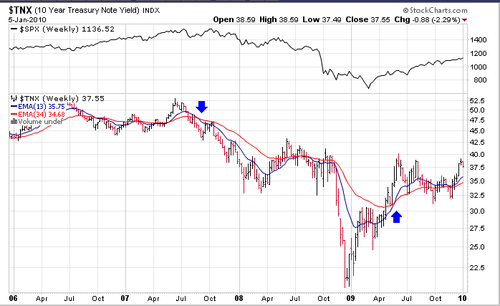
    The weekly exponential moving averages called the decrease in rates, and the decrease in stocks shown above pretty well. We previously posted these MAs on the stock market. The SPX is at the top. Notice that yields followed the stock market down. IN the recovery yields have followed the market up. 

    Conventional wisdom has it that yields should be rising as the Government issues more debt. But if the stock market turns down, what will yields do the same in the face of the massive government desire for more money?  The best answer will be to continue to examine this chart For the time being, rates are trending up against resistance at 4%.

    Picture 6 

    Two different markets but the same graph. Robert Prechter's group at http://www.elliottwave.com has identified this as 'All the Same Market' with stocks bonds and even oil looking like the same chart pattern. 

    So we suspect oil will continue up, particularly if the dollar weakens and as China and other holders of dollars seek to diversify out of them and into physical commodities. 
     

  • Professor Elam

    I think the whole e book think is really going to take off with the announcement of the Apple Tablet. 

    Amazon's Kindle, Sony Reader, and BN product only connect to the net to download a book. Look for the Apple product to be a big iPhone running all those apps AND connecting to the internet. 

    I also firmly believe this will help video conferencing get going.  Folks like Umar and the hapless TSA are the best friends video conferencing ever had. 

  • Professor Elam

    the US Tax System is all about social policy, it is not about collecting revenue. This article makes that clear. The Administration has favored athletes, writers, and performers but does not seem to like investors. Will this work come November?

  • Professor Elam

    The Banks in Canada did not go bust as they have in the US. The housing market did not go bust in the spectacular fashion of the US, though it is way up now given their resource based economy and the strength of the loon versus the buck. This article by the Cleveland FED examines the differences in the Canada versus the US approach. 

    We will be studying liabilities in Intermed II this semester, well we do every semester in Intermed II but 

    it is important to understand the regulations regarding off balance sheet debt and how companies try to conceal their real liabilities. We will be reading this article in the spring.