• Professor Elam

    Mnday 10/2/23

    Arnold’s Corner: Monday Motivation

    This week, the big sale starts. My book, Be Useful, comes out next week, so every day, you’ll see me in magazines, on podcasts, on your TV — hopefully, everywhere.

    I’ve already talked to you about how much I’ve enjoyed the real conversations in the podcasts, so today, I want to talk to you about the importance of selling.

    There’s an entire chapter in the book called “Sell, sell, sell.”

    It is a vital part of every success story, and I know it makes people uncomfortable, so I want to be very clear.

    You can have the best book, the best podcast, the best art, the best anything in the world; you can be the best teacher, the best plumber, the best whatever you want to be — but if you don’t sell, how will anyone ever know?

    For too many people, “selling” is a dirty word. They think it’s beneath them, or it’s dirty, and they think of a snake oil salesman or a caricature of a used car salesman pawning off lemons on some unfortunate soul.

    I’m lucky. I never thought that way. Since I apprenticed as a salesman in Austria, and even before that, when I sold ice cream to people at the lake, sales have always been how I found success. I didn’t have any hangups about it, so I was free to sell.

    In those early days, that meant having the money to buy a used bicycle and a tracksuit that my parents couldn’t afford. Later in life, that meant selling myself, the sport of bodybuilding, action movies, clean energy, infrastructure, and good government policies — everything.

    Sell, sell, sell.

    You might say, “Schnitzel, I don’t have anything to sell.”

    You do. This is the most important thing to learn: selling isn’t just about making money. Selling is communicating, pitching, marketing.

    No matter what, you have to sell yourself. We talk all the time about the importance of having a vision. Once you know your vision, your first customer is yourself. You’re going to hit roadblocks and naysayers, and you’ll need to sell yourself to stick with it and keep chasing that vision.

    Then, you must sell yourself and your vision to other people. What’s a job interview? A sales pitch. What are you doing when you create a fantastic project and share it with people at your company? Selling.

    Let’s say your vision is to be the best teacher in the world. First, you have to sell a principal on hiring you. Then, you have to sell the students on listening to you. Then you have to sell them on each subject.

    No matter what you want to do, you’re going to have to sell. So, I want you to get beyond those hangups because once you feel free to sell yourself and your vision, you’ll find doors opening to the life you imagine.

    If Schnitzel’s success coming from sales isn’t enough for you, how about this: would you know about the Theory of Relativity if Einstein was a purist who just sat on it in a notebook in his lab? No! He sold it.

    And if you still have a little bit of a hang-up and feel like you shouldn’t go out there in the world hyping yourself or your vision, I just heard a story that might help.

    Like many of you, I’ve been captivated and inspired by Coach Prime, Deion Sanders, one of the greatest football players (and a great baseball player) of all time and now a great coach for the University of Colorado. I just heard a lesson from him that might help all of you.

    He said that Deion Sanders is an introvert who doesn’t like crowds and prefers fishing alone. So, he created an alter-ego when he was a young football player. Prime Time, and now Coach Prime, goes all out. He’s as extroverted as you can be. He realized that his talent could only get him so far, but if he could sell himself, there was no ceiling. Since he’s one of the most talked about people in sports right now, we can all see that he’s succeeding.

    If you’re still worried about selling yourself, create your own alter-ego.

    No matter what it takes, I just want you to start selling yourself and your vision so that I can watch your success.

    I promised all of you I’d share the interviews and podcasts I’ve done for the book. Here’s the first round. I’ll keep sharing all week. Sell!

    People

    New York Times 

  • Professor Elam

    10/1/23

    When FTX founder Sam Bankman-Fried’s crypto empire teetered on the brink of collapse, top lieutenant Caroline Ellison addressed a group of employees. One part of the empire, trading firm Alameda Research, had made risky bets using customer deposits from its sister crypto-exchange FTX and now the money was gone.

    When an employee asked who decided to take customer funds, Ellison hesitated, then said, “Sam, I guess.”

    She is set to be a star witness at Bankman-Fried’s fraud trial, which begins this week. The prosecutors have called the collapse one of the biggest financial frauds in U.S. history. 

    Ellison, 28 years old, will join two other members of his onetime inner circle—FTX co-founder Gary Wang and engineering director Nishad Singh—in taking the stand to tell the exchange’s behind-the-scenes story.  

    The testimony from Ellison has the potential to be particularly personal and raw. In her writings, she has detailed her complicated and sometimes romantic relationship with her boss and her interest in polyamory. These topics could provide fodder for cross-examination.

    “At bottom, every fraud case is just a human drama,” said Jordan Estes, a former federal prosecutor now at the firm Kramer Levin. “Caroline is the likely vehicle for getting a lot of that out.”

    The trial, which starts Tuesday, will mark the first time Ellison has spoken publicly about FTX since its collapse. She drew attention this summer after 31-year-old Bankman-Fried shared her private writings with a reporter. The move kicked off a process that ultimately led the judge presiding over Bankman-Fried’s criminal case to jail the FTX founder while he awaits trial.  

    Ellison has pleaded guilty to seven criminal counts—more than Wang or Singh—and agreed to cooperate with the government. Prosecutors have said that she not only was involved in criminal activity ranging from bribery in China to defrauding FTX customers of billions of dollars but also acted at Bankman-Fried’s direction. Her lawyer declined to comment.

    Bankman-Fried has pleaded not guilty. His lawyers say that prosecutors haven’t adequately established that Ellison acted at his direction. His spokesman declined to comment. 

    Ellison met Bankman-Fried at the trading firm Jane Street Capital and joined Alameda as a trader in 2018. The daughter of two MIT professors, she grew up in the suburbs of Boston and graduated from Stanford University with a math degree.  

    “Before I did any trading, I didn’t really consider myself a, like, trader-y person,” Ellison said on an FTX podcast. “It’s sort of something I’ve learned more on the job and had, like, a super strong natural instinct towards.”

    Ellison’s testimony could include Signal and Slack messages, her handwritten notes from meetings, and lists she made, such as one titled “Things Sam is Freaking Out About.” That list includes Ellison’s understanding of Bankman-Fried’s concerns about subjects including Alameda’s trading, bad press coverage and fundraising, prosecutors said. 

    Bankman-Fried shared a similar background with Ellison, growing up on Stanford University’s campus, where his parents taught at the law school. He studied physics at the Massachusetts Institute of Technology before he worked at Jane Street and founded Alameda in 2017. 

    Bankman-Fried named Ellison and another colleague, Sam Trabucco, as co-CEOs of Alameda in 2021, saying that he wanted to focus on his new project, the crypto exchange FTX. Ellison, who was known among employees as a smart and kind boss, handled day-to-day operations and trading at Alameda. 

    Prosecutors said that while Bankman-Fried distanced himself publicly, he privately maintained control and directed the trading firm’s criminal activity.

    At work, Bankman-Fried was often the decision maker when Ellison didn’t have a strong opinion, people familiar with them said, describing Ellison as not one to push back. 

    Bankman-Fried and Ellison’s on-again, off-again romantic relationship dates back to at least 2021 and ran into 2022, according to people who know them. 

    By early 2022, Bankman-Fried had become known as a crypto wunderkind, inking promotional deals with celebrities including quarterback Tom Brady and comedian Larry David.  

    Bankman-Fried, Ellison, Singh and Wang misappropriated more than $1 billion between 2020 and 2022, buying luxury real estate, bankrolling pet projects and financing large loans and bonuses, FTX’s new management has alleged in federal bankruptcy court.

    Prosecutors say there were two ways that executives moved billions of dollars of FTX customer money to Alameda: by secret code and by having FTX users deposit funds in bank accounts controlled by Alameda.

    One big-ticket purchase that allegedly involved customer funds was a $30 million six-bedroom penthouse in a resort community in the Bahamas. Bankman-Fried, Ellison, Wang and Singh lived together in the luxury apartment while running FTX and Alameda. According to people who know them, the four would spend some evenings eating vegan meals and playing bughouse chess, a variation of the game involving two boards and four players. 

    Alameda and FTX also used the customer money for speculative investments in technology companies and cryptocurrencies. 

    The risky bets caught up with Alameda when the crypto market slumped in the summer of 2022. After lenders demanded the firm repay outstanding loans, Bankman-Fried authorized the trading firm to draw down billions in FTX customer assets, according to the indictment. 

    On Nov. 2, the crypto website CoinDesk published what purported to be a leaked Alameda balance sheet, causing a run on customer funds. 

    As pressure mounted, Bankman-Fried directed Ellison to reassure customers on Twitter, prosecutors said. They said Alameda began liquidating its assets at Bankman-Fried’s direction. 

    “I just had an increasing dread of this day that was weighing on me for a long time, and now that it’s actually happening, it just feels great to get it over with one way or another,” Ellison wrote in a message to a former co-worker.


    On Nov. 11, Bankman-Fried resigned and FTX filed for bankruptcy. Thousands of customers were left without billions of dollars in funds. 

    Bankman-Fried remained in the Bahamas, where he was arrested on Dec. 12. A week later, in Manhattan, Ellison signed a formal cooperation agreement. The Southern District of New York requires a cooperator to detail every crime committed.

    Ellison pleaded guilty to crimes including fraud offenses and conspiring to commit money laundering. The total maximum sentence was 110 years in prison, the judge told her.   

    She told the judge she had conspired with Bankman-Fried to lie to lenders and to hide the true nature of the relationship between Alameda and FTX. “I am truly sorry for what I did,” she said. “I knew that it was wrong.”

    The payoff for cooperation can be high. If Ellison provides substantial assistance to prosecutors, her agreement says that they will write the judge a letter requesting leniency. White-collar cooperators who receive such a letter often aren’t sentenced to a prison term, lawyers said.

    Ellison will still be required to repay proceeds from her crimes, and has agreed with securities regulators to conditions that effectively bar her from many finance jobs.

    Still, she would likely be free to pursue her nonfinancial passions.

    “My family keeps asking me when I’m going to finish my novel,” Ellison said on a 2021 FTX podcast, “and I tell them probably when I’m not working at Alameda anymore, or at least when I take a long vacation.”

    Hannah Miao, Alexander Osipovich, Caitlin Ostroff contributed to this article.

    Here is a great youtube on just how outrageous the the outright theft of customer money became


  • Professor Elam

  • Professor Elam

    9/30/23

    Negative mood is exclusionary, in politics that means throw the bums out.  Seems the Student Body President changed the rules so his brother could could attain a positiion he was not qualified to hold.

    The vote was 35-15.

  • Professor Elam

  • Professor Elam

    9/25/23 WSJ article

    After more than six years working as an accountant, Omer Khokhar knew he wanted out.

    The New York resident found accounting work monotonous, with little room for creativity or growth, and maximum salaries weren’t as high as he would have liked.

    “The job security and the ability to have a comfortable life motivated me at first,” said Khokhar, who served as a senior accountant at two construction firms and senior auditor at an accounting firm. “But once I started, had some work and life experience, I realized there are better options out there.”

    Khokhar earlier this year joined

    as a treasury sales associate in its commercial real-estate banking division. 

    Newsletter Sign-up

    WSJ | CFO Journal

    The Morning Ledger provides daily news and insights on corporate finance from the CFO Journal team.


    Subscribe

    The 30-year-old isn’t alone in his discontent with the industry. Accountants have long been viewed by people in the profession as underpaid and undervalued compared with positions in tech and banking. Now the foot soldiers of the profession are leaving the field in droves. Accountants cite low salaries, mundane tasks, burnout and the threat of new technology like generative AI as reasons for considering other industries.

    Professionals in any field may find it isn’t a fit for them, but accountants are moving on or considering doing so at a time of an already widening shortage of these workers, who often specialize in either auditing financials or preparing taxes. 

    There were about 1.65 million accountants and auditors in the U.S. in 2022, up 1.3% from the previous year but down 2.6% from 2020 and down 15.9% from 2019, according to the Bureau of Labor Statistics’ current population survey. More than 300,000 accountants quit their jobs between 2019 and 2021, data show.

    Fewer people are pursuing degrees in accounting and entering the field, leading to more open positions and for longer periods. The shortage is expected to worsen as more accountants retire without a robust pipeline of replacements.

    The profession carries a barrier to entry of 150 college credit hours, which are required to become a certified public accountant, essentially resulting in a fifth year of school. Accounting representatives in states such as South Carolina and Minnesota are rallying to loosen the mandates. 

    Much of the industry’s focus has been on filling the void left by retirees rather than on the discontent of the entrenched workers. Several professional groups have stepped up their outreach to prospective new entrants by increasing awareness about accounting opportunities among high-school and college students

    Former accountants have largely moved to nonaccounting roles in finance, as well as working as financial analysts or in business operations, human resources and banking, according to employment data provider Live Data Technologies. 


    A greater percentage of accountants are leaving the profession later in their careers now than in years past. About 82% of workers who exited accounting this year through Sept. 1 had at least six years’ experience, up from 77% and 71% in full years 2022 and 2021 respectively, Live Data said.

    The average tenure and age of accountants are increasing, meaning that any given exit is likely to be someone with a longer tenure, said Jason Saltzman, director of growth at Live Data. 

    Other accountants, increasingly dissatisfied with their careers, are weighing their options. Zach Madel, for example, plans to evaluate whether to switch careers after the tax season ends in April, potentially counseling people who are struggling with substance abuse or mental-health issues. 

    The 28-year-old owns a one-person accounting business in Clearwater, Fla., in which he does monthly accounting work for healthcare businesses and tax planning throughout the year for a mix of companies and individuals. He started working in accounting in 2018, graduated with a bachelor’s degree in accounting in 2019 and earned his CPA license in January 2021. 

    While Madel has the flexibility of running his own business, he said the work is often tedious and he doesn’t feel as if he’s making a difference in his clients’ lives. “We’re there to help people, we’re there to make scary things like taxation better, and I feel like that’s not the message a lot of people view us as giving,” Madel said. “I think it’s somewhat rare that you can say your CPA changed your life.” 

    Zach Madel, an accountant in Clearwater, Fla. Photo: Carissa Madel

    The exodus of auditors and tax accountants isn’t surprising given the wear and tear fueled by long hours and a relatively low salary in relation to the extent of education and related costs, he said. “There are good things about the profession,” Madel said. “It’s just that some of the negatives are so negative sometimes, it’s hard to always dwell on the positive.”

    The sentiment recurs in other parts of the country as well. A 33-year-old tax accountant in Kansas City, Mo., said she feels overworked year-round and is carefully looking at career options after more than six years in the field. “Because of the burnout that I feel, I really just want a job where you show up, do your 40 [hours a week] and go home. I don’t even know what that would be,” she said.

    A 32-year-old senior accountant and CPA in Levittown, Pa., said she is considering going back to school for nursing because that career likely would yield more meaningful work and potentially a better work-life balance. 


    After more than six years working as an accountant, Omer Khokhar knew he wanted out.

    The New York resident found accounting work monotonous, with little room for creativity or growth, and maximum salaries weren’t as high as he would have liked.

    “The job security and the ability to have a comfortable life motivated me at first,” said Khokhar, who served as a senior accountant at two construction firms and senior auditor at an accounting firm. “But once I started, had some work and life experience, I realized there are better options out there.”

    Khokhar earlier this year joined

    as a treasury sales associate in its commercial real-estate banking division. 

    Newsletter Sign-up

    WSJ | CFO Journal

    The Morning Ledger provides daily news and insights on corporate finance from the CFO Journal team.


    Subscribe

    The 30-year-old isn’t alone in his discontent with the industry. Accountants have long been viewed by people in the profession as underpaid and undervalued compared with positions in tech and banking. Now the foot soldiers of the profession are leaving the field in droves. Accountants cite low salaries, mundane tasks, burnout and the threat of new technology like generative AI as reasons for considering other industries.

    Professionals in any field may find it isn’t a fit for them, but accountants are moving on or considering doing so at a time of an already widening shortage of these workers, who often specialize in either auditing financials or preparing taxes. 

    There were about 1.65 million accountants and auditors in the U.S. in 2022, up 1.3% from the previous year but down 2.6% from 2020 and down 15.9% from 2019, according to the Bureau of Labor Statistics’ current population survey. More than 300,000 accountants quit their jobs between 2019 and 2021, data show.

    Fewer people are pursuing degrees in accounting and entering the field, leading to more open positions and for longer periods. The shortage is expected to worsen as more accountants retire without a robust pipeline of replacements.

    The profession carries a barrier to entry of 150 college credit hours, which are required to become a certified public accountant, essentially resulting in a fifth year of school. Accounting representatives in states such as South Carolina and Minnesota are rallying to loosen the mandates. 

    Much of the industry’s focus has been on filling the void left by retirees rather than on the discontent of the entrenched workers. Several professional groups have stepped up their outreach to prospective new entrants by increasing awareness about accounting opportunities among high-school and college students

    Former accountants have largely moved to nonaccounting roles in finance, as well as working as financial analysts or in business operations, human resources and banking, according to employment data provider Live Data Technologies. 


    A greater percentage of accountants are leaving the profession later in their careers now than in years past. About 82% of workers who exited accounting this year through Sept. 1 had at least six years’ experience, up from 77% and 71% in full years 2022 and 2021 respectively, Live Data said.

    The average tenure and age of accountants are increasing, meaning that any given exit is likely to be someone with a longer tenure, said Jason Saltzman, director of growth at Live Data. 

    Other accountants, increasingly dissatisfied with their careers, are weighing their options. Zach Madel, for example, plans to evaluate whether to switch careers after the tax season ends in April, potentially counseling people who are struggling with substance abuse or mental-health issues. 

    The 28-year-old owns a one-person accounting business in Clearwater, Fla., in which he does monthly accounting work for healthcare businesses and tax planning throughout the year for a mix of companies and individuals. He started working in accounting in 2018, graduated with a bachelor’s degree in accounting in 2019 and earned his CPA license in January 2021. 

    While Madel has the flexibility of running his own business, he said the work is often tedious and he doesn’t feel as if he’s making a difference in his clients’ lives. “We’re there to help people, we’re there to make scary things like taxation better, and I feel like that’s not the message a lot of people view us as giving,” Madel said. “I think it’s somewhat rare that you can say your CPA changed your life.” 

    Zach Madel, an accountant in Clearwater, Fla. Photo: Carissa Madel

    The exodus of auditors and tax accountants isn’t surprising given the wear and tear fueled by long hours and a relatively low salary in relation to the extent of education and related costs, he said. “There are good things about the profession,” Madel said. “It’s just that some of the negatives are so negative sometimes, it’s hard to always dwell on the positive.”

    The sentiment recurs in other parts of the country as well. A 33-year-old tax accountant in Kansas City, Mo., said she feels overworked year-round and is carefully looking at career options after more than six years in the field. “Because of the burnout that I feel, I really just want a job where you show up, do your 40 [hours a week] and go home. I don’t even know what that would be,” she said.

    A 32-year-old senior accountant and CPA in Levittown, Pa., said she is considering going back to school for nursing because that career likely would yield more meaningful work and potentially a better work-life balance. 

    Advertisement – Scroll to Continue

    To be sure, there are accountants who believe their work has significant value to their clients. Nicole Davis, a 42-year-old CPA who runs a 14-person Covington, Ga.-based firm that performs accounting, tax and payroll services, said she feels gratitude and fulfillment from her work, for example, by helping small businesses get their books in order and often improving their financial health. Her role took on more meaning for her during the pandemic, when small businesses were especially vulnerable, Davis said. “For me, it’s all about helping them achieve the goals that they set out for themselves.” 

    In one common trajectory, people in the field start their careers at an accounting firm, burn out and move to accounting roles in-house at companies for a less hectic life but ultimately less thrilling work, accountants say.

    “That definitely exacerbates the shortage if you lose people in the middle too,” said Troy Janes, clinical accounting professor at Purdue University. 

    To retain people, firms don’t just need to raise salaries and offer training in new capabilities. More accounting firms in recent years have been willing to allow managers to remain at the same level, rather than dismiss them, even if they don’t plan to make them partner, a move to keep personnel who might otherwise leave, Janes said. “We don’t think that you’re going to be a partner, but if you want to stay here as just a manager, then you can do that,” he said. 

    SHARE YOUR THOUGHTS

    What would make the accounting profession more appealing to those already in it? Join the conversation below.

    Accountants also increasingly face the risk of generative artificial intelligence endangering their roles, fueling their frustration. “As technology gets further and further ahead, we’re stuck in place and the gap is getting wider,” said Ben Wann, who runs an accounting-education company. 

    Some professionals are optimistic that AI will do more of the mundane tasks and allow them to tackle complex tasks earlier in their careers.

    Jesse Fu, a 39-year-old senior director of automation and business transformation at satellite-radio giant

    , left the accounting world last year after a combined 15 years at Big Four firms PricewaterhouseCoopers and KPMG. At Sirius XM, he trains accountants on how to automate more of their work but doesn’t do any accounting on his own anymore. Repetitive tasks, long hours and high pressure around tax work led Fu to look elsewhere, he said. 

    “I definitely do not want to do repetitive work,” said Fu, who has an enrolled-agent designation from the Internal Revenue Service that supported his tax work. 

    In a time of economic uncertainty, accounting careers can offer a stable path unlike some other areas of business, though for some people who left, that may not be enough of an incentive to return. 

    “I feel like it’s a good safety net to have, but would I consider moving back?” Khokhar said. “Probably not.

     

  • Professor Elam

    9/22/23

    several current and former TAMUSA students attended the annual SA TXCPA Career Fair.  Our  exec director Jacqui Belcher did a great job of recruiting sponsors, a necessity when renting the Norris Conference Center.

    Here is Jacqui with the principals of FHK CPA, Alan Rich Land Bob Herbst R.  Yes these are tall guys!

    DSCF4161

    Dang I took another dozen  or so photos but for some reason they are not uploading, anyway, great turnout,  tables were labeled with cruise locations,  CPAs moved from table to table explaining what they did in their career via CPA.


  • Professor Elam

    9/22/23

    Curiosity Stream  is an internet documentary website and it is just great. The rare fiind of great for all ages. If you have kids lots of dinosaurs, outer space, history.  It costs a mere three bucks a month, quality is excellent. 

    I ran across a four or five part called Wargamers. It is the story of how Britain analyzed German U boat attacks during WW II. Germany at one point sak  20 out of  35 ships in one  convoy, Britain was literally going to starve if something did not change.  Change came with Commander Roberts tactical war game group. With all the men at sea he turned to the WRENS

    Women in the Royal Navy. He recruited the one of the first woman to pass the British Chartered  Accountants exam as well as other math grads and whiz kids, like bridge players.

    A great history lesson and a big win for women in WW II.

  • Professor Elam

    9/21/2023

    Click here for the rules


    Arnold after heart surgery

    Screenshot 2023-09-21 at 3.16.45 PM

    Terminator

    Screenshot 2023-09-21 at 3.21.39 PM


    Screenshot 2023-09-21 at 3.23.23 PM

    Arnold has a sense of humor watch this to the end, and do not smoke cigars!

    Arnold is flexibler

  • Professor Elam

    9/21/23

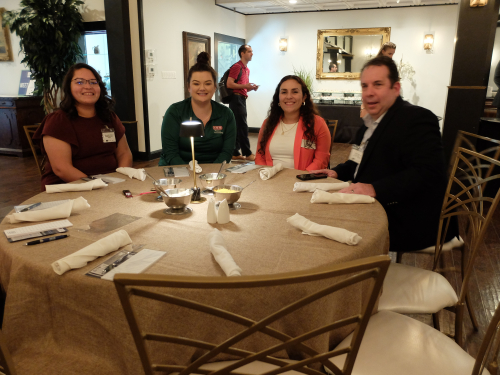
    The Gangs all here L to R

    >Bernadette, Miranda, Ana, Brian

    DSCF4147

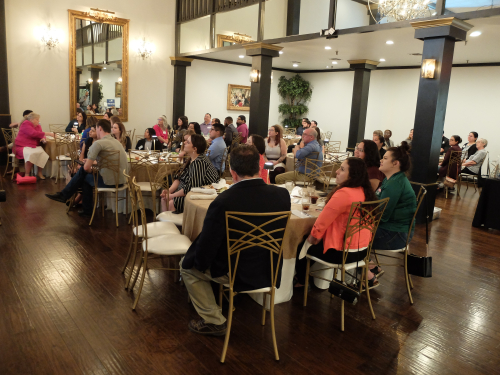
    Mike Lovelace drew a big group of students not just locally but out of town virtually as well.

    DSCF4157