• Professor Elam

    Bob Prechter takes  look at the commercial real estate market.

    I noticed four vacancies of six in the small strip center at the corner of 281 on the way to my house.

    Once the mood changes, it takes a huge reversal for anyone to get the courage to lease again, we are nowhere near the bottom.

  • Professor Elam

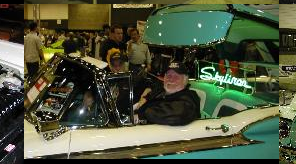
    Picture 6Art can take many forms. The 1950s was the era of American manufacturing dominance. We won the war, gasoline was cheap, and America went for a ride.

    The cars with rocket styled tail fins mirrored the space race,  and lots of chrome and heavy cast iron V 8s to drive to the corner grocery,

    reflected the self confidence of the day.

    Check out these photos

    with the gorgeous backdrop of Vancouver Island.

    Click on the STEPS at left to follow the re construction of this car. In process problems we show mateiral added at the start of the process and then conversion costs are added to finish. This is an excellent example of how conversion costs are most of the project. Can you see how activity based costing would be of some help in estimating the cost to do this?  Can you see that unless you could do it yourself there is no telling what this would cost in labor?

    You might think the retractable hardtops that are lately the rage, but did you realize that Ford built these in the 1950s, see photo above.

    All this hubris peaked with the muscle cars of the late 1960s and the subsequent energy embargo in the early 1970s. The Japanese were mastering small engine technology building pretty wonderful motorcycle engines. Indeed the 1500cc dohc four in the Honda Fit has its origins in the Honda 750 motorcycle engine. Mired in cast iron V 8s and unwilling to spend the money on new technology, Americans sawed two cylinders off the V 8s for an out of phase V 6 as honda introduced the CVCC engine, it complied with emission laws without an air pump. And so the die was cast. Servicemen returning from Viet Nam brought back high tech Japanese stereos and cameras, setting a belief system that high tech was Oriental. The American response was to ask for a limit on the import of small Japanese trucks. That passed and then the Americans got their worst nightmare, the Japanese simply came here and started building. And today Chrysler and GM are on borrowed time, bet on Ford.

  • Professor Elam

    Wendi Taber spoke last night in my Grad Accounting Class. she sends this warning from Information Week about requests from your social networking friends.

    Beware Hijacked Social Networking Accounts, FBI Warns

    Social networking sites are becoming a more popular attack vector for cybercriminals because people trust those they believe to be friends.


    Think twice before wiring money to help a Facebook friend who claims to be in trouble in a foreign country.

    Marking the commencement of National Cybersecurity Awareness Month, the Federal Bureau of Investigation (FBI) on Thursday warned that there's been an increase in hijacked social networking accounts and that cybercriminals are using these accounts to defraud victims' friends.

    Since 2006, there have been 3,200 reports of account hijackings, according to the Internet Crime Complaint Center (IC3).

    Such scams often begin with spam messages.

    "When opened, the spam allows the cyber intruders to steal passwords for any account on the computer, including social networking sites," the FBI said. "The thieves then change the user's passwords and eventually send out distress messages claiming they are in some sort of legal or medical peril and requesting money from their social networking contacts."

    Facebook's security blog includes a transcript posted in August of a chat conversation in which this very scam is played out.

    "Pretending to be Derek's friend Jill, the scammer tells Derek that she was mugged at gunpoint in London, and that she needs him to wire her $890 immediately," Facebook explains. "Derek becomes more and more suspicious as the conversation progresses and ultimately realizes that the person he's talking to isn't his friend, and that the story he's being told is a lie."

    Another common scam, the FBI said, involves phishing spam that presents a fake notice about some issue requiring attention, such as a terms of service violation, account expiration, or unexplained account activity. Messages of this sort often seek to prompt recipients to click on a link that leads to a malicious site and to provide personal information or account details.

    The reason that cybercriminals seek to abuse social networking accounts is that messages from friends have an appearance of legitimacy.

    As if to underscore the FBI's concern, Roger Thompson, chief of research at AVG Technologies, reported in a blog post on Thursday that his company had detected a series of identical Facebook profiles, differentiated only by profile names, set up to distribute fake anti-virus software through a link purporting to be a home video.

    The FBI advises: that users check their privacy settings on social sites to make sure they're not exposing too much information; being selective about friends on social sites; disabling unused sharing options; being careful about links posted to social sites; and reviewing the security settings and procedures at social sites.

    InformationWeek has published an in-depth report on smartphone security. Download the report here (registration required).
  • Professor Elam

    Wendi Taber spoke last night in my Grad Accounting Class. she sends this warning from Information Week about requests from your social networking friends.

    Beware Hijacked Social Networking Accounts, FBI Warns

    Social networking sites are becoming a more popular attack vector for cybercriminals because people trust those they believe to be friends.


    Think twice before wiring money to help a Facebook friend who claims to be in trouble in a foreign country.

    Marking the commencement of National Cybersecurity Awareness Month, the Federal Bureau of Investigation (FBI) on Thursday warned that there's been an increase in hijacked social networking accounts and that cybercriminals are using these accounts to defraud victims' friends.

    Since 2006, there have been 3,200 reports of account hijackings, according to the Internet Crime Complaint Center (IC3).

    Such scams often begin with spam messages.

    "When opened, the spam allows the cyber intruders to steal passwords for any account on the computer, including social networking sites," the FBI said. "The thieves then change the user's passwords and eventually send out distress messages claiming they are in some sort of legal or medical peril and requesting money from their social networking contacts."

    Facebook's security blog includes a transcript posted in August of a chat conversation in which this very scam is played out.

    "Pretending to be Derek's friend Jill, the scammer tells Derek that she was mugged at gunpoint in London, and that she needs him to wire her $890 immediately," Facebook explains. "Derek becomes more and more suspicious as the conversation progresses and ultimately realizes that the person he's talking to isn't his friend, and that the story he's being told is a lie."

    Another common scam, the FBI said, involves phishing spam that presents a fake notice about some issue requiring attention, such as a terms of service violation, account expiration, or unexplained account activity. Messages of this sort often seek to prompt recipients to click on a link that leads to a malicious site and to provide personal information or account details.

    The reason that cybercriminals seek to abuse social networking accounts is that messages from friends have an appearance of legitimacy.

    As if to underscore the FBI's concern, Roger Thompson, chief of research at AVG Technologies, reported in a blog post on Thursday that his company had detected a series of identical Facebook profiles, differentiated only by profile names, set up to distribute fake anti-virus software through a link purporting to be a home video.

    The FBI advises: that users check their privacy settings on social sites to make sure they're not exposing too much information; being selective about friends on social sites; disabling unused sharing options; being careful about links posted to social sites; and reviewing the security settings and procedures at social sites.

    InformationWeek has published an in-depth report on smartphone security. Download the report here (registration required).

  • Professor Elam

    The OWL at Purdue stands for Online Writing Lab at Purdue University which happens to be in Indiana.

    Click here for the OWL concerning Research Papers.

    This site contains literally everything you need to know about writing a paper. I suggest you book mark it for future reference.  

  • Professor Elam

    Here is the plan for social security, cut the benefits. Imagine what it will look like when the students get this age.

  • Professor Elam

    Harvard Stanford and Yale are all down about 25% in their endowments, as a result of the last year alone.

    Now Stanford wants to sell some of its illiquid investments, good luck guys. As I have said in class, this recession will cause long term adjustments, most folks have not grasped the extent of these changes but we are making the case on this blog, GM and Chrysler in big trouble, the banks still at risk, and college endowments in trouble. While the big guys can weather this, the real problem is with the small colleges, losing say 25% of a few million is  a real problem.

  • Professor Elam

    China is moving to establish their yuan as an alternative currency. The Administration does not seem to understand that it will be foreign investors that decide what we can and cannot do, not our own desires. As the article says this mirrors the decline of the British Pound in the 1920s as well as the international status of Britain. Do not ask for whom the Bell Tolls…

  • Professor Elam

    I am delighted to remind accounting students that Wendi Tabor, President Elect of San Antonio CPA Society will speak to my Graduate Cost Class Wed evening October 7 at 7 PM.We meet in Room 12 in the classroom annex. Accounting students whether you are in this class or not are certainly invited.

    Wendi came to speak to my classes when we were in the portables, as you can see below, she brings a good deal of experience in the San Antonio market and I look forward to her remarks. Her bio appears below.

    Wendi C. Taber, CPA, CISA, CITP

    San Antonio, TX


    She has a Bachelor of Business Administration, with a Major in Accounting, from Southwest Texas State University in San Marcos, TX.  She worked in public accounting for about 12 years in small CPA firms; mainly in the tax field.  While a brief three years in Japan, she volunteered with the VITA (Volunteer Income Tax Assistance) program through the IRS for the military and worked with the Department of Finance and Accounting Services.


    She earned her CPA credential in 1999.  She received her Certified Information Systems Auditor (CISA) certification in 2007.  She received her Certified Information Technology Professional (CITP) Credential in 2008.   You must be a CPA to qualify and then establish you have the requirements for technology, information management and assurance.


    She was employed with Randolph Brooks Federal Credit Union for about 7 years working in the Accounting Department and later in the Internal Audit Department.  She moved on to work for IBC Bank in the Internal Audit Department as a Vice President & Auditor working closely with the IT department on information technology audits.  She currently works for Security Service Federal Credit Union as a Risk Management Analyst in the Risk Management Department.  She is responsible for the Enterprise-Wide Risk Assessment and User Security Systems. 


    She has been a member of TSCPA since 1999.  She is currently the President-Elect of the SACPA Society.  She has been involved with many committees – Education and Accounting Careers, Funlympics, New CPA Involvement, Student Auxiliary and Financial Literacy.  She is also on the BOD at the state level and has been chair of the state committee – Career Awareness Committee. 


    She has been a Regional Director of the American Society of Women Accountants (ASWA).  She has been President of ASWA for two terms and also held several other board positions and is currently a national committee member of the Chapter Partnering Committee.  She is also a member of the IIA and ISACA. 


  • Professor Elam

    I am delighted to remind accounting students that Wendi Tabor, President Elect of San Antonio CPA Society will speak to my Graduate Cost Class Wed evening October 7 at 7 PM.We meet in Room 12 in the classroom annex. Accounting students whether you are in this class or not are certainly invited.

    Wendi came to speak to my classes when we were in the portables, as you can see below, she brings a good deal of experience in the San Antonio market and I look forward to her remarks. Her bio appears below.

    Wendi C. Taber, CPA, CISA, CITP

    San Antonio, TX


    She has a Bachelor of Business Administration, with a Major in Accounting, from Southwest Texas State University in San Marcos, TX.  She worked in public accounting for about 12 years in small CPA firms; mainly in the tax field.  While a brief three years in Japan, she volunteered with the VITA (Volunteer Income Tax Assistance) program through the IRS for the military and worked with the Department of Finance and Accounting Services.


    She earned her CPA credential in 1999.  She received her Certified Information Systems Auditor (CISA) certification in 2007.  She received her Certified Information Technology Professional (CITP) Credential in 2008.   You must be a CPA to qualify and then establish you have the requirements for technology, information management and assurance.


    She was employed with Randolph Brooks Federal Credit Union for about 7 years working in the Accounting Department and later in the Internal Audit Department.  She moved on to work for IBC Bank in the Internal Audit Department as a Vice President & Auditor working closely with the IT department on information technology audits.  She currently works for Security Service Federal Credit Union as a Risk Management Analyst in the Risk Management Department.  She is responsible for the Enterprise-Wide Risk Assessment and User Security Systems. 


    She has been a member of TSCPA since 1999.  She is currently the President-Elect of the SACPA Society.  She has been involved with many committees – Education and Accounting Careers, Funlympics, New CPA Involvement, Student Auxiliary and Financial Literacy.  She is also on the BOD at the state level and has been chair of the state committee – Career Awareness Committee. 


    She has been a Regional Director of the American Society of Women Accountants (ASWA).  She has been President of ASWA for two terms and also held several other board positions and is currently a national committee member of the Chapter Partnering Committee.  She is also a member of the IIA and ISACA.