EWI has commented that the solution to companies with too much debt (25% of russell 2000 stocks cannot meet debt payments) is
sure enough, more debt
that thought crossed my mind in reading on yahoo finance, goldman heightens chances of recession and specifically how CS is saved
that's great if the swiss central bank is now a shareolder in CS and CS does not have to re pay the loan, otherwise I don't see how this works
this is the sort of thing I want too mention in the upcoming podcast, Bob went out of his way to to make this point in the llast few EWT
has anyone ever paid off a $54 B loan?
dennis
Credit Suisse (CS) shares have seen two days of extreme volatility on rising fears of its survival. The investment bank said late Wednesday it would borrow up to $54 billion from the Swiss central bank to shore up investor confidence.
We recently listed an Internal Audit Intern position with Clear Channel Outdoor. Unsure if you have any contacts that you might be interested in sharing this with, but I informed my team that I would pass it around. Happy to answer questions if you have any.
That giant slurping sound on Friday was Silicon Valley Bank imploding. America’s 16th-largest bank had some $175 billion in deposits and disappeared by breakfast. It wouldn’t have happened if not for management mistakes. This was a 21st-century bank run—customers tried to withdraw about $42 billion, a quarter of all deposits. But what triggered the collapse?
Let’s go back. In January 2020, SVB had $55 billion in customer deposits on its balance sheet. By the end of 2022, that number exploded to $186 billion. Yes, SVB was a victim of its own success. These deposits were often from initial public offerings and SPAC deals—SVB banked almost half of all IPO proceeds in the last two years. Most startups had relationships with the bank.
That’s a lot of money to put to work. Some was lent out, but with soaring stock prices and near-zero interest rates, no one needed to take on excessive debt. There was no way SVB was going to initiate $131 billion in new loans. So the bank put some of this new capital into higher-yielding long-term government bonds and $80 billion into 10-year mortgage-backed securities paying 1.5% instead of short-term Treasurys paying 0.25%.
This was mistake No. 1. SVB reached for yield, just as Bear Stearns and Lehman Brothers did in the 2000s. With few loans, these investments were the bank’s profit center. SVB got caught with its pants down as interest rates went up.
Newsletter Sign-up
Morning Editorial Report
All the day's Opinion headlines.
Subscribe
Everyone, except SVB management it seems, knew interest rates were heading up. Federal Reserve Chairman Jerome Powell has been shouting this from the mountain tops. Yet SVB froze and kept business as usual, borrowing short-term from depositors and lending long-term, without any interest-rate hedging.
The bear market started in January 2022, 14 months ago. Surely it shouldn’t have taken more than a year for management at SVB to figure out that credit would tighten and the IPO market would dry up. Or that companies would need to spend money on salaries and cloud services. Nope, and that was mistake No. 2. SVB misread its customers’ cash needs. Risk management seemed to be an afterthought. The bank didn’t even have a chief risk officer for eight months last year. CEO Greg Becker sat on the risk committee.
As customers asked for their money, SVB had to sell $21 billion in underwater longer-term assets, with an average interest rate around 1.8%. The bank lost $1.8 billion on the sale and tried to raise more than $2 billion to fill the hole.
The loss flagged that something was wrong. Venture capitalists, including Peter Thiel, suggested that companies in their portfolios should withdraw their money and put it somewhere safer. On Thursday the dam broke and there was no way to cover billions in withdrawal requests.
Mistake No. 3 was not quickly selling equity to cover losses. The first rule of survival is to keep selling equity until investors or depositors no longer fear bankruptcy. Private-equity firm General Atlantic apparently made an offer to buy $500 million of the bank’s common stock. Friday morning, I’d have offered $3 billion for half the company. Where was Warren Buffett? Or JPMorgan?
Before they could get a deal together, the Federal Deposit Insurance Corp. took over to protect up to $250,000 for each depositor. Larger, uninsured deposits are frozen. Since the bank took a 9% haircut on the $21 billion in bond sales, that could mean uninsured depositors might get 90 cents on the dollar, but it could take months or years. So venture capitalists are getting emergency funding requests.
Why did so many startups bank with SVB in the first place? Here’s a hint. Apparently, more than half of SVB’s loans went to venture and private-equity firms backed by the borrower’s limited-partner commitments, a legal but slippery way to goose venture funds’ all-important internal rate of return metric, IRR, by investing three to six months before calling investors for cash. VCs are very persuasive with startups.
Here’s an important lesson for companies in trouble: On Thursday, Mr. Becker told everyone to “stay calm.” That never works, ever since Kevin Bacon’s character in “Animal House” told everyone, “Remain calm. All is well,” as chaos ensued.
Was there regulatory failure? Perhaps. SVB was regulated like a bank but looked more like a money-market fund. Then there’s this: In its proxy statement, SVB notes that besides 91% of their board being independent and 45% women, they also have “1 Black,” “1 LGBTQ+” and “2 Veterans.” I’m not saying 12 white men would have avoided this mess, but the company may have been distracted by diversity demands.
Management screwed up interest rates, underestimated customer withdrawals, hired the wrong people, and failed to sell equity. You’re really only allowed one mistake; more proved fatal. Was management hubristic, delusional or incompetent? Sometimes there’s no difference.
Silicon Valley Bank failed just 14 days after KPMG LLP gave the lender a clean bill of health. Signature Bank went down 11 days after the accounting firm signed off on its audit.
What KPMG knew about the two banks’ financial situation and what it missed will likely be the subject of regulatory scrutiny and lawsuits.
, on Feb. 24. Regulators seized the bank on March 10 after a surge of withdrawals threatened to leave it short of cash.
“Common sense tells you that an auditor issuing a clean report, a clean bill of health, on the 16th-largest bank in the United States that within two weeks fails without any warning, is trouble for the auditor,” said Lynn Turner, who was chief accountant of the Securities and Exchange Commissionfrom 1998 to 2001.
Two crucial facts for determining whether KPMG missed the banks’ problems are when the bank runs began in earnest and when the bank’s management and KPMG’s auditors became aware of the crisis.
What is known about Silicon Valley Bank is that deposit outflows accelerated last month. In its March 8 statement, Silicon Valley Bank said “client cash burn has remained elevated and increased further in February.” The bank said its deposits at the end of February were lower than it had predicted in January.
Both bank audits were for 2022, so auditors weren’t scrubbing the banks’ books for the time period when they ran into trouble. But auditors are supposed to highlight risks faced by the companies they audit. They are also supposed to raise important issues that occur after companies close their books and before the audit is completed.
A spokesman for KPMG declined to comment on the specific audits, due to client confidentiality. In a statement, the firm said it isn’t responsible for things that happen after an audit is completed.
Silicon Valley Bank’s deposits peaked at the end of the first quarter of 2022 and fell $25 billion, or 13%, during the final nine months of the year. That means deposits were declining during the period of KPMG’s audit. If the decline was affecting the bank’s liquidity when KPMG signed off on the audit report, that information likely should have been included. Since it wasn’t, the question becomes, did KPMG know or should it have known what was going on?
Auditors are supposed to warn investors if companies are in trouble. They are required to evaluate “whether there is substantial doubt about the entity’s ability to continue as a going concern” for the next 12 months after the financial statements are issued.
Auditors also use their reports to highlight “critical audit matters” that involve challenging, subjective or complex judgments. KPMG in that section of its report focused on the accounting for credit losses at Silicon Valley Bank. But it didn’t address Silicon Valley Bank’s ability to continue holding debt securities to maturity—which, in the end, the bank lacked.
Even if the bank wasn’t struggling last year, KPMG was required to evaluate developments that occurred after the balance-sheet date so the company’s financials were presented fairly.
, which was seized by regulators on Sunday, also faced a run last week but it didn’t have the same balance-sheet issues as Silicon Valley Bank. KPMG signed off on its audit on March 1.
Signature’s bet on the crypto industry led to a surge in deposits, which went into reverse as that market struggled. A large amount of its deposits were uninsured, making it more likely the customers would flee at any sign of trouble. But it hadn’t disclosed the same losses on its investments as Silicon Valley Bank, giving it a greater ability to pay depositors.
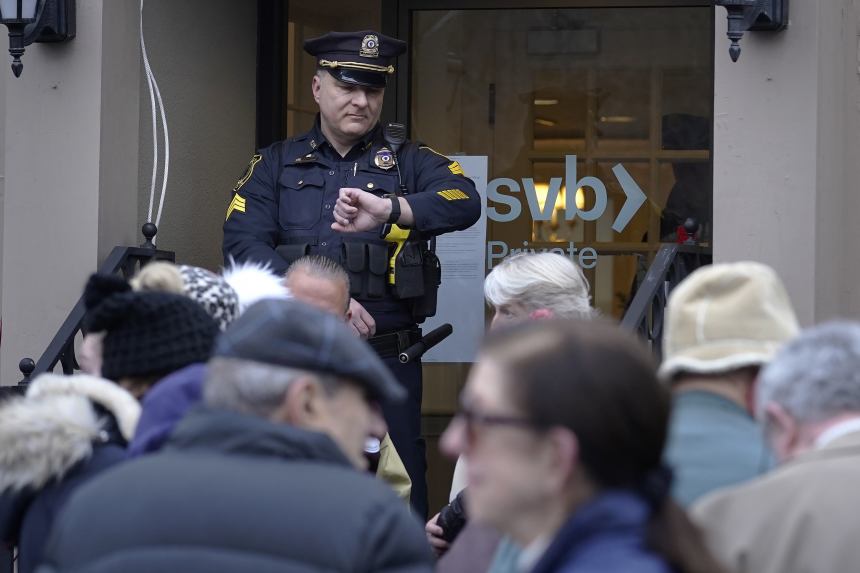
A Silicon Valley Bank branch in Wellesley, Mass., before opening on Monday morning. Photo: Steven Senne/Associated Press
Silicon Valley Bank failed just 14 days after KPMG LLP gave the lender a clean bill of health. Signature Bank went down 11 days after the accounting firm signed off on its audit.
What KPMG knew about the two banks’ financial situation and what it missed will likely be the subject of regulatory scrutiny and lawsuits.
, on Feb. 24. Regulators seized the bank on March 10 after a surge of withdrawals threatened to leave it short of cash.
“Common sense tells you that an auditor issuing a clean report, a clean bill of health, on the 16th-largest bank in the United States that within two weeks fails without any warning, is trouble for the auditor,” said Lynn Turner, who was chief accountant of the Securities and Exchange Commissionfrom 1998 to 2001.
Two crucial facts for determining whether KPMG missed the banks’ problems are when the bank runs began in earnest and when the bank’s management and KPMG’s auditors became aware of the crisis.
What is known about Silicon Valley Bank is that deposit outflows accelerated last month. In its March 8 statement, Silicon Valley Bank said “client cash burn has remained elevated and increased further in February.” The bank said its deposits at the end of February were lower than it had predicted in January.
Both bank audits were for 2022, so auditors weren’t scrubbing the banks’ books for the time period when they ran into trouble. But auditors are supposed to highlight risks faced by the companies they audit. They are also supposed to raise important issues that occur after companies close their books and before the audit is completed.
A spokesman for KPMG declined to comment on the specific audits, due to client confidentiality. In a statement, the firm said it isn’t responsible for things that happen after an audit is completed.
Silicon Valley Bank’s deposits peaked at the end of the first quarter of 2022 and fell $25 billion, or 13%, during the final nine months of the year. That means deposits were declining during the period of KPMG’s audit. If the decline was affecting the bank’s liquidity when KPMG signed off on the audit report, that information likely should have been included. Since it wasn’t, the question becomes, did KPMG know or should it have known what was going on?
Auditors are supposed to warn investors if companies are in trouble. They are required to evaluate “whether there is substantial doubt about the entity’s ability to continue as a going concern” for the next 12 months after the financial statements are issued.
Auditors also use their reports to highlight “critical audit matters” that involve challenging, subjective or complex judgments. KPMG in that section of its report focused on the accounting for credit losses at Silicon Valley Bank. But it didn’t address Silicon Valley Bank’s ability to continue holding debt securities to maturity—which, in the end, the bank lacked.
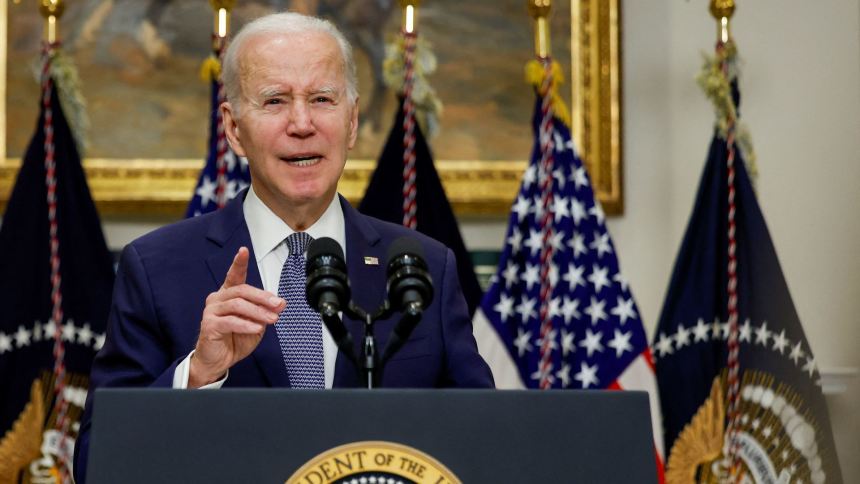
President Biden Addresses Turmoil in the U.S. Banking System
You may also like
President Biden Addresses Turmoil in the U.S. Banking SystemPlay video: President Biden Addresses Turmoil in the U.S. Banking System
President Biden said the banking system is safe in remarks on Monday, aiming to shore up confidence in the financial system. The remarks come just days after Silicon Valley Bank collapsed after a run on deposits. Photo: Evelyn Hockstein/Reuters
Even if the bank wasn’t struggling last year, KPMG was required to evaluate developments that occurred after the balance-sheet date so the company’s financials were presented fairly.
, which was seized by regulators on Sunday, also faced a run last week but it didn’t have the same balance-sheet issues as Silicon Valley Bank. KPMG signed off on its audit on March 1.
Signature’s bet on the crypto industry led to a surge in deposits, which went into reverse as that market struggled. A large amount of its deposits were uninsured, making it more likely the customers would flee at any sign of trouble. But it hadn’t disclosed the same losses on its investments as Silicon Valley Bank, giving it a greater ability to pay depositors.
KPMG’s audit work likely will be scrutinized by regulators, including the Public Company Accounting Oversight Board and the SEC, as well as private litigants that lost money when Silicon Valley Bank collapsed, said Erik Gordon, a professor at the University of Michigan’s Ross School of Business. A shareholder lawsuit against the firm concerning its Silicon Valley Bank audit“won’t be an easy one for people to win, even though the timing is spectacularly embarrassing for KPMG,” Mr. Gordon said.
Live Q&A
What Does the Silicon Valley Bank Failure Mean?
The Journal’s Banking Editor Marie Beaudette sat down with former FDIC Chair Sheila Bair to discuss the SVB bank failure, subsequent regulatory action and what this all means for the tech sector and overall health of the U.S. economy.
Watch the Conversation
A PCAOB spokeswoman said the regulator “cannot comment on ongoing inspection or enforcement matters.” An SEC spokesman declined to comment on the Silicon Valley Bank audit.
One argument KPMG could try in court is that the run on the bank started after the firm signed its audit report. A state banking regulator, the California Department of Financial Protection and Innovation, in a filing Friday said the bank was “in sound financial condition prior to March 9,” when depositors withdrew $42 billion.
Douglas Carmichael, the PCAOB’s chief auditor from 2003 to 2006, said it was unclear how the California regulator could have determined the bank’s financial condition. “It seems like a premature analysis. How could they know without examining?” he said.
“Auditors are always under the microscope when the company fails shortly after the issuance of a clean opinion,” Mr. Carmichael said. “The shorter the period, the greater the concern would have to be.”
Silicon Valley Bank almost doubled its assets and deposits during 2021. It got in trouble because it bought long-term, low-yielding bonds with short-term funding from depositors that was repayable upon demand. Accounting rules said it didn’t have to recognize losses on the assets as long as it didn’t sell them. When rising interest rates caused the bonds’ value to drop, it got stuck in them, and they kept falling. Silicon Valley Bank still had to maintain enough liquidity to pay withdrawals, which became increasingly difficult.
The $1.8 billion investment loss Silicon Valley Bank disclosed last weekstemmed from Silicon Valley Bank’s decision to sell all its “available for sale” securities during the first quarter. Silicon Valley Bank didn’t say when it started or when it completed the sales. It isn’t clear if Silicon Valley Bank used the proceeds of those sales to help cover withdrawals.
In the March 8 disclosure, Silicon Valley Bank said it expected to reinvest proceeds from the sales. But money is fungible, and it is unclear if selling the available-for-sale securities may have freed up other sources of cash to help pay departing customers.
Newsletter Sign-up
Markets A.M.
A pre-markets primer packed with news, trends and ideas. Plus, up-to-the-minute market data.
Subscribe
Most of the capital hole in Silicon Valley Bank’s balance sheet was in government-sponsored mortgage bonds that Silicon Valley Bank classified as “held to maturity.” That label allowed Silicon Valley Bank to exclude unrealized losses on those holdings from its earnings, equity and regulatory capital.
In a footnote, Silicon Valley Bank said the fair-market value of its held-to-maturity securities was $76.2 billion as of Dec. 31, or $15.1 billion below their balance-sheet value. The fair-value gap was almost as large as Silicon Valley Bank’s $16.3 billion of total equity—which, KPMG could point out, is something anyone reading the financial statements could have seen.
Silicon Valley Bank stuck to its position that it intended—and had the ability—to hold those bonds to maturity. KPMG allowed the accounting treatment. Now it will be up to the Federal Deposit Insurance Corp. to sell the securities.
The bank’s troubles put KPMG in a no-win situation. If it had called attention to Silicon Valley Bank’s falling deposits, or issued a warning about Silicon Valley Bank’s ability to continue as a going concern, it could have set off a run on the bank. By not raising these issues, it will face questions about how it missed the signs that the bank was headed for trouble.
One of the agencies likely to ask pointed questions of KPMG is the FDIC. After a bank fails, the FDIC’s Office of Inspector General regularly conducts investigations and publishes detailed reports called failed-bank reviews that identify the causes of the collapse and the parties most responsible.
Such reports are studied carefully by private litigants eyeing defendants to sue for damages. On that front KPMG caught a break over the weekend: The government said it would backstop all of both banks’uninsured depositors, in effect helping to bail out KPMG as well. The backstop won’t affect losses suffered by the banks’shareholders.
#1. This is the last call for our dinner meeting on Wednesday, March 15th – from 6-8pm CT with networking beginning at 5:30pm. (If you are out of the area, we have a virtual option as well!)
2 hour CPE topic is on ESG Reporting and what it means to each of us.
It will be interactive with case studies and discussions.
Ok guess who issued an all is well, no going concern warning just a couple of weeks before SVB collapsed, yep you guessed it
KPMG, I recieved this e mail from author Kurt Pany our undergrad audit author
We realize that this is probably more than you bargained for (particularly given our promise that we “will not deluge you with emails”), but things are happening pretty quickly.
The links below relate to the Silicon Valley Bank (SVB Financial Group) issues this past week. The date of its most recent audit report included in its Form 10-K is February 24, 2023, about 12 days before all the news started.
The first link is to that 10-K (in that document search for “In our opinion” to quickly locate the audit report). All this presents a wide variety of possible audit related discussion issues (critical audit matters, going concern, an illustration of an integrated report on the financial statements and internal control, a 30 year client, etc.)
Following that are a couple links to articles (the Wall Street Journal one you may not be able to see if you don’t subscribe). If you wish, a quick Internet search will provide you with any number of alternate sources.
NEW YORK (AP) — A former Goldman Sachs banker was sentenced Thursday to 10 years in prison for his role in looting a Malaysian development fund of billions of dollars used to finance lavish parties, a superyacht, premium real estate and even the 2013 film “The Wolf of Wall Street.”
Roger Ng was convicted last April by a U.S. District Court jury in Brooklyn, but he continues to deny charges that he conspired to launder money and violated two anti-bribery laws.
Prosecutors said Ng and his co-conspirators helped the Malaysian fund, known as 1MDB, raise $6.5 billion through bond sales — only to participate in a scheme that siphoned off more than two-thirds of the money, some of which went to pay bribes and kickbacks.
Reading from a prepared statement, Ng pleaded for mercy from U.S. District Judge Margo Brodie.
“I’m embarrassed. I’m ashamed,” he told the judge.
“I don’t want to live in resentment,” he said. “I want to redeem myself.”
The judge admonished Ng: “The only explanation for your conduct is greed.”
Ng had hoped that he would avoid prison time and be allowed to return to Malaysia, where he faces a separate prosecution. His lawyers argued that incarceration would worsen his “serious mental health condition.”
Ng was extradited to the United States in 2019 after spending six months in custody in Malaysia. He has been under house arrest for the past four years.
Federal prosecutors had asked Brodie for a 15-year sentence.
His lawyers acknowledged the looting was “perhaps the single largest heist in the history of the world.” But they failed to convince the jury that Ng was the fall guy for two other people charged in the $4.5 billion scheme.
One of them, Tim Leissner, Ng’s former boss at Goldman Sachs, pleaded guilty in 2018 to bribing government officials in Malaysia and Abu Dhabi. He was ordered to pay $43.7 million and became a key government witness during Ng’s two-month trial.
The third man, the Malaysian financier known as “Jho Low,” remains an international fugitive.
Ng was allowed to leave the courthouse and will surrender to authorities in two months, unless the judge grants his request to remain released on bail while he appeals.
The judge declined to issue a fine, and would consider a forfeiture amount in the coming days. That amount could be anything up to $35 million.
Ng, who oversaw investment banking in Malaysia for his firm, was the only Goldman Sachs banker to stand trial. He said Leissner implicated him to gain leniency during his own sentencing. Leissner has not yet been sentenced.
In 2020, Goldman Sachs acknowledged its role in the embezzlement scheme and paid more than US$2.3 billion as part of a plea deal with the U.S. government. The firm had previously reached a $3.9 billion settlement with the government of Malaysia.
The U.S. government said the theft of so much money harmed the people of Malaysia.
The fund, 1Malaysia Development Berhad, was set up in 2009 by Prime Minister Najib Razak to promote economic development.
The financial scandal helped topple his government during the country’s 2018 elections. A Malaysian court would later find him guilty of abusing his power and committing other crimes connected to the massive embezzlement. He was sentenced to 12 years in prison.
But Najib was acquitted last week of tampering with an audit to cover up wrongdoing.
The scandal touched on several figures in the U.S.
A top fundraiser for former President Donald Trump and the Republican Party, Elliott Broidy, was charged with running an illegal lobbying campaign on Jho Low’s behalf to get the Justice Department to drop its investigation into 1MDB’s looting. Broidy pleaded guilty, but was pardoned by Trump, so was never sentenced.
A member of the hip-hop group the Fugees, Prakazrel “Pras” Michel, was also charged with being part of a conspiracy to help Low make illegal campaign contributions. Michel says he is innocent.
In the 20 + years I have been teaching college, the administrators running universities have exhibited a it's still 1964 mentalilty.
the cost of college has soared far beyond the benefits of starting salaries. Over a trillion dollars of debt has been created. Biden's proposal to forgive debt outright likely will not pass the courts but the mere suggestion sends a message that schools are free to continue increasing tuition and fees. When will the game end?
This article suggests the pandemic was a game changer. Staying home reminded many there are other avenues and many do not involve shouldering debt. MOre companies like google and amazon offer good starting salaries and on the job training for a higher skill, and it's free while one earns a living.
the article notes, the results may be dire! Yes but for who, not the country rather the luxurious campuses which now required thousands of new entrants willing to take on debt to continue the game. take a read as bob dylan said
the times they are a changing
Hre is another article along the same line, notice one student is studying data analytics at a CC, smart move
Earlier this year, Senior U.S. District Judge David A. Ezra — who originally sentenced Uresti in two unrelated cases — quietly reduced the sentences in both cases. The judge’s reasons for slashing the sentences were filed under seal.
Uresti’s 12-year sentence in the first case was cut to eight years while his five-year sentence in the second was reduced to a year. The sentences run concurrently.
Uresti, though, is slated to serve far less time than that. The Bureau of Prisons’ website shows his release date is Dec. 12, 2024. That means he’ll serve about five years and 10 months — or less than half of his original sentence.
So how did Uresti, 59, manage to get so much time lopped off? Could he have provided help to investigators in a case in exchange for shaving time off his sentence?
Assistant U.S. Attorney Joseph Blackwell, the lead prosecutor in Uresti’s criminal cases, declined to comment.
Mikal Watts, one of Uresti’s lawyers, said he didn’t know anything about the longtime Democratic lawmaker helping investigators.
“I think I would have heard,” Watts said.
A Trump reform?
He said he think the reason Uresti will serve far less time than his sentence called for is the First Step Act, signed by President Donald Trump in 2018 to reform sentencing laws.
Under the law, federal inmates can earn up to 54 days of good time credit for every year of their imposed sentence rather than every year of their sentenced served.
Watts suggested Uresti also could have had a year knocked off for completing a Residential Drug Abuse Program. But Watts added that he didn’t know if Uresti had participated in the program. Ezra had recommended that Uresti participate in a 500-hour drug treatment program while incarcerated.
“He was the senior citizen of the prison, if you will, teaching all these guys,” Watts said. That included classes for inmates to earn high school equivalency diplomas.
That, however, doesn’t explain Ezra’s decision to amend the sentences.
Court records show the judge conducted a sealed hearing in both cases Nov. 18. That was after Uresti’s counsel and prosecutors each filed sealed documents the same week. The judge amended Uresti’s sentences on Jan. 10.
‘Snitch agreements’
Joey Contreras, a former federal prosecutor and state district judge, said the feds sometimes make recommendations to judges to give defendants sentence reductions for “substantial” assistance in their investigations. The assistance can be against co-defendants or accomplices in the same case, or even in unrelated investigations. The recommendations can be made before sentencing, or even after, and are generally sealed, he said.
They can result in a defendant’s sentence being slashed significantly, he noted.
“They’re known as ‘snitch agreements,’” said Contreras, who prosecuted organized crime, including one of the state’s largest gangs, the Texas Mexican Mafia. Some defendants he prosecuted were granted significant sentence reductions through those recommendations, he said.
A jury in 2018 found Uresti guilty of 11 felony charges for his role as legal counsel in FourWinds Logistics Inc., a now-defunct San Antonio company that bought and sold sand used in fracking for oil production. Investors, including those recruited by Uresti, were defrauded.
In the second case, Uresti in 2019 received a five-year sentence on an unrelated public-corruption charge in West Texas.
Uresti had pleaded guilty to a single count of conspiring to commit bribery rather than go to trial.
He still has to serve three years of supervised release and, along with other defendants, must pay $6.3 million in restitution to victims in the FourWinds’ case. He also must pay $876,000 in restitution in the bribery case.
At the 2019 sentencing, Uresti said, “It is my primary mission and my goal to redeem myself to my friends, my family and victims.”
Watts last visited Uresti Feb. 11 at Bastrop.
“He’s doing as well as can be hoped,” Watts said. “I think he was doing well.”
Uresti plans to return to San Antonio and get a job upon his release, Watts said.
“He’d be the world’s most qualified paralegal,” Watts said with a laugh. “I’d give him a job.”
Staff writer Guillermo Contreras contributed to this report.


 Professor Elam