• Professor Elam

    I have visited with cpa firms that tell me they have adopted the ‘paperless office’ concept.  Well apparently everyone has not.  Do you know about the GLB? That would be the Gramm-Leach-Bliley Financial Modernization Act of 1999. It relates to accounting banking and securities information.

    Or what about the HIPAA? It of course controls PHI!  That would be the Health Information Privacy Act concerning Personal Health Information!  Seems that there are now regulations about properly disposing of and shredding this information.  This has been a boon to companies like Iron Mountain IRM. 

    My point is that we are still a long way from the paperless office and now we have an entire industry devoted to destroying all those documents so carefully created in the first place.  Dig a hole, fill the hole, what an economy.

  • Professor Elam

    Hummer Environmental whackos, er environmentalists, would have us believe that the Prius is the end all in auto conservation.  Not so fast, when one considers the total environmental cost of building a Prius versus  a Hummer, guess which one wins?

    This is an example of the total real cost of doing something, once again, managerial accouting is relevant to our daily lives.

  • Professor Elam

    Peter Singer has an interesting article at this link about ethics.  You will be presenting your movie reviews about ethical themes in the next few weeks.  Singer is an Australian that wrote the piece for Britanica that I Used in my ethics class and now is at Princeton.  He notes that the taking of life has moved to an impersonal event in the last two centuries, but it was not always that way.  The result is a different form of mental reaction. This is an interesting article.

    Hmm

  • Professor Elam

    Please read How Long Can the Us Count on Foreign Funding?  You may recall the famous quote from Bill Clinton.  After then Speaker of the House Foley explained how the economy really works to him  Bill exclaimed ‘You mean my programs depend on a bunch of ()_(_+&*&* bond traders@!"  Well Bill as a matter of fact, they do or did or will.

    IN the 1930s the US was a creditor nation, the world owed us. During WW II, as depicted in Flags of our Fathers, the US went heavily into debt to finance the war.  After the war the US again recovered as the number one manufacturing nation in the world. It would not be until Lyndon Johnson in I believe 1965 that the US had its first $100 B budget prompting Ev Dirksen, Minority Leader of the Senate to famously remark, ‘a billion here, a billion there, pretty soon you are talking real money.’  At that point the US dollar was still backed by gold.  Which is to say that the govt was limited in the dollars it could print, the currency was then redeemable in gold or silver (US dollars used to bear the guarantee, silver certificate). This limits the total amount of currency the country can print, or spend, to a ratio of the money to the metal that backs it. 

    Richard_nixon It was Richard Nixon that took the US off the gold standard. That introduced fiat money or money by decree. Today the budget it three TRILLION DOLLARS.

    Now, as the article points out, we we spend more than we take in we have a current account deficit consisting of the trade deficit and net investment income we owe to foreigners who own our debt. Right now that is about $70 B a year. But in Dec 2006 we only took in $15.6 B, on an annual basis just enough.

    Are you following all this?  Do you think C average John Kerry or George Bush follow all this?  Well anyway, all this juggling of the money in the air only works as long as we can convince someone to loan us the money to do it.  Oil trades are settled in US dollars, or they have been. Iran of course is now asking for Euros, not Dollars. the reason is to weaken demand for the dollar. Should all the oil producing countries do that, the game is over, game set match.  Then US debt becomes banana republic debt. That would require our govt to take drastic measures, like forcing US citizens to fund their IRAs or all pension plans with US debt.  Which of course no one else would want. …..

    And that boys and girls is what they  SHOULD have taught you in economics….

  • Professor Elam

    Steve Forbes is right on in this column.  HE correctly identifies the culprit not as interest rates but the declining dollar as the source of inflation in oil and metals prices.  But the problem is not at the FED. This will not be solved by raising or lowering interest rates, though I suspect eventually higher interest rates will result.  The FEd is helpless in the face of drunken sailor spending by Congress, flooding the world with dollars.  A recent Business Week article noted that inflows of dollars to the US are slowing.  If OPEC ever ditches the dollar, we are in serious trouble.  In the 1930s the US was still a creditor nation, the world owed us. Now the US is a debtor nation, we owe the world. If the official US policy is to continue to diminish the dollar, it is only  a matter of time before the world realizes we are repaying in a type of banana republic currency. At that point they will say no thanks.  Sorry Steve, but just selling bonds at the FED will not solve this problem.

  • Professor Elam

    This is an article written for mid career folks seeking a big change.  But guess what, Rachelle Canter syas it is still about marketing yourself.  Your mind, your brand and your focus make the difference, AND gee it is still all about marketing and networking not just announcing you are available. We discuss this in ACCT 3405. You will get a chance to hone your skills in your classroom presentations.  Do not ‘blow this assignment off’ this is a valuable opportunity to try to market yourself to us! Click and read the article.

  • Professor Elam

    I have obtained an placed in the library both

    Gleim Overviews of the CIA and CMA exams that you are welcome to take with you

    Copies of a CIA and CMA review manual as well as a couple of CPA exam review Q & A, these are on reserve but I urge you to stop and review them to get a feel for what they are about, and please read the overview for these two exams. If you are an accounting major I would certainly set my sights on one of them, everyone will have a degree, only a few of you will reach the level of certification. This will definitely set you way apart come interview time, not only will you have achieved the certification, it shows great motivation and can do on your part to an employer.  More infor at http://www.gleim.com

    DLE

  • Professor Elam

    As the scandals of Enron et al unwound, it was clear that a move was beginning  to inject a greater consideration of ethics into business courses.  Indeed, the State Board of Public Accountancy has now adopted a required 3 hour ethics class for those seeking to take the CPA exam.  I have designed, submitted, and received approval for such a course.  In the process I studied other approved syllabi.  I have ‘taught’ the course twice.  The first time with partial success, the second with a sold feeling of accomplishment all round.  Indeed, the second time half the class was located by television over one hundred miles away. Yet when we finished, the each sent me e mails reporting that they were all sitting there a bit peeved and let down that the discussions were all over.  Now that makes a successful seminar.

    I tell you all this not to brag.  The point I think of a successful seminar is INVOLVEMENT. Why do you admire your favorite author or movie star, why is there a show named Entertainment Tonite that broadcasts five nights a week?  Because these are people whose company we enjoy and we want to know more about them, at least that’s what their agents would have us believe. Hold on I am going somewhere with this.

    And so, in considering how to involved students in ethics, I hit on the idea of movie reviews.  Generations Xers, Yers, millenials, wherever we are now, are more used to electronic experience than text experiences.  Great, so let them review movies and explain the social and ethical relevance of them.  I have concluded since that we are not all Roger Ebert or Joel Morgensterns and that reviewing a movie for a crowd is considerably more difficult than one might think.  Having said all that, here are a few thoughts about preparing your movie or book review for class.

    I honestly believe the most important education experience in my life was high school debate and extemp speaking.  The ability to stand and speak in a manner that gathers the attention of your audience and communicates a complete thought in four minutes is a feat extraordinaire. Many try, few succeed.  The idea here is to relate the plot of the movie to the conflict that confronts the characters and how they resolve it, then relate that to the class, and conclude with your thoughts on the subject, in less than four minutes, whew.  To do this you will need to

    Summarize the plot and characters in about one minute.  You Will have to avoid rambling or getting into plot specifics.  Get to the point. Most plots are not THAT different. Good and bad guys, romance, intrigue, whatever, what was the plot twist or circumstance that made this special. 

    Example-Gone with the Wind

    Not so good-southerners grapple with whether to go to war and lose

    Better-the Genteel life of southern culture contrasted with the brutality of slavery collides with the modern industrialization of the north.  Clever strategy falls victim to mass manufacturing of war as the South loses both the war, its cities and plantations, and perhaps its very culture.  Powerful figures of strong plantation women, Scarlett, and strong men, Rhett, have to resolve their own civil wars against the backdrop of a society falling apart.
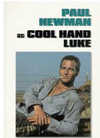
    Cool_hand_luke Well maybe Roger Evbert could do better but you get the idea.  Lots of guys have portrayed prisoners, what was it about Paul Newman in Cool Hand Luke that made him different? Or Tim Robbins in Shawshank or Morgan Freeman?

    Okay now that you have the plot and characters down for us, what is the ethical conflict.  How did it come about?  What are the misgivings of the characters?  Do they know right from wrong or are they choosing to ignore it?  (What did Ken Lay really think, we’ll never know, that story he took to the grave).

    So what is the resolution? What larger story or question does this raise?  What lesson does this teach us or ask us to consider in our daily lives?

    Now what did all this mean or say to you?  Why did you pick the movie?  Why should we want to see it and what can we learn from it? 

    Now all you have to do is just that-in four minutes.

    My experience is that students tend to assume we have seen the movie. Above, Cool Hand Luke came out while I was in college, it was enormously popular and EVERYBODY saw it.  The Student paper even had a story on someone attempting to duplicate the egg devouring incident portrayed in the movie. But realizing many of you have probably not seen it, I inserted the reference to the much newer and frequently on cable, Shawshank, ie, relate to your audience.

    Now, as one of my students said at the outset of our second ethics class, this is all pretty much black and white. By the end of the class, we agreed it wasn’t.  What made the second class was that I required the students to do multiple presentations about ethical conflicts in different situations.  Historical figures, personal conflicts, contemporary business, and then we would discuss the issues after a survey of current ethical thought on how to analyze such questions.

    Here is an example.  One student stopped and sought some help  on a review, great, I am always here.

    The movie involves gun running, and her conclusion was, don’t sell guns.  Well is it that simple? What if  your people are being suppressed by those that have guns?  Wouldn’t you sell some to the underdogs?  But wait, can we trust the underdogs to not act like bad guys if they win (think the US arming Usama bin Laden in Afghanistan, yesterday’s friend, today’s enemy. Should we have left the Russians alone in Afghanistan, knowing now how it ended?)

    Good luck over the break getting your review ready, it may be your most important project of the semester. In  a perfect world I would whisk all of you back to the university experience I enjoyed, yep like every other gray hair you meet, I think it was better then.  I would magically transport all of you to a residential campus where we lived in apartments and dorms and campus was accessible 24/7. Yes you would have a part time job but expenses would be such that the job was ancillary to the university experience, not an all encompassing task.  There would be morning classes and afternoons on the mall tossing Frisbees and debating the forthcoming presidential election.  There would be ferocious debates over the student senate while someone ran Mickey Mouse for the Student Body President (this actually happened when I was an undergrad, Mouse ran a close second….) There would be movies and poetry readings and stories about life in ‘foreign’ lands abound all over campus.  And on Thursday evening we would gather for the ethics movie of the week. All would watch and then a lively discussion would ensue.  We might repair to a nearby pub or coffee shop afterward, just to make sure we got it right.  Discussion, debate, camaraderie, yep, where is that Back to the Future Machine when I need it…..

    Stay safe, see you after Spring Break

    DLE

  • Professor Elam

    Gee time flies.  Seems like yesterday but already Nick Leeson, centerpiece of the movie Rogue Trader, is now out of jail. And guess what, the lad that brought down Barrings Bank with his unsupervised trading of Japanese stock futures, is considering entering the trade again.  The fact that this is occurring against the backdrop of NEW collapsing and H R Block losing 25% of its value this month, makes this all the more fascinating.  Those of you contemplating a forensic or audit career, really should check out this movie.

    By the way, for a look at what capitualtion looks like, click here on NEW.  Then click on broker or any of the other two terms at the top right to read the letter that NEW is, well, they don’t say it but, out of business. Not surprisingly NEW did the usual things as things got worse, they lied.  Click to read about it.  Again, this is why we study accounting to learn the hows and whys of setting aside loss reserves. I hope that my emphasis on everything from charting stock prices to socionomics has given you added insight and tools on how to do this for yourself.

  • Professor Elam

    The_palm_jumeirah Click here to see where your gasoline money is going.   And don’t laugh, click and suf to read just how quickly some of these properties sold out.  This is one of the most lavish web sites I have seen. We clicked on in ACCT 4270, hey it’s pre spring break, at the end of class today, and WOW, everyone stood around amazed.