• Professor Elam

    Friday Sept 2 2022

    A Short Stock Rally Ahead

    The  Report shows 315,00 new jobs were created this past month. Now if someone could just create 315,000 people who want to work…


    Let’s discuss several topics today. First, Mitch Daniels, President of Purdue University, has a great op-ed in today’s WSJ.  He notes that tuition and fees at his school have not risen since 2012. Average student debt is $3,000. Instead of billions of loan forgiveness, how about requiring all the other universities to follow Purdue’s model? Another idea floated this week is to loan money to the University which would then be on the hook for re-payment to the Feds.   That might result is some scrutiny of the student borrower.

    Stocks fell 4.2% in August.  And for four of the last five days. We are due for a short rally in stocks. A mid-September high is expected. But then the bear market will likely resume.  The early stages of a bear market involve denial, which is where we are now.

    Positive mood originating in the Reagan recovery of 1982 has propelled the market to the  36,000 high. But negative mood was on vivid display as President Biden made an unprecedented attack on former President Trump and his supporters. Mayors in New York and Chicago are astonished the Texas Governor has taken them up on their Sanctuary City Pledge.  There is no Southern Border. The EU economies slow having outsourced their energy requirements to the Climate Crowd and Putin. Expect mood to trend in a far more negative fashion if it is already on boil at DJIA 32,000.

    It appears that  William Devane may finally be right in those  gold and silver ads on cable television.  Silver has fallen from $27 in March  to just under $18 Thursday. It has reversed today.  Coeur and Hecla Mining have reversed to the upside this morning.  As previously mentioned in this space, I suspect this is a long term low in metal prices.  World bankers want a digital currency. Expect the hard money crowd to put up a fight which starts today.  Gold and silver mining shares look very attractive at this level.

    Crude oil and natural gas remain at elevated prices.  I see more reports that only 7% of our USA energy comes from wind or solar. And the rare earth metals needs to an electric car are mostly found in China.   The move to  jump to all electric car fleets in the next few years will not happen. It is not economical and as EU is learning, nuclear and carbon fuels are quite reliable.

    Dennis.elam@att.net

  • Professor Elam

    Friday Sept 2 2022

    Anyone who has dealt with Chinese authorities knows that serious negotiation starts only after an agreement is signed. Hong Kong learned this lesson the hard way in the decades after the 1984 Sino-British Joint Declaration.

    Now it’s America’s turn. This week Chinese authorities and the U.S. Public Companies Accounting Oversight Board struck a last-minute deal allowing American regulators to inspect the audit papers of Chinese companies in Hong Kong that are listed on U.S. stock exchanges.

    Under the 2020 Holding Foreign Companies Accountable Act, the Securities and Exchange Commission has warned some 260 Chinese companies, collectively worth $1.3 trillion in market capitalization, that they will be delisted in the U.S. by 2024 if they don’t allow independent audits. In response, the Chinese government introduced tighter rules for companies listed overseas and encouraged Chinese businesses to upgrade their listing on Hong Kong’s stock exchange. New laws on data security and personal information make it almost impossible for many Chinese companies to maintain their listing status overseas without acting in breach of their legal obligations at home. Five Chinese state-owned companies recently announced they would voluntarily delist from the New York Stock Exchange.

    The deal between Beijing and the PCAOB seems to have reassured the financial world. The Nasdaq Golden Dragon China Index, which tracks Chinese companies that trade in the U.S., surged on the news. But differences between the two sides soon emerged.

    Newsletter Sign-up

    Morning Editorial Report

    All the day's Opinion headlines.


    Subscribe


    PCAOB insists that its audit inspections will be wholly independent of Chinese authorities, with no requirement for consent from the Chinese government. The China Securities Regulatory Commission insists that “audit work papers and other information that the U.S. regulator needs access to will be obtained by and transferred through Chinese regulators.” The CSRC also says that a Chinese regulator may “assist” in any interviews or testimonies Chinese personnel give during audit inspections.

    Under the Chinese interpretation, the PCAOB would be able to inspect only information Chinese authorities have first screened. Officials may insist that data crucial for proper auditing and transparent governance amounts to state or trade secrets and therefore isn’t disclosable under Chinese law. It will be almost impossible to challenge these decisions within the Chinese system, even in Hong Kong. The definitions of state or trade secrets fall within the domain of the Hong Kong Committee on National Security, whose decisions are binding on the Hong Kong courts and not open to any challenge by private parties or overseas regulators. Even if the Hong Kong courts were dragged into a dispute, the U.S. side won’t be able to count on a level playing field given the overarching power Beijing has under the Hong Kong National Security Law.

    That’s not all. We expect China will maintain that audit records containing sensitive personal information and national-security data must be destroyed after any audit in compliance with Chinese laws. The American side is likely to insist that it has the right to preserve all audit records as per international auditing standards.

    All and all, the agreement looks to be little more than window dressing. It may allow Chinese companies to remain on U.S. stock exchanges, but there’s no reason to think they’ll be rigorously audited.

    This may please some large institutional investors, but the signal to the Chinese Communist Party is that U.S. regulators, and by extension the Biden administration, are still unwilling to challenge the governance issues endemic to Chinese companies—despite the serious financial risks they pose to investors and shareholders in the Western financial system.

    Advertisement – Scroll to Continue

    Mr. Kwok is a senior fellow at Harvard’s Kennedy School of Government. He served as a Hong Kong legislator, 2012-20. Mr. Goodman is executive director of the China Risks Institute and director of policy and advocacy at Hong Kong Watch.

    Appeared in the September 2, 2022, print edition as 'U.S.-China Audit Deal Is Only Window Dressing'.

  • Professor Elam

    Friday Sept 2 2022

    he colorful Ohio Gov. Jim Rhodes once likened George Romney’s run for the presidency to “a duck trying to [make love to] a football.” I wish he had been around to put a label on the federal student-loan program. In the sad catalog of its failures, the federal government has set a new standard. President Biden’s debt-cancellation announcement represents the final confession of failure for a venture flawed in concept, botched in execution, and draped with duplicity.

    The scheme’s flaws have been well chronicled. It’s regressive, rewarding the well-to-do at the expense of the less fortunate. It’s grossly unfair to those who repaid what they borrowed or never went to college. It’s grotesquely expensive, adding hundreds of billions to a federal debt that already threatens our safety-net programs and national security. Like so much of what government does, it’s iatrogenic, inflating college costs as schools continue to pocket the subsidies Uncle Sam showers on them. And it’s profanely contemptuous of the Constitution, which authorizes only Congress to spend money.

     
    Opinion: Potomac Watch

    WSJ Opinion Potomac WatchBiden's Costly and Illegal Debt Cancellation


    When the federal government took over the loan program in 2010, President Obama claimed it would turn a profit of $68 billion and that “we are finally undertaking meaningful reform in our higher education system.” Credit where due: a dead loss of hundreds of billions of dollars and tuition costs that continued to soar can fairly be described as “meaningful.”

    There are, and long have been, better ways. Colleges should always have been at some risk for any non-repayments by graduates. One can view such defaults as a breach of warranty, as degrees could be thought to imply that their bearers were prepared to be productive citizens, with the market value and personal character to live up to their freely chosen obligations.

    Newsletter Sign-up

    Morning Editorial Report

    All the day's Opinion headlines.


    Subscribe


    Even a modest percentage of shared liability for non-repayments would have significantly affected schools’ behavior. The financial exposure and potential embarrassment would have driven material changes in the rigor of teaching and the amounts they charged and encouraged students to borrow. Such a system would have amounted to a fair request that institutions stand behind their product.

    Of course, much of this unpaid debt would never have been accrued if colleges hadn’t raised their prices at the highest rates of any category in the economy. Thanks to the subsidy gusher, that was easy to do. But it wasn’t right or necessary.

    I have been asked countless times about Purdue’s record of holding tuition and fees flat since 2012 while lowering room, board and book costs. It is less expensive to attend our university, in nominal dollars and for all students, in-state or out, than it was a decade ago.

    I’d like to claim that this was a triumph of managerial brilliance, but I can’t. We simply asked ourselves each year, “Can we solve the equation for zero?”—meaning what would it take to avoid a fee increase? Placing top priority on containing student costs has driven lower ratios of administrators to faculty, less gold-plating on new buildings, modernized and consumer-driven health plans, and other simple changes. Meanwhile, not coincidentally, enrollment and revenues have surged.

    Ten years on, more than 60% of our students graduate debt-free. Debt per student has been cut in half, to just over $3,000. Had Purdue raised tuition at the national average, students’ families would have sent us more than $1 billion more than they have.

    Along with marketable knowledge and skills, Purdue aspires to foster character in its students. Watching each year as more than 99% of our graduates honor their student-debt obligations, we take pride in them. But I’m uncertain what to say to them as they see their less-responsible contemporaries bailed out—with, adding insult to injury, a portion of the tab handed to them as taxpayers.

    When, not if, our national debt forces a traumatic reckoning, asset sales will likely be part of the emergency plan to preserve safety-net payments and some vestige of discretionary government. Along with surplus federal land and structures, it will make sense to sell whatever remains of the student-loan portfolio. That will be a fitting end to a bankrupt lending system born of bankrupt policy choices.

    Mr. Daniels is president of Purdue University. He served as governor of Indiana, 2005-13.

     
  • Professor Elam

  • Professor Elam

    Thursday Sept 1 2022

    Ernst & Young faces a $100 million fine, the biggest ever doled out by the Securities and Exchange Commission against an auditing firm, after an investigation found that hundreds of its auditors cheated on ethics exams from 2017 to 2021, The New York Times reports. The SEC also says EY didn't do enough to combat the cheating.

     
    Note to students, how come CPAs at this level had to cheat to pass an ethics exam, did anyone ask?

    Ernst & Young to Pay $100 Million Penalty for Employees Cheating on CPA Ethics Exams and Misleading Investigation

    Largest Penalty Ever Imposed by SEC Against an Audit Firm

    FOR IMMEDIATE RELEASE
    2022-114

    Washington D.C., June 28, 2022 —

    The Securities and Exchange Commission today charged Ernst & Young LLP (EY) for cheating by its audit professionals on exams required to obtain and maintain Certified Public Accountant (CPA) licenses, and for withholding evidence of this misconduct from the SEC’s Enforcement Division during the Division’s investigation of the matter. EY admits the facts underlying the SEC’s charges and agrees to pay a $100 million penalty and undertake extensive remedial measures to fix the firm’s ethical issues.

    Click here for full article

    more details from bloomberg


    Speaking of auditor incompetence, check out these two blow ups

    EY and Wirecard

  • Professor Elam

    Wed Aug 31 2022

    /blue looks a great deal like our Catahoula Bentley, who has now passed

    Ana Montalvo send this photo of her dog Blue and son Eric relaxing

    blue looksScreen Shot 2022-08-31 at 10.13.37 AM


  • Professor Elam

  • Professor Elam

    Friday August 26 2022

    Not to students – A red flag for fraud is someone who is living above what their salary would support. Instead of simply stashing the money overseas and then leaving the country, Wayne lived it up right here, a give away for what he was doing.

    _________________________

    Former bank executive Ronald “Wayne” Schroeder, the mastermind of a fraud scheme that the Bank of San Antonio says cost it more than $13 million, is headed to federal prison for 97 months.

    Schroeder, who led the bank’s financing subsidiary, submitted bogus invoices to the bank on behalf of a fake company he created. The bank paid the invoices, resulting in him obtaining nearly $3.2 million. He used the proceeds to buy a beach house, an airplane, a boat, recreational vehicle and cars.

    “I’m embarrassed to be standing here before you,” Schroeder told U.S. District Judge Jason Pulliam on Thursday. “It’s not who I am. It’s not how I was raised. I’ve done my family and friends a great amount of harm by my actions.”

    In December, Schroeder pleaded guilty to one count of conspiracy to commit bank fraud. Prosecutors dropped three counts of bank fraud and a single count of conspiracy to commit money laundering as part of his plea deal.

    Chip Lewis, one of the former banker’s defense lawyers, argued for his client to receive home confinement and five years of supervised release. Schroeder, 49, of New Braunfels, is the sole care giver for a young son, Lewis said.

    But Assistant U.S. Attorney Joseph Blackwell countered that Schroeder could have lived a nice lifestyle just by doing his job and working hard. He earned a monthly salary of $18,500 from Texas Express Funding, the bank subsidiary.

    “He made a series of choices over the years to defraud the people he was working for, the financial institutions he was working with,” Blackwell said in seeking prison time for Schroeder.

    ‘Insidious evil’

    J. Bruce Bugg Jr., executive chairman of Texas Partners Bank, which operates the Bank of San Antonio, told the judge Schroeder gave the bank a black eye.

    “To be sure, Wayne Schroeder has caused our bank to suffer significant damages by his insidious evil and despicable criminal and fraudulent activities,” Bugg said.

    Pulliam sentenced Schroeder to a sentence at the low end of federal guidelines, which ranged up to 10 years and a month in prison. In addition to his time behind bars, he must serve five years of supervised release and pay nearly $9 million in restitution.

    Schroeder also agreed to forfeit a beach house, which had an assessed value of more than $466,000, a $200,000 airplane, an $80,000 recreational vehicle and various cars.

    He has up to 90 days to turn himself in to begin serving the sentence.

    Schroeder and four co-defendants submitted fraudulent invoices for companies they owned and two other financial institutions. Some of the money received went to pay off old invoices owed while some went into the defendants’ pockets.

    Also Thursday, Pulliam sentenced one of the co-defendants, Phyllis Jo Martinez, 80, of San Antonio, to time served and five years of supervised release. She also must pay about $290,000 in restitution.

    She and her son, Ryan Glenn Martinez, 58, owned a cleaning company called Nerd Factory that participated in submitting fraudulent invoices. His sentencing was continued to a later date so the judge can learn about the circumstances of his release from jail in connection with an earlier crime.

    Earlier sentencings

    The other two defendants were sentenced in June. Rigo Alvarado, 57, was sentenced to 48 days in jail, while his wife, Jill Martin Alvarado, 60, was sentenced to four months of home confinement. The Irving couple must also serve five years of supervised release and pay about $3.9 million in restitution. They owned Alvy’s Logistics, a trucking company.

    Bank of San Antonio records show Alvy’s obtained almost $4.6 million, while Nerd Factory obtained nearly $2.1 million, according Schroeder’s plea agreement. .

    The Bank of San Antonio launched Texas Express Funding in 2019 and hired Schroeder, a 30-year industry veteran, as president of the factoring company. Factoring involves advancing cash to companies in return for acquiring, at a discount, the debts owed to them. This allows the companies to get money quickly instead of waiting for customers to pay their bills.

    About a year after Schroeder was hired, in July 2020, the bank disclosed it uncovered a $13.2 million “Ponzi-style fraud scheme” he orchestrated. It also filed a civil lawsuit against Schroeder and others seeking to recover its losses and collect unspecified punitive damages. The case is pending.

    Schroeder operated Texas Express Funding as a “fraud from the get-go,” bank attorney Andy Taylor said at the time. “This was never a legitimate business opportunity. We thought it was but it wasn’t. We were buying snake oil.”

    The conspiracy began in April 2017 and continued until Schroeder and the four others were indicted by a grand jury in November 2020. It started at SouthWest Bank, then Bank of San Antonio and finally TransPecos Banks, according to Schroeder’s plea deal.


  • Professor Elam

    Wed August 24 2022


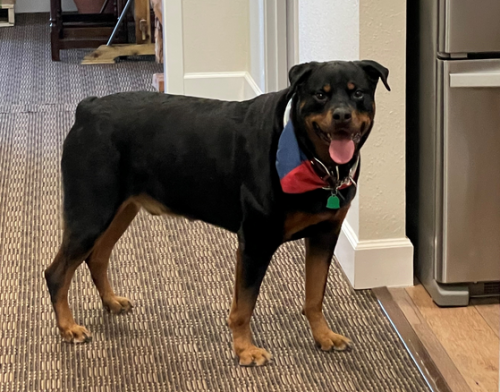
    Edward Stout has a rottweilller named Rocky

    Screen Shot 2022-08-24 at 1.10.03 PM

  • Professor Elam

    Wednesday  Aug 24 2022

    Dear Texas A&M University – San Antonio Student,

    I hope this email finds you well. You will use the Gleim EQE P-Led Assessment Quiz for Auditing in your ACCT 4311 class for the FALL(22) semester as required material.

    To obtain access to the Gleim EQE P-Led Assessment Quiz for Auditing and allow your instructor to track your progress, you must click one of the two links below or copy/paste the URL into a web browser. Note that you MUST use one of these links to order your materials because they indicate to Gleim which virtual class to enroll you in. If you order via any other means (e.g., the Gleim website), you will not receive credit for your work.

    https://www.gleim.com/?promoID=ASSESS-TAMU-SA-FALL(22)-ACCT-4311

    This link allows you to order only the Gleim EQE P-Led Assessment Quiz for Auditing, which is required for this class. Clicking the link will send you to the Gleim website, where you must create your account or log into an existing account. Then, you will be taken to the shopping cart with the correct item listed at $0.00. Complete the check out process by following the on-screen instructions.

    OR

    https://www.gleim.com/?promoID=PLED-TAMU-SA-FALL(22)-ACCT-4311

    This link presents you with the option to order the Gleim EQE P-Led Assessment Quiz for AUD for the specially discounted price of $34.95. This system usually retails for $50.00, but Professor Elam and Gleim have arranged to give you a great deal.

    **Note: If you wish to order the Premium Review System for AUD, you ONLY need to use the second link. Using this link will also give you access to the required course materials.**

    Please feel free to contact me if you have any questions regarding access to the course.

    Thanks, and have a great day!

    Alexandra


    Alexandra Graham
    Professor Relations Coordinator | IMA Chapter Coordinator
    800.874.5346 ext. 428 | 352.375.0772 ext. 428
    alexandra.graham@gleim.com | www.gleim.com/professors