Friday March 17,2017

Update for 3/27/17

the comments section is now open, please post your thoughts

Accounting Students

As the ACCT 5308 Ethics Class is aware,  Director of Research   Matt Lampert and Executive Director Alyssa Hayden of the Socionomics Institute

will be attending the Student Research Symposium, here May 5-6.    Robert Prechter    is  the President and Founder of  the Institute,

We have a unique opportunity to take the national  stage of academic thought. Mr. Prechter has a new book out, the Socionomic Theory of Finance. . Screen Shot 2017-03-17 at 6.20.28 AM
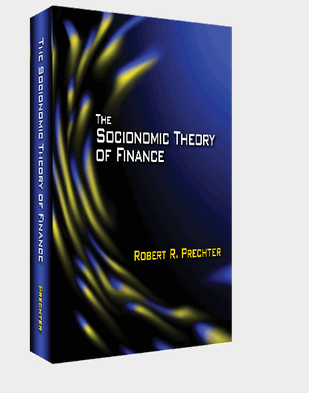
Here is the link to the excerpt from Chapter One. 

Re-defining causality is a major  theme of the book. The media is constantly attempting to connect a physical or external or exogenous event with what happens in the stock market.

For example, the day after the Trump speech to Congress, the DJIA jumped 300 points. The media implied this was the result of an improved economy world wide and more positive reaction to Trump than was expected.   But then for the next few days, the market gave back every single point.The media was scrambling to explain what exogenous event could have caused the change.

The first chapter challenges the conventional view of causality.  Several examples are given like the above demonstrating that again and again, the markets do not necessarily follow what is deemed to be conventional causality.  The conventional view is that external or exogenous events determine social action. Individuals are acted upon by news  in the active sense.

Socionomic thinking turns this idea on its head. Instead the argument is that social mood is generated internally or endogenously.   Thus the often unrealized, unremembered mood of the public generates social action.

I am asking our accounting students to read the excerpt and post a comment here on the weblog.

Learn more about socionomics at the Institute website.

Posted in

21 responses to “Socionomic Theory of Finance, Chapter One”

  1. Vicky Salazar Avatar
    Vicky Salazar

    As Robert Pretcher mentions in chapter 1 of the Socionomic Theory of Finance book, most people believe in the theory that the fluctuation of the stock market changes as good or bad news are reported. I can say that I thought the same thing. I believe this is very interesting topic because it got me thinking that if dramatic news do not affect the financial markets, then what affects these changes? There has to be something related to mood that affect the fluctuation in the stock market, but what specifically does affect it is what got me engaged to continue to learn about socionomics.

    Like

  2. Heather Grant Avatar
    Heather Grant

    I find the correlation between the movement of the DJIA, up or down, and the social mood of the day wildly fascinating. I am looking forward to demonstrating this with my SRS project.

    Like

  3. Nelson Thomas Avatar
    Nelson Thomas

    I found Prechter’s deconstruction of the exogenous cause claims very appealing especially in light of his analysis related to the anthrax attacks in 2001. The idea that news does not necessarily move the markets in a causal relationship demolishes the prevailing paradigm. Prechter’s explanations about the fall of oil prices after Hurricane Katrina suggests that it is quite possible for most of the media’s commentary about what provokes market reactions to be completely false.
    Prechter’s commentary on the false application of cause and effect in the markets could revolutionize the way in which we study economics. Instead of an action causing a reaction, I suspect that some kind of a feedback loop or fluidity is in effect when describing societal mood and market behavior.
    Socionomics offers an exciting alternative to the existing thinking about market shifts. I hope that, over the coming years, more resources can be shifted to studying behavioral economics so that we can debunk common myths about the way society interacts with the markets.
    Vicky- Great question about what actually affects the changes in the markets? What is beneath all of the moods that we experience as a society? I suspect that the answer is a mix between groupthink, individual mood and other variables like the subconscious mind. What do you think?
    Heather- I would love to hear more about your SRS project. Socionomics seems like a field ripe with research topics and new ways to look at society and the markets.
    I also found this lecture which explains socionomics in a succinct fashion using a clever analogy.
    https://www.youtube.com/watch?v=wdLTu6bdRzo

    Like

  4. Christina Marie Dotson Avatar
    Christina Marie Dotson

    I think one thing we all need to remember is that the stock market is based on company performance and growth. Although sometimes the media and/or historians enjoy treating it like a magic 8 ball that cannot be predicted or that it is impacted by the slightest social event, the bottom line is that stock prices will grow if a company is doing well. Many US companies had amazing Q4 results, (almost all except the mall stores and some brick & mortar, thanks to Amazon :). However we understand that Q1, & Q2 will not look the same, so the market will fall.

    Like

  5. Pete Galvan Avatar
    Pete Galvan

    Stock values fluctuate for different reasons. One cannot predict the effect an event will have on stock value based on the magnitude of the event. As Prechter explains, not all events have the effects we predict they may have. There are two things I believe one needs to take into consideration: media coverage and society’s perception. Figure 1 in chapter 1, is a good example of how media portrays the relationship between an event and the market. Not all readers could comb through these assumptions to determine if this type of coverage is accurate of the truth. This can then play into society’s perception thus influencing the market price.

    Like

  6. Priscilla Segovia Avatar
    Priscilla Segovia

    In reading the expert from chapter, like Vicky I do find it interesting to believe that there has to be a certain trigger in mood that affects the fluctuation in the stock market. I can’t wait to explore this topic more in debt and see what type of mood does the trick.

    Like

  7. Nancy Espinoza Avatar
    Nancy Espinoza

    I thought this post was very interesting. Even though I don’t understand much about the stock market, I was very intrigued by what I was reading. I hear so many people at work talk about the stock market almost everyday, but I have never heard anyone talk about Socionomics. I’m beginning to wonder if they even know what this is. I know I didn’t until this class. One thing I do know, is that companies must do well in order to help the market go up. And I don’t understand why the media has so much effect on the market, but I believe it may be because most people don’t educate themselves on how to make good investments so they have to go by what they see or hear if they don’t have all of the details they need. Or one simply has to trust the person handling their investments, and that can be risky.

    Like

  8. Roseann Palmer Avatar
    Roseann Palmer

    As Heather mentioned above, I also agree that it is very intriguing to see that the correlation between the movement of the DJIA, up or down, and the social mood. Many of our examples in class related to this theory have been the mood of the movies that are released and the legislation that is passed or repealed. I find myself looking for these signs in the social mood and the DIJA, as if I were testing the theory myself.

    Like

  9. Anais Arteaga Avatar
    Anais Arteaga

    Chapter 1 of The Socionomic Theory of Finance presents some interesting comparisons between major negative events and the stock market. I agree with the ending note that mentions people tend to link two occurrences that may be independent of one another only for their convenience (what best suits their mindset). If one cannot determine the reason why a specific event has occurred or why the stock market has changed drastically, media is one of the easiest outlets to find a separate, independent event that you could inaccurately tie together in order to make sense of an event.

    Like

  10. Christina Idrogo Avatar
    Christina Idrogo

    Cause and effect is a way of life. Everyone believes that for every action there is a reaction. So it only makes sense to try to apply this to the stock market. There has to be a way to make predictions. Those that invest need to have a way to predict stock market outcomes to make profits. However, shown in the first chapter of Pretcher’s book, The Socionomic Theory of Finance, this assumption would be wrong. The only outcome would be loss. As commented earlier that the stock market is based on a company’s financial standing is accurate. The only news that would seem to effect the stock market would be good or bad news concerning that company. The question is do worldly events have an effect on the direction of the stock market. According to Pretcher the answer is no. Then news headlines are not connected to the direction of the stock market. So, I am curious what other outside events, if any, do effect the stock prices?

    Like

  11. Dennis Elam Avatar
    Dennis Elam

    Cristina
    This is precisely how socionomics turns conventional wisdom on its head. Outside events dop not drive stock prices as those examples show. Internal mood, unconsciously generated drives social events. In the mid 1960s as the DJIA hit 1,000for the first time ever, the Oscar for best movie was My Fair Lady and Sound of Music. But by 1969 the winner was Midnight Cowboy, a big a change in mood as one can imagine. Hillary got run over buy a truckload of mood change in this last election.

    Like

  12. Yeret Bustos Avatar

    I believe the market does make corrections based on mood. In those instances, the markets bounce back right away. People later look at P&L statements and realize and say, “Oh the company still has 6 billion cash at hand.” This is a big flaw in EMH (Efficient Market Hypothesis). They can never predict a correction just react to it. I also believe the media has a big part in that. These corrections in the market are shorter the less they do with the entire financial market. The anthrax case was about the US mail system and that does not affect the entire market as we are a global economy. The Katrina hurricane messed up global production but again it is only a segment of the market; additionally, the Bush tapped into oil reserves, so the market bounced back. I would think applying socionomic models in a bull market is beneficial. I don’t think when the market is bearish people will apply socionomic principles because of fear. I believe the EMH makes more sense in a bear market as you are trying to look at real numbers and seeing if the company is surviving and turning a profit. To conclude I think both models can be beneficial if used together.

    Like

  13. Jessica Black Avatar
    Jessica Black

    Even before reading this, I thought that the stock markets reliance on mood was kind of silly. I think it’s too easy to find a a happy event with a rise in stocks. It either starts to become too much of a stretch or just coincidences, in my opinion.
    I really enjoyed how the chapter was set-up, though. Having you formulate your own opinion on an occurrence and then basically flipping it on you and proving you wrong.
    The predictions that investors make about what values of stocks will be are what influence the prices to vary so much. They may rely on social mood too much, which causes their investments to result in a loss. It’s easy to watch the markets and find trends, but if it was as accurate as some believe, more people would be doing it for a living…

    Like

  14. Giselle De la Garza Avatar
    Giselle De la Garza

    The Socioeconomic Theory of Finance by Robert Prechter’s book illustrates how the stock market works independently besides great social events around the world.
    After reading the examples on the “The Myth of Shocks” I realize how the stock does not get affected by social events, and how sometimes people (including myself) get confused on how the stocks work. I think that this confusion is mainly on how we are being influenced by social media myths about stock fluctuation.
    But how and when the stock market fluctuates? It is just by the company performance or there is something else behind it?

    Like

  15. Cindy Zuniga Avatar
    Cindy Zuniga

    As I read through Chapter 1, I personally found his perspective fascinating. The fact that although movements in the stock market may have a profound impact on the economy but that sometimes the stock market appears out of step the other way around is very interesting. After reading about his analysis I can see how in the depth of a recession, share prices could rise since investors are looking forward to a recovery in the future. I consider that participants of the financial market (specially beginners that would assume, like me, that bad news are directly correlated with the stock market going down) would very much benefit from reading this book. However, it leaves me thinking that if this is the real true about market dynamics why are are so many articles stating the opposite point of view? Is that maybe what they want ordinary people that don’t go above and beyond to believe? Shocking!

    Like

  16. Alejandro Martinez Avatar
    Alejandro Martinez

    Interesting points were made in the reading on the socionomics theory, however, I am not 100% convinced. Take the example in class on the movie “The Dark Knight Rises” (batman). I did not see that movie because of an event that occurred or something in the media that drove my mood or behavior to see the movie. I simply went to go see the movie because I am a batman fan and enjoy superhero movies. I remember that day perfectly. That night I went to go see the movie, almost everyone was wearing something related to batman (batman shirts, capes, a mask, etc) There were over achievers that dressed like the joker, alfred the butler, robin etc… Nonetheless, I don’t think people went to go watch the movie because of “socionomics”. I strongly believe that there are numerous of reasons over the changes in stock values.

    Like

  17. Jose Jimenez Avatar
    Jose Jimenez

    As one of my classmates mentioned, stocks should be valued by the company’s performance. The fact that many news and trends can lead a stock to loose or gain value really leaves me thinking of why do people really invest their money on stocks. is it because they really think the company has a bright future and they will get a return or because most people do it and they go along with the crew but they really do not know what to do with their money.

    Like

  18. Brenda Reyes Avatar
    Brenda Reyes

    I found very interesting Chapter 1 of the The Socionomic Theory of Finance, since the very beginning where Robert Prechter quotes “Good economic news propel markets” and “Bad economic news is chilling investors” from USA Today and The New York Times. However, I do believe that every action has a reaction, even if it’s not significant or right away. This just means that society have to take time to assimilate the situation and make the best decision that suits their case. Likewise, media and the way situations unrevel cause society to act in different ways and affecting the stock market.

    Like

  19. Dennis Elam Avatar
    Dennis Elam

    Yeret
    No Precther’s argument is that EMH cannot possibly explaion market behavior which is often what you would expect.

    Like

  20. Rachel Shore Avatar
    Rachel Shore

    I found reading this first chapter intriguing, and it leads me to purchasing the novel. I found the comparison of the stock market movements to not be related to crucial events that has happened fascinating. I enjoyed the whole gimmick with the devil offering you advance information for what was going to happen. It really takes you back and provokes thought about the stock markets movement towards what is going on in the world that the news outlets normally pin it on. It makes me curious about socioeconomics and if there is something of a guarantee for predicting how the stock market goes up and down. It is crazy how society’s perception on events can persuade you into thinking one way over another. Believing that because this happened, then this will happen, which Robert Prechter shows otherwise.

    Like

  21. Roshawnda Anderson Avatar
    Roshawnda Anderson

    I liked the analogy and how he used the devil in his explanations as it made the chapter more interesting. However, while he made his point about major events not causing changes in the stock market, I didn’t really see where he proved his point about how social mood affects the stock market. In addition, I’ve heard it said that when the economy is doing bad that’s the best time to buy stocks and if that’s happening during a bad season then wouldn’t it look like the market is recovering and doing well during bad economic times if most people are buying?

    Like

Leave a reply to Heather Grant Cancel reply