• Professor Elam

    Wed April 20, 2011

    Take a look at the interesting graphic on

    Mish Global Economic Analysis

    We have been discussing budgets and this is an interactive display of where the Ryan versus Obama budget proposals would take us. Oh neither gets the job done. And of course any real action is way in the future which means it won't happen. 

  • Professor Elam

    Tuesday April 19, 2011

    http://globaleconomicanalysis.blogspot.com/


    Mish points out that two year Greek debt now yields 20%. In short the market is betting the Greeks will default. The price of bonds fall when interest rates rise. The market is now betting Greece will default. So yesterday US Stocks fell, US bonds fell then rallied, and the S & P suggested it will eventually downgrade US debt. No wonder with the Federal take now at 25% of the economy. The US  Dollar rallied.

    I would say the future of the Euro is in doubt why it is still up is a bit of a  mystery. The Finns voted against bailing out Europe in their choice of candidates this past weekend.  Tiny Finland you see is a well managed country, Greece is not. 

    This bears watching the next few weeks, such a spike in price suggests a coming climax of sorts, bailout or default. The Greeks refuse to restructure, ie slow default. as their own state controlled pension funds of full of Greek bonds. So they would be defaulting to their own citizens. 

    By the way, those going to Ireland on the trip are surely aware that Irish banks have all been downgraded to or near junk status. The saga of PIGS Portugal Ireland Greece Spain slogs on. 

  • Professor Elam

    Sunday April 17, 2011

    I am reading Robert Scheer's The Great American Stickup. Recently I gave the lecture on the history of derivatives as well as the recent history of the financial crisis as well as famous derivative blow ups. Sheer pulls not party line punches, describing vividly how Enron et all bought an paid for stalwarts in both parties to do their bidding. As I have said this sort of background reading will allow you to understand more about derivatives, how they came to be, how de regulation of Glass Stegall by Texan Phil Gramm no less, made all this happen. Consider this e mail from one Enron lobbyist to another. The comments in parentheses are mine. 

    Treasury just minutes ago sent this compromise language to the CEA Commodity Exchange Act to Gramm's staff. It is my understanding from Treasury that the swap exemption is expanded slightly to say that if you (that would be Enron) are trading on a facility MTF and you are trading on principle to principle basis (you dreamed up the trade all on your own) among eligible contract participants, you are no longer subject to anti fraud and anti maniuplation as contained in Sec 107 of the House passed legislation. This would be good for us (no kidding!)  Ken Lay is in London so we can take a quick look at the attached language and tell me if you concur. Also we need to take a look at the new Sec 4 to see if it causes any problems. They may cut a deal as early as this afternoon!

    This students is an example of the best politicians money can buy

    Treasury run by Robert Rubin who would later get a multi million job at Citicorp also created by such chicanery

    Wendy Gramm former Commodity Futures Trading Commission Chair who moved to the Enron Board

    Phil Gramm R from Texas who sponsored the CFMA Commodity Futures and Modernization Act without which we would not have banks in the gambling business

    Come back, I'm not thru with the book more to follow


  • Professor Elam

    Sat April 16, 2011

    An alert student,  Laura Kingsley, posted this link

    http://www.ocean.edu/readcoltext/howtoreadcollegetextdrjohnweber.htm


    o how to read a textboook. I made a comment on her post that I too used to get fan fold computer paper from the  computer lab, and used the blank side to outline my courses. That paid off big time. Not only could I recall the mateiral I had practiced writing it down.

  • Professor Elam

    Friday April 15, 2011

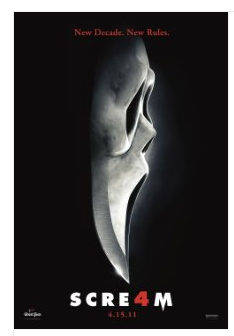
    Yesterday I did  a post on why Scream 4 is likely to be a success. I noted that it is in synch with the current mood which is about to be down again. 

    Now consider this comment on Sidney Lumet, the director who just died. This appeared today in the San Francisco Chronicle. 

    IN the 1970s there was a sense in the air of a world gone made, of a society on the edge of an abyss. Until Scorcese with Taxi Driver, 1976,  no one capturedthat desapairing chaotic and hopeless feeling quite like Lumet in his two classic films with Al Pacino, Serpico and Dog Day Afternoon. 

    Network upped the ante. It was  a farce nightmare of a society in  which everyone is angry and in which corporations  are more powerful than governments. 

    The dates tell the whole story. Society was half way through an 18 year period of stagnation.  The downbeat theme of the films matched the downbeat mood of the public. Bingo box office success!


  • Professor Elam

    Thursday April 13, 2011

    It's been 10 years since Scream III. The third installment cost $40m but grossed 4x that at $160M. Scream I was made for a mere $15 M and grossed $160M, Scream II cost more and only did $101M. 

    Screen shot 2011-04-14 at 8.11.47 AM The timing for Scream III, released in 2000,  was perfect, the markets topped and then headed down destroying the this time it's different theme of the dot.com era. When the social mood turns negative, an outlet for digesting horror movies is created. There has been no lack of horror grist the last ten years  as vampires have become mainstream in Twilight and True Blood, both books and or movies and tv series. 

    Here are Director Wes Craven's thoughts on Scream IV

    But I think it's just the perfect time to turn around and look at the decade of the 21st century

    That is certainly an interesting perspective on a slasher movie set  in a small California town!  In other words Craven does not see this as a mere slasher movie but a statement on the last century. Note he is not re-making The Sound of Music but a horror movie. Craven's view then of the last century would be one of horror not joy.  One reviewer sums it up this way.

    There is a dark nihilism here that seems to appeal to Scream fans. No one deserves to die but so many do

    What is happening is that the movie is a visual echo of what is happening in the world. The people dying in the revolts around the world do not deserve to die either, but they are.  Consider the conclusion of the review in today's SA Express News.

    Scream 4 provides exactly what the audiences expect, one victim after another being slashed, skewered, stabbed, gutted, and sliced, with everyone in on the joke. Maybe that's your idea of a good time. 

    While the reviewer does not realize the irony yes indeed that is the idea of the viewers, why else are they paying to see the show. Dark moods generate the desire for dark entertainment. This is why horror movies became so mainstream in the 1930s with Frankenstein, Dracula, and later Wolfman entertaining depressed masses as never before. 

    Now that the markets are back up, every fund manger is bullish, the only way the markets have left go is down, don't believe me, what happened after Scream 3?  Protests are on full boil from Wisconsin to Greece to Libya to China. Yesterday the WSJ described the President's budget speech as

    the most dishonest in decades. 

    I cannot ever recall harsher words in a WSJ lead editorial. But the President was equally harsh, that is the whole point.  This collision of negative mood along irrational enthusiasm for markets  will  result in the markets turning down. A few posts back we linked Shiller's trailing P/E model which shows the same optimism which existed in 1929, 1966, 2000 and 2007. Here we go again. 

  • Professor Elam

    Thursday April 13, 2011

    Carl Levin, D Michigan is referring Goldman Sachs to the Dept of Justice for possible perjury charges. 

    Charles Gasparino in Bought and Paid For details how Goldman and Wall Street underwrote the Obama campaign for President. So far GS has had to put up with being called Fat Cats and such and pay some fines but all this debt is underwritten by Wall Street. At issue is GS claim over whether they really shorted mortgages while selling them to their clients. 

    We are studying derivatives in multiple business classes.  It will be interesting to see how this plays out, more show or will GS finally be in trouble. 

  • Professor Elam

    Wed April 13, 2011

    I have visited at length with the intermed I and II classes about how we do what we do in those courses. As evidence of my sincere interest and general dissatisfaction with all existing texts, I sent this to Cengage, Pearson, and McGraw Hill.

    I am printing this to show my concern and to elicit your comments. 

    Subject: Intermediate Accounting – Dennis Rants On

    All

    1. Accounting books are selected by accounting academics not the

    students. This is why the books have gotten so long and heavily

    footnoted. In addition all feature dazzling displays of fancy math

    formulas. While this may send spirits soaring  of the accounting types

    that frequent the Journal of Accountancy, it does little for bewildered

    students that never mastered algebra I. 

    2. Since the the big publishers compete in the same market and listen to

    the same 'peer reviewed' academics, the three books from Cengage MH and

    Wiley are remarkably similar, right down to the topics covered in the

    same numbered chapters. So all are putting out the same product, rather

    like the old days of GM Ford Chrysler, a big three but all the same. 

    3. It took VW and Toyota to break up the perception of what a car should

    be, American Motors never did it. Different out of the box thinking,

    like making tinted glass, reclining seats and four speed transmissions

    standard as well as the FM radio, way back in 1972 on the Toyota

    Corolla. Detroit never recovered. 

    4. The big books of intermed acct such as they exist are probably fine

    for the top 50 schools where there is at least some sort of entrance

    requirement. and there is a perform or you are out requirement if a

    grade level is not maintained . But this is not the case for the other

    1150 colleges in America.  The book is grossly unfair to these students who have a knowledge and background gap. 

    But as they discover that is not accounting; it is bookkeeping. The other big gap is the assumption gap. All these books assume students know for example, what a put, call , or derivative is and how it works. Unless you know that you could not possibly understand the entries for them. 

    5. Most of the community colleges only make this worse. They take the

    students money and pass them on citing outstanding completion rates.

    Most of the intermed students I get cannot complete a standard ten

    column worksheet with adjusting entries. This was the gold plated

    standard when I took principles in 1967; yet just this semester in

    Intermed II one student have never encountered a ten column worksheet. 

    6. So what happens?  Well the students struggle,

    7. Now look at www.khanacademy.org. It contains over 2,000 short videos,

    not on accounting by close enough to get the idea, lots and lots of math

    videos on every subject imaginable. 

    8. Does watching a video teach one in the same way that reading the

    chapter and working a problem teaches one, I frankly doubt it, I think

    it is like a power point good exposure.I suspect a video like a power point can

    gain some familiarity but not understanding or content mastery.I bought a visual learner set of DVDs on Excel, it helped but honestly I did not learn how to use Excel, the reason is that I was watching, I was not participating. Only active involvement results in knowledge gain. 

    9. Give the textbook companies credit, there are power points, games,

    podcasts, m/c exams, you name it. There are books now written for

    students that will not read the book (a conundrum indeed)  with special

    boxes in the margins, cornerstone from cengage and whitecotton from MH

    are both good examples. But if this is the case perhaps we should

    jettison the text and just focus on the boxes. 

    10.Derivatives are more important than stocks which is why D Bank wants

    the NYSE for Euronext, not the stock exchange part of the NYSE. Yet

    there is scant coverage of derivatives in any of the books. I dare say

    the average acct teacher cannot explain the difference between a put and

    a call, but I digress. 

    11.  I suspect the better idea would be a combination of the

    presentation form of

    Schaums Accounting Books, these are outline and short paragraph

    interspersed with solved examples, like the 1960s accounting books no

    fancy pictures or stories about companies that the students do not read

    anyway

    Gleim's outline with mandatory questions to answer, it is a  format by

    topic, Gleim is a leading provider of cpa review texts, the arrangement

    of their books after forty years of working with students is  no

    accident. 

    I would include  the graphics and tables that are pretty well done in

    the three main books today. But even then many of these are overly

    complex. 

    There needs to be more requirement of content mastery, yes, if you

    cannot do the ten column worksheet, you cannot answer simple questions

    about what financial statement which account will appear. 

    And so like the automobile world of the late 1960s the accounting world

    awaits some out of the box thinking. 

    VW took 10% of the American market in 1967 with a car designed in

    Germany in the 1930s, that lacked an air conditioner no less. 

    12. I don't know the 'guys in the carpeted offfices' at the big firms.

    But I do  know I am right about the failure of 1,000 page intermed books

    to resonate with the students. 

    Arguments for and agains e books are only about the delivery system, not

    the method of teaching.   And frankly e books are about where personal

    computers were in 1980, no common platform. Right now a paper book is

    still easier to use. 

    The Datsun 240 Z was a faux Jaguar XKE in affordable form, it changed

    everything. Japan was the new innovator, not Detroit.  Send this e mail

    around, please, somewhere there is 

    the next 240 Z of accounting textbooks. It does not exist yet but here

    is the outline for what it ought to be. 
     

  • Professor Elam

    Wed April 13 2011

    Please read this WSJ article on how the Dodd Frank rules will affect derivative trading.

    We are studying derivatives in various classes. I will post more on this later but this is an effort to raise thin margin requirements by participants. 

  • Professor Elam

    Wed April 13, 2011

    Take a look at this article which uses a Shiller trailing p/e.

    We are studying price earnings ratios in Intemed II now. This article suggests as I have been suggesting, that we are at another historic top in market prices. 

    The price earnings ratio tells us how many dollars one is wiling to pay for one dollar of earnings of a company. The higher the ratio the higher the expectation for the company.